
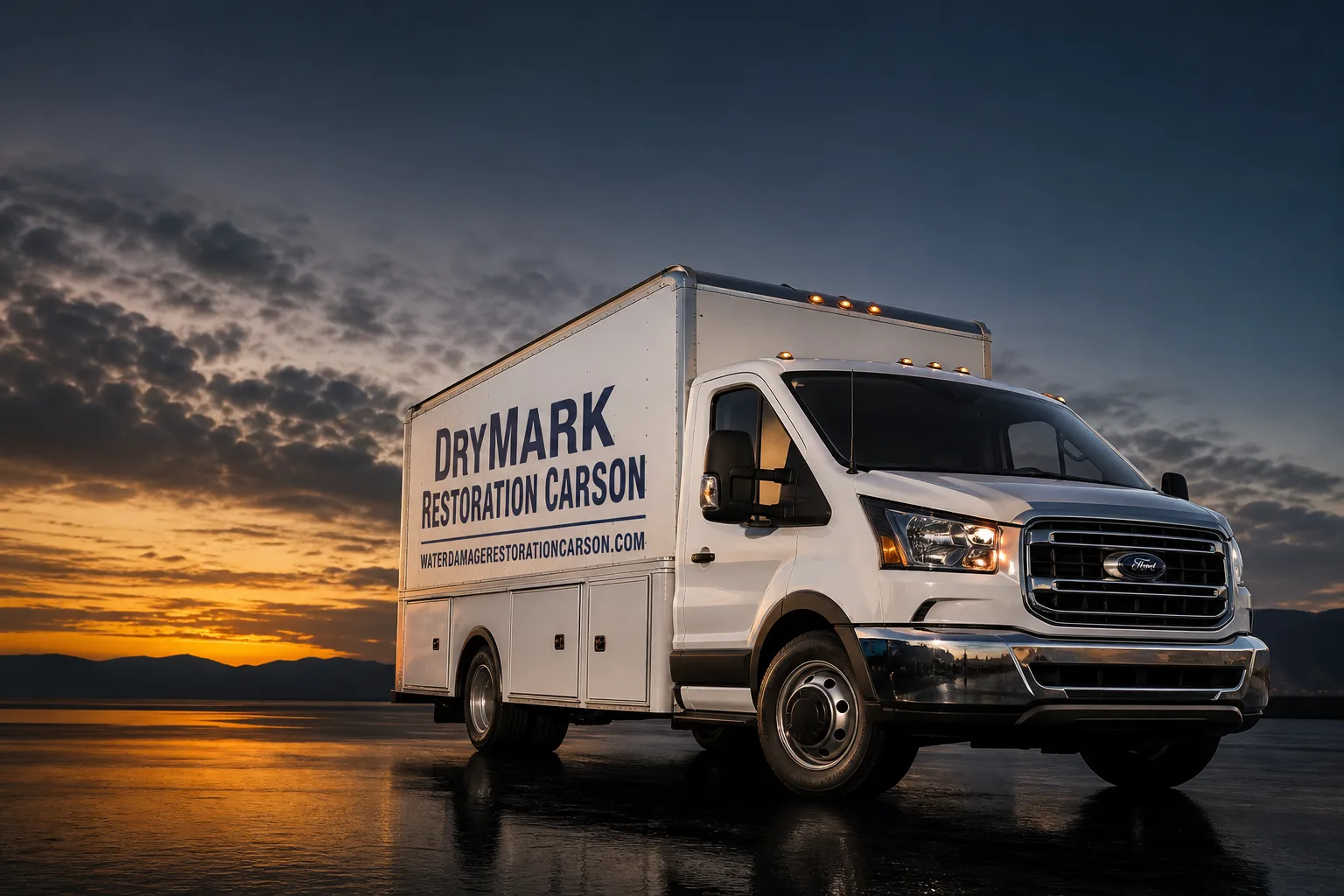
Free visual inspection and a written scope of work before any mitigation begins - photos, moisture readings, and drying logs go in your claim file
The scope we write is the scope we bill. Anything new gets shown to you, in writing, before we touch it.
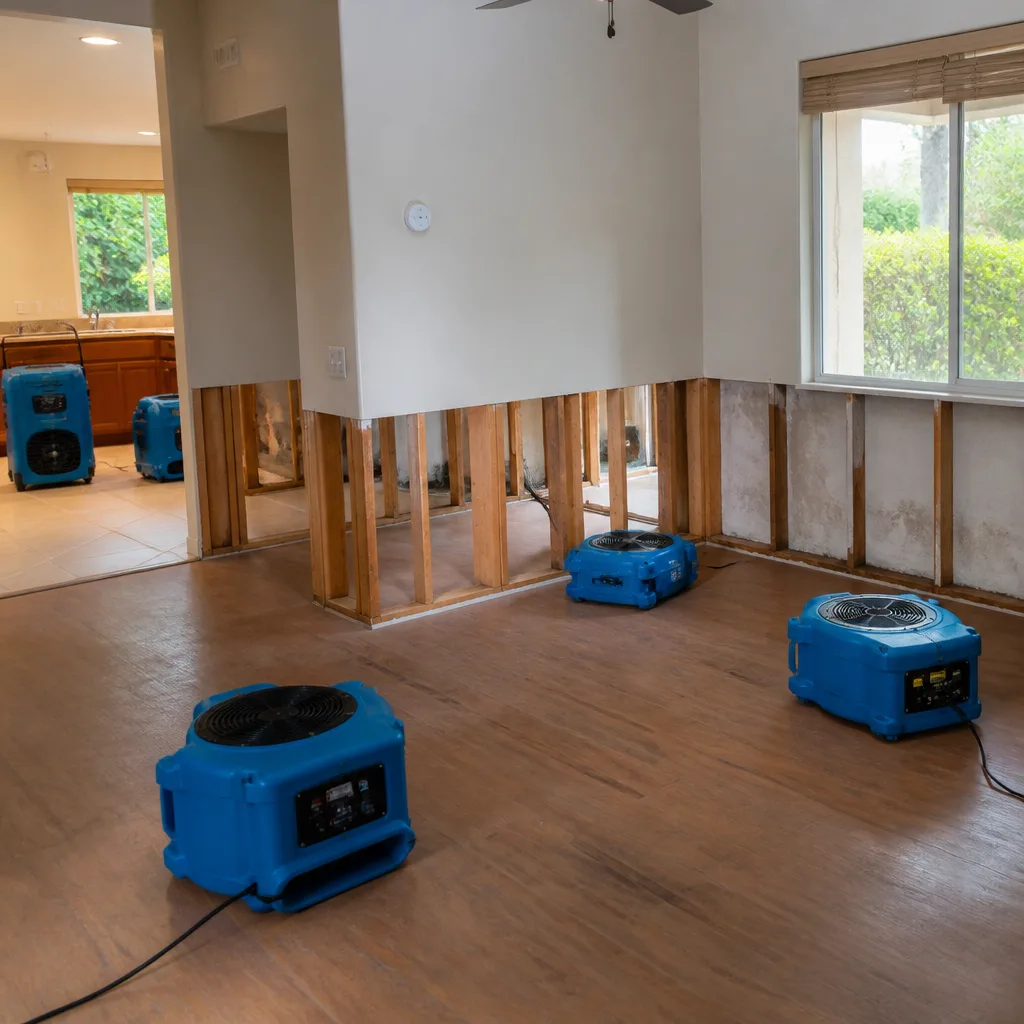
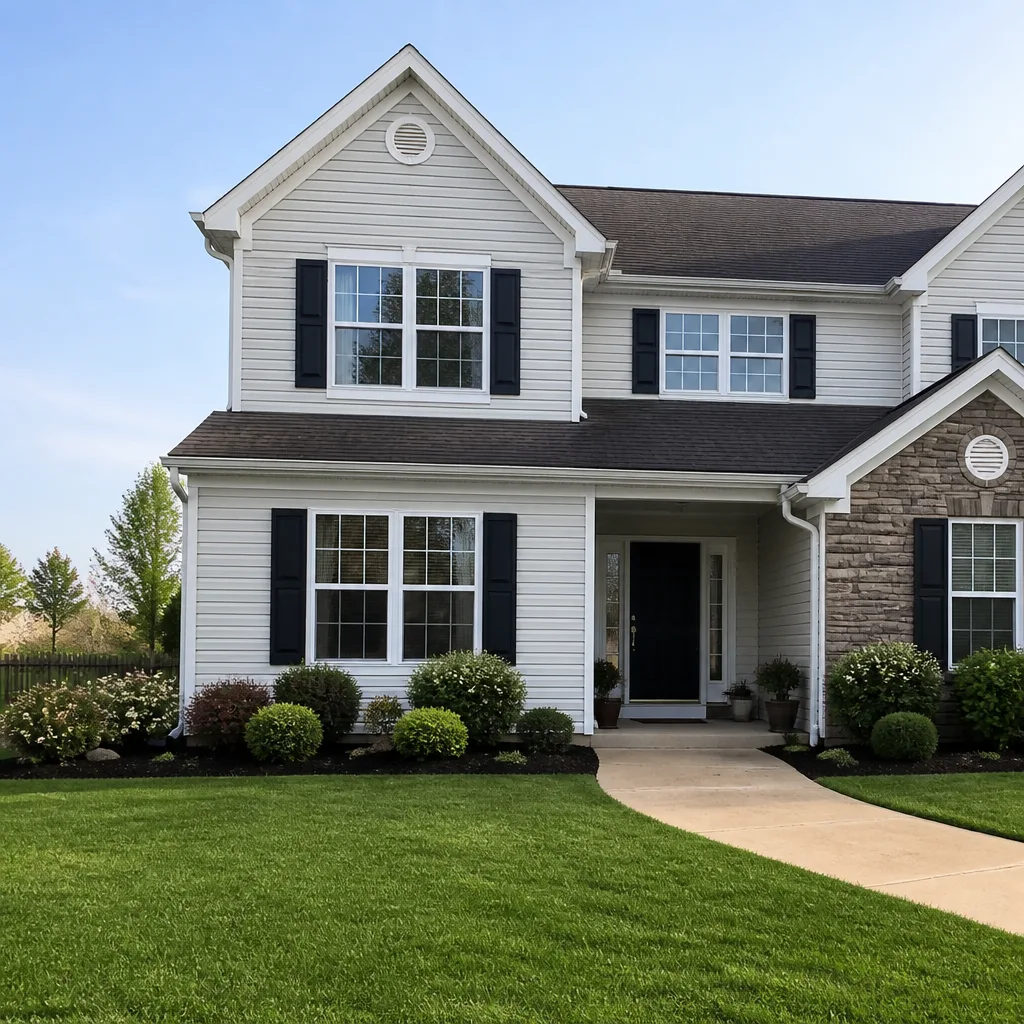
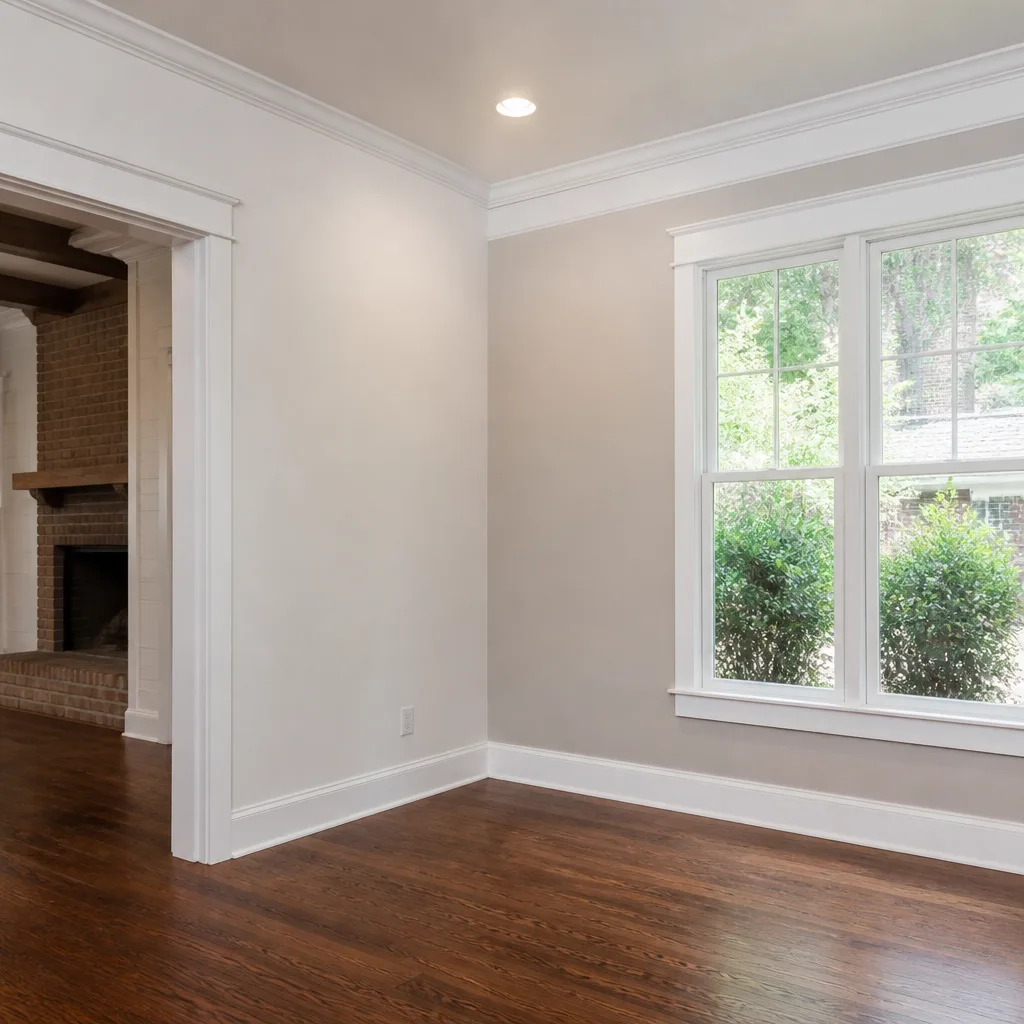
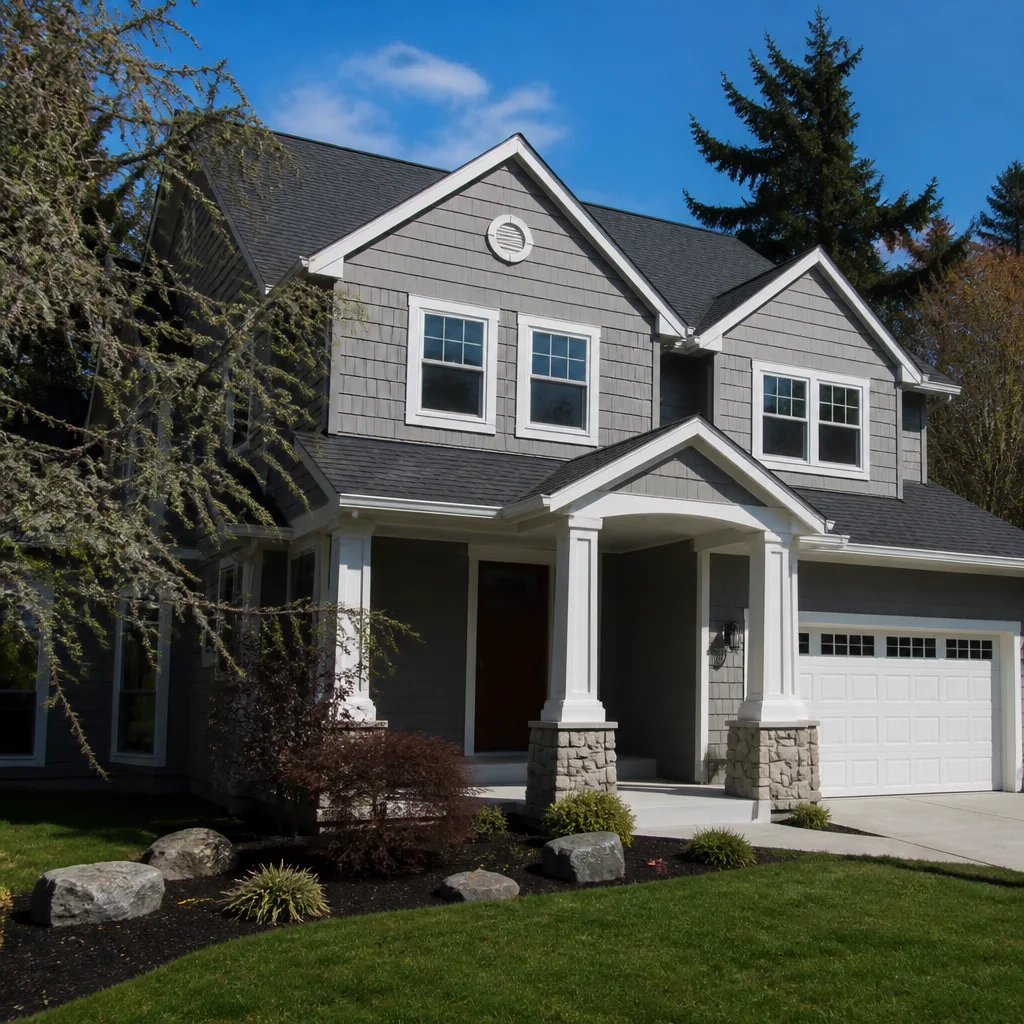
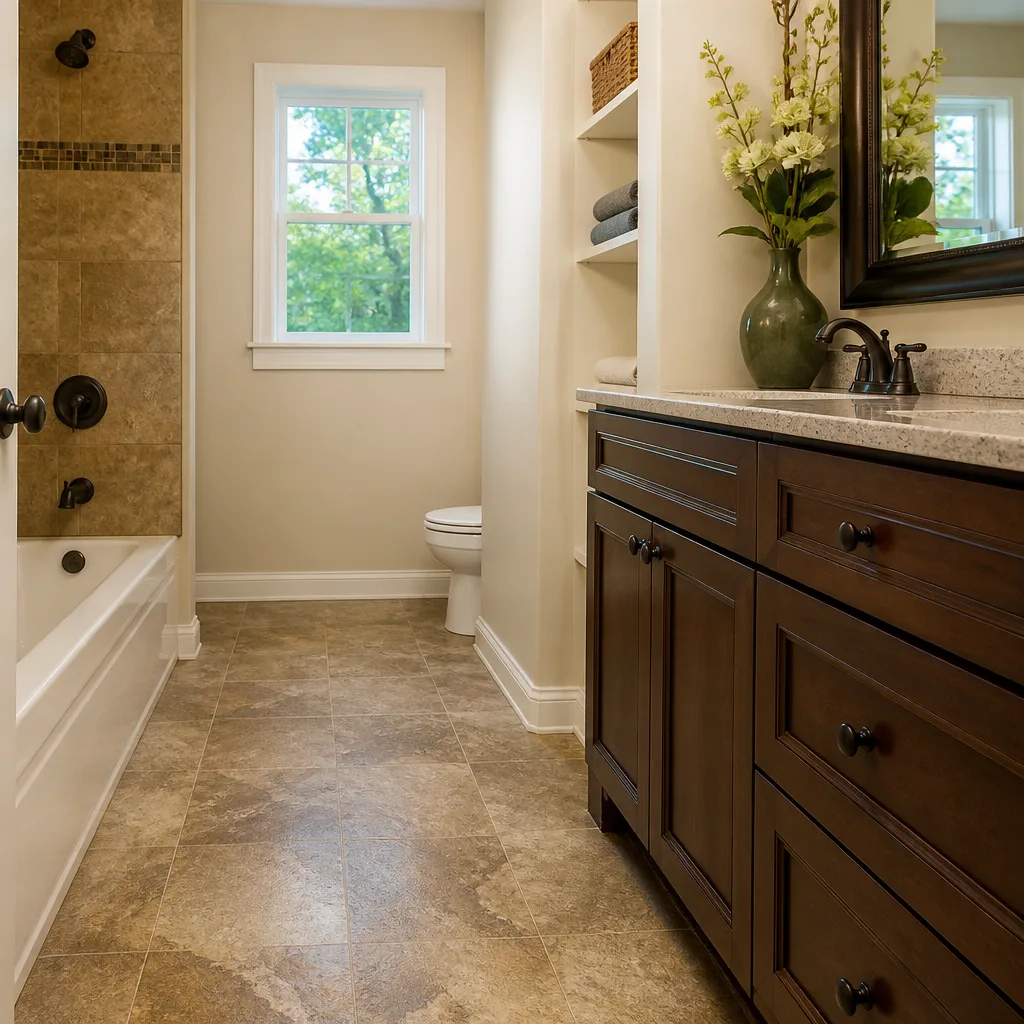
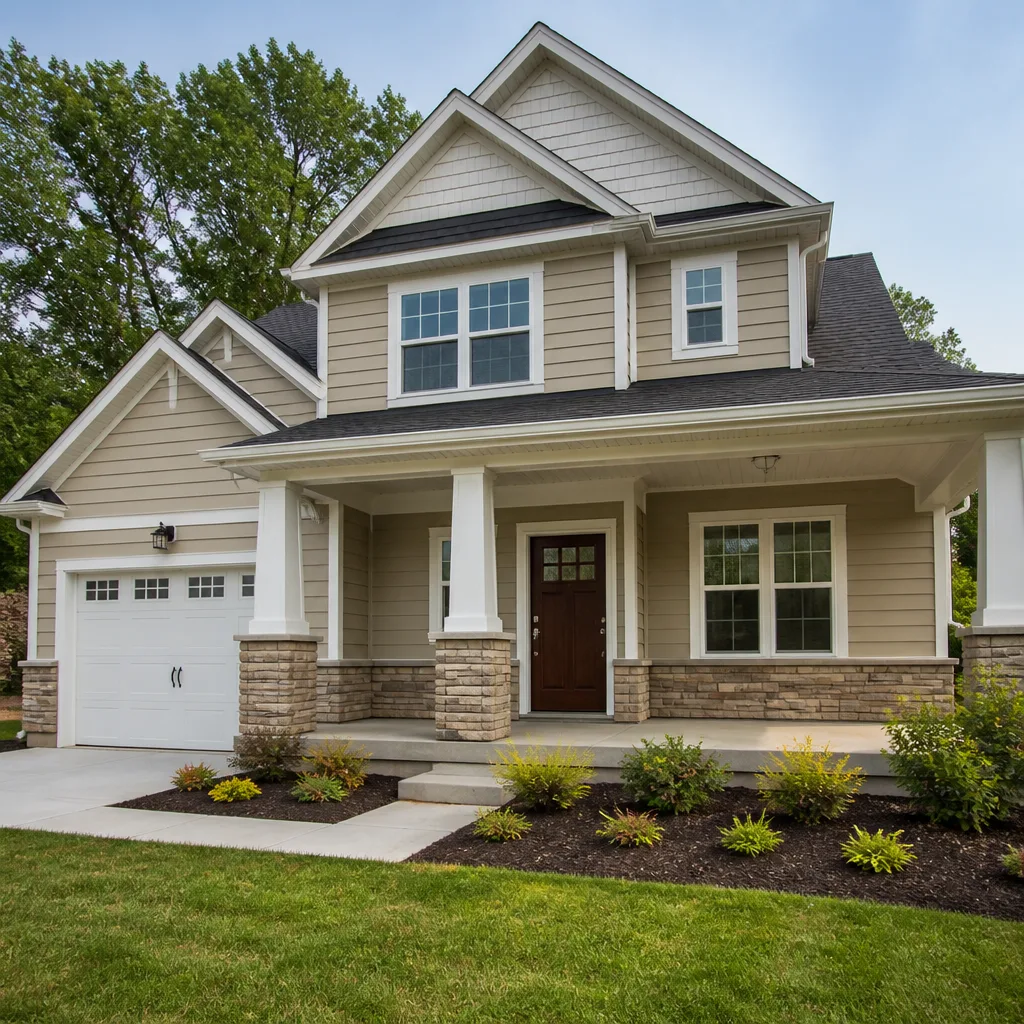
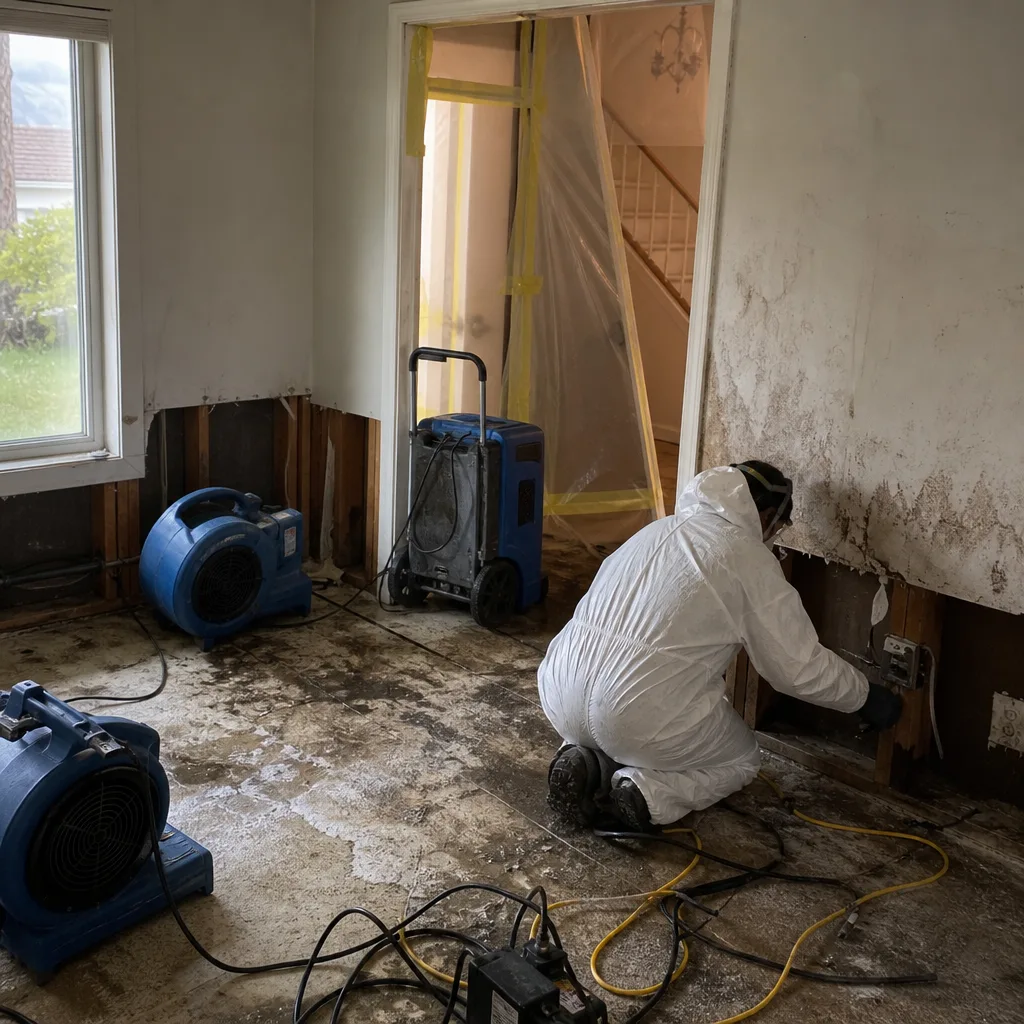 Before
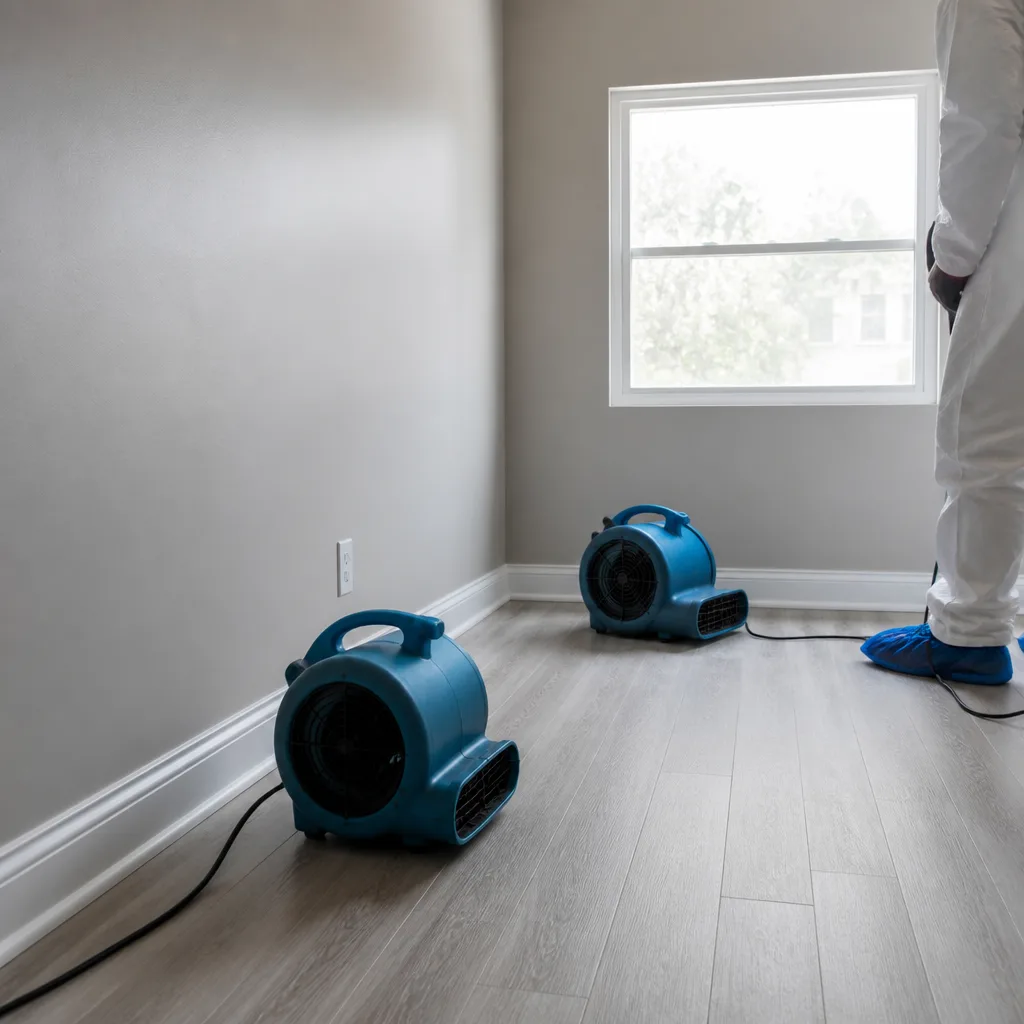 After
After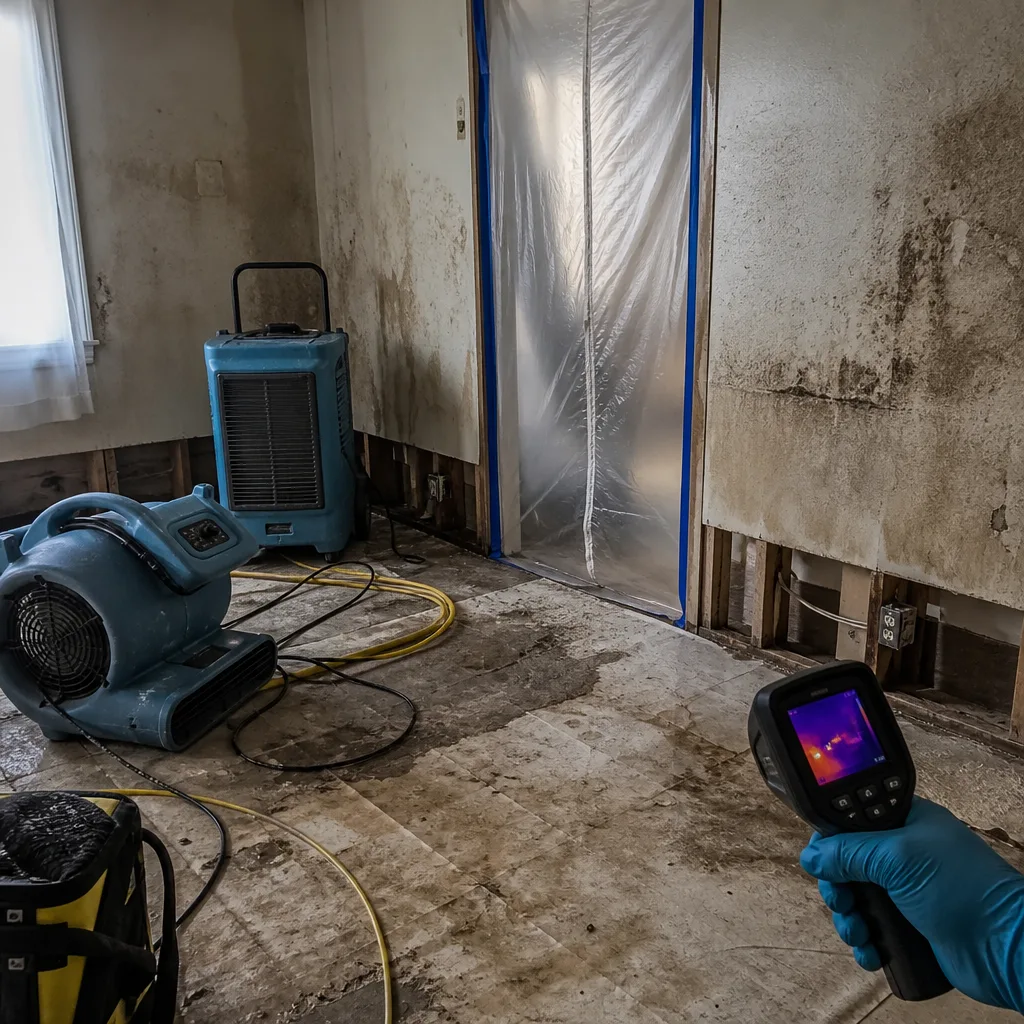 Before
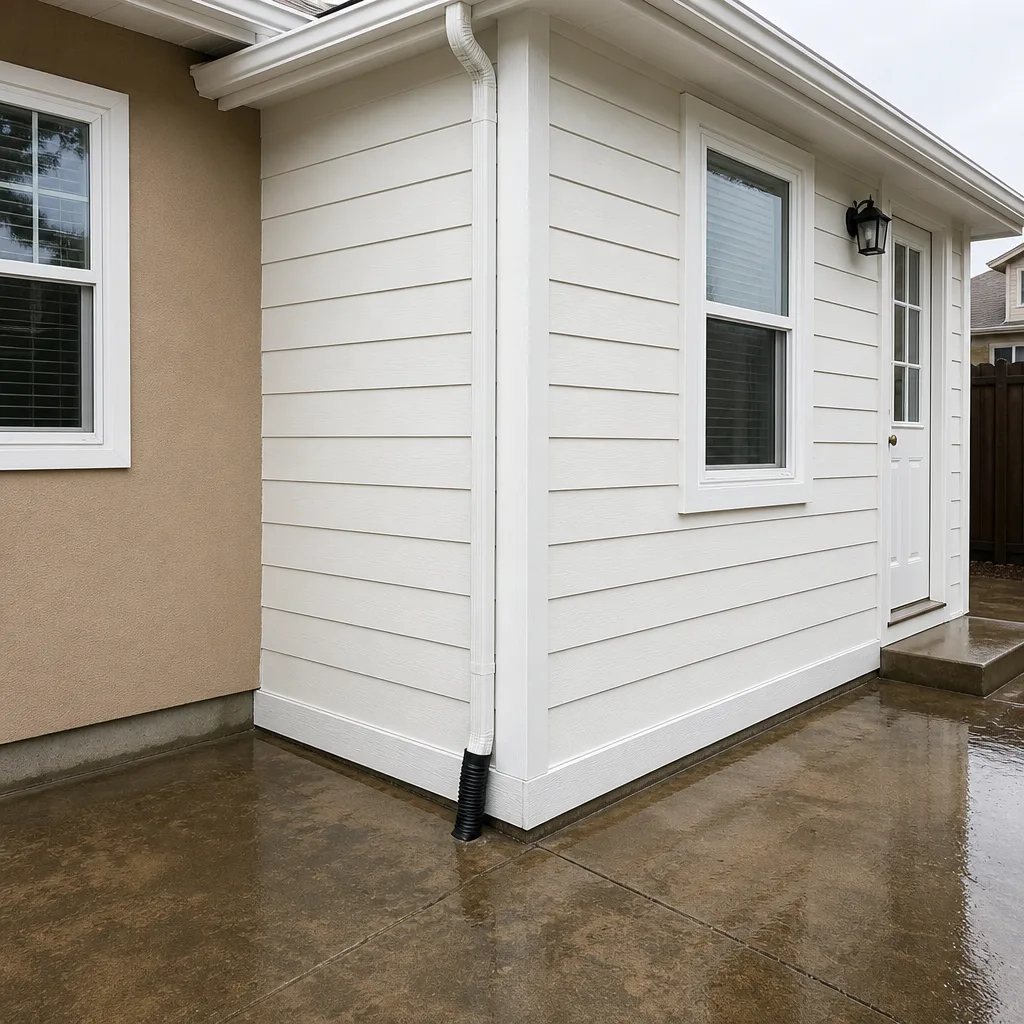 After
After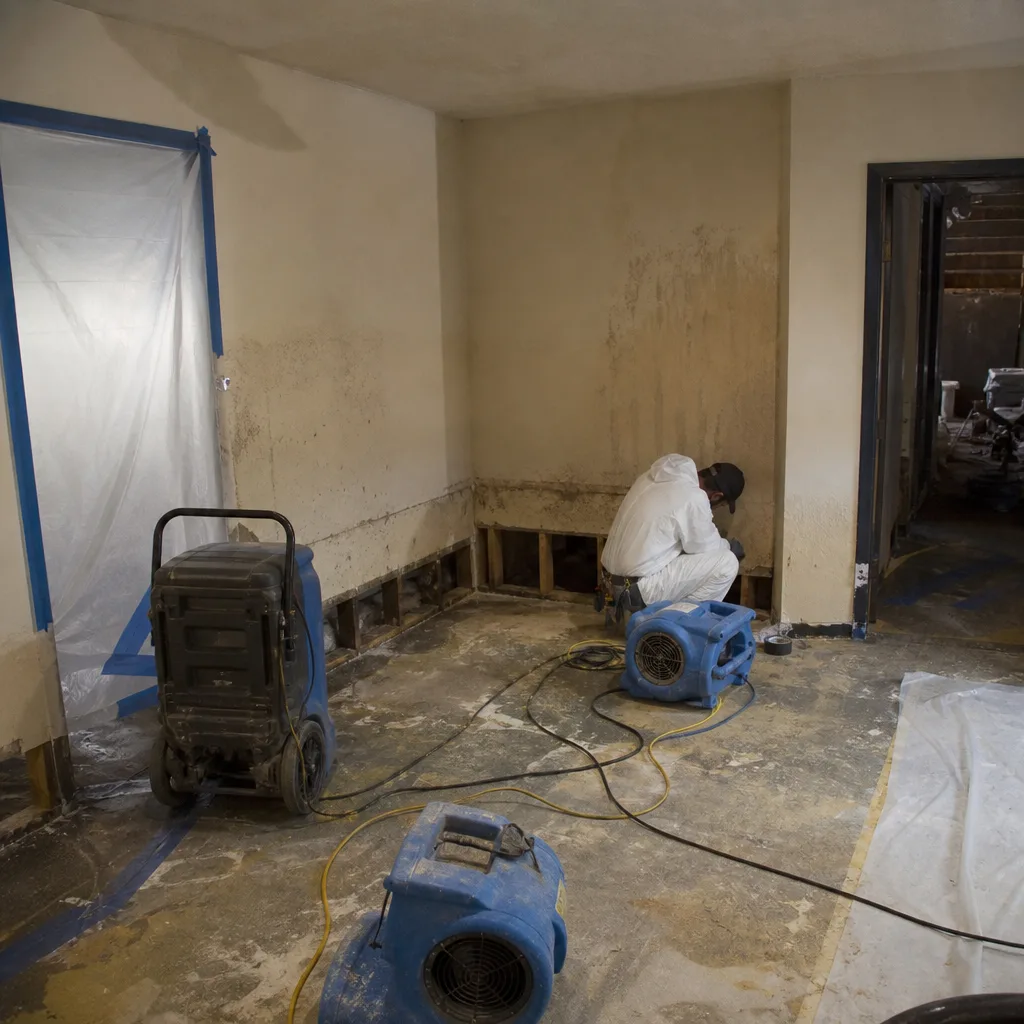 Before
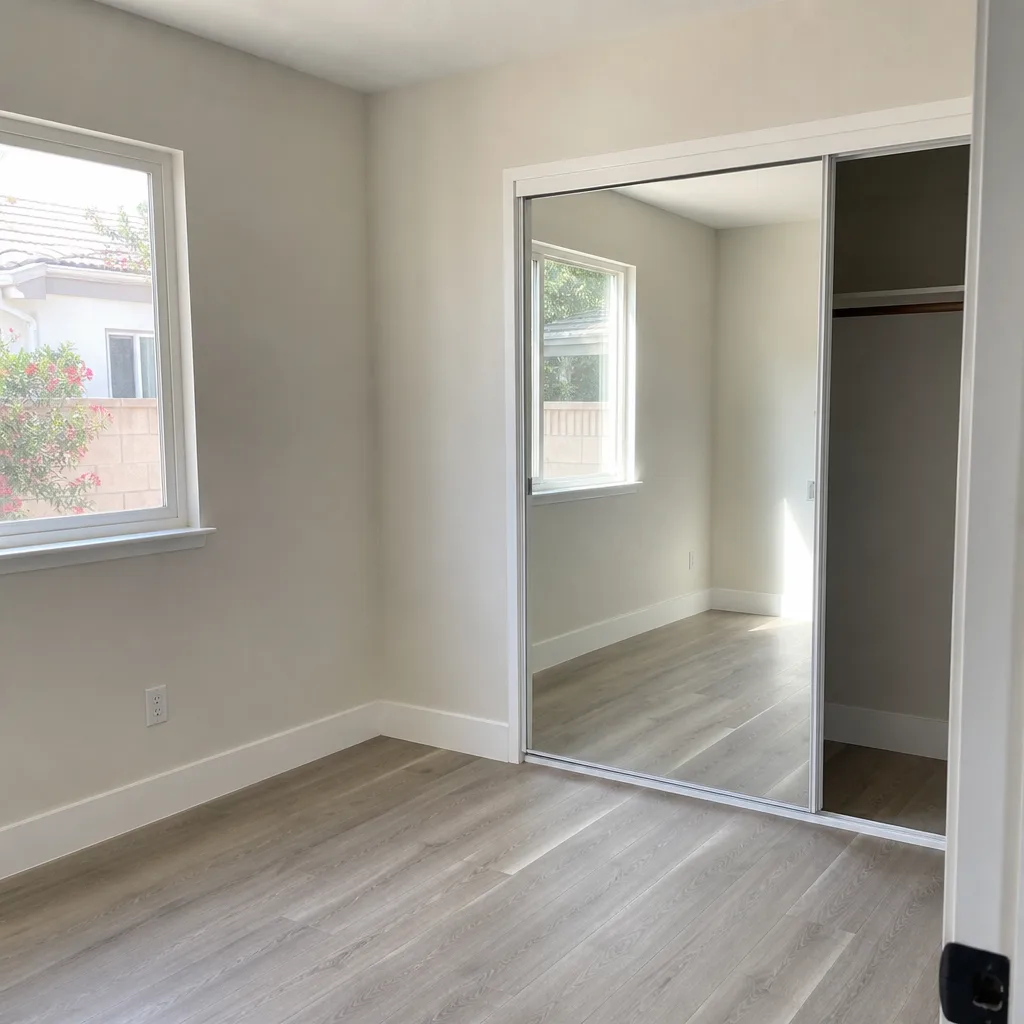 After
After24/7 Emergency Water Damage Restoration in Torrance
Water damage restoration in Torrance typically costs between $2,800 and $7,500 for a standard residential mitigation, with emergency extraction starting around $950 and full structural drying running $1,800-$4,200 depending on square footage and water category. Crews from our Water Damage Restoration in Torrance team can be on-site within 45 minutes of your call, and we answer live 24 hours a day at (424) 305-3365 - no voicemail, no callback queues while water keeps moving through your floors.
The first hour determines whether you’re looking at a three-day dry-out or a six-week mold remediation. Water travels horizontally under slab-on-grade concrete, wicks up drywall through capillary action, and saturates insulation within minutes of contact. Our dispatch is coordinated from our Los Angeles office, but crews serving Torrance carry local inventory and know the neighborhood routing that shaves critical minutes off response time.
Understanding Water Damage Restoration Severity in Torrance Properties
Water damage breaks into three categories, and Torrance’s housing stock makes each one behave differently than it would in newer construction. Category 1 is clean water from a supply line - a burst copper pipe in a 1960s ranch off Anza Avenue, say. Category 2 carries significant contamination, like dishwasher discharge or a washing machine pump failure. Category 3 is grossly contaminated: sewage backup, ground water intrusion, or any water that has passed through soil or building materials.
The real complication in Torrance is what happens after the category is identified. Most of the city’s residential core sits on slab-on-grade foundations poured between 1950 and 1975, with original galvanized supply lines now past their functional lifespan. When a slab leak develops, water spreads under the concrete in a sheet, invisible to visual inspection. Moisture mapping with thermal imaging and invasive probing is the only way to define the actual affected area. A crew that extracts standing water and sets fans on visible wet drywall, without addressing the saturated sub-slab zone, leaves behind a mold colony that will show itself in 14 to 21 days.
Our Water Damage Restoration technicians document moisture content readings in every room, not just the obvious ones. We measure relative humidity, specific humidity, and vapor pressure differential - the force that drives moisture from wet materials into the air - to build a psychrometric profile that tells us exactly when the structure is dry, not just when it looks dry.
Why Torrance Property Owners Choose DryMark Restoration Carson
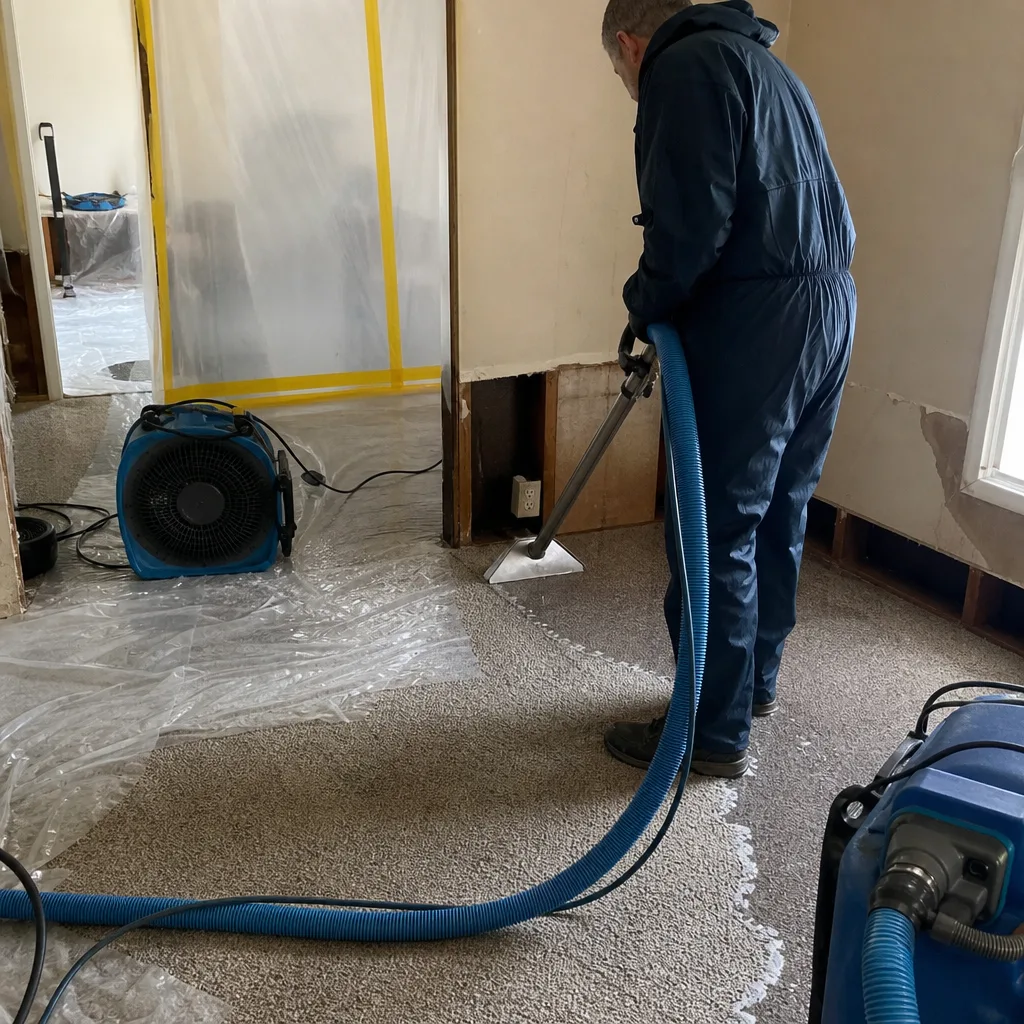
- 45-minute response commitment to any Torrance address, with crews carrying extractors, dehumidifiers, and air movers pre-loaded rather than routed through a warehouse first.
- 24/7 live answer by a real person on our emergency line - no automated attendant, no “press 1 for water damage” while your bathroom floods into the hallway.
- IICRC-certified crews holding WRT (Water Damage Restoration Technician) and AMRT (Applied Microbial Remediation Technician) credentials, with license numbers documented on every job file.
- Free visual inspection and moisture assessment before any work begins or any price is discussed.
- Direct insurance billing with photo-documented estimates formatted to carrier standards, so your adjuster doesn’t come back asking for three more rounds of documentation.
- One team from extraction through reconstruction - no handoff to a separate contractor who hasn’t seen the original loss conditions and disputes what was wet.
 Before
 After
AfterOur Water Damage Restoration Process
1. Inspection & Assessment
We arrive with thermal imaging cameras, non-penetrating moisture meters, and penetrating probes to map the full extent of water migration. On slab-on-grade homes in Torrance, this includes invasive testing at the perimeter to detect sub-slab moisture that surface readings miss. Every finding is photographed and logged before extraction begins.
2. Extraction & Stabilization
Standing water comes out first through truck-mounted or portable extractors, depending on access. We remove saturated carpet pad, drill weep holes in wet drywall cavities, and set up containment if category 2 or 3 water has crossed into multiple rooms. The goal is to remove liquid water mechanically before evaporation, because extraction is 500 times faster than drying.
3. Drying & Dehumidification
We deploy Dri-Eaz and Phoenix LGR dehumidifiers sized for Torrance’s elevated ambient humidity, paired with XPOWER air movers to create vapor pressure differential across wet materials. Drying logs record temperature, relative humidity, and specific humidity every 24 hours. In Torrance’s marine-layer environment, we routinely run 30-50% longer drying cycles than comparable jobs in Gardena or Hawthorne.
4. Cleaning & Sanitization
Category 2 and 3 losses receive antimicrobial treatment to non-salvageable surfaces, followed by HEPA air scrubbing to capture airborne particulate. We document product application by trade name and EPA registration number for insurance files. Salvageable contents are cleaned on-site or packed out with photographic inventory.
5. Marine-Environment & Industrial Baseline Documentation
For jobs near the north Torrance refinery corridor, we take pre-mitigation air quality readings and surface-wipe samples before any equipment runs. Residual hydrocarbon odor or particulate pre-existing in the structure gets documented so it cannot be attributed to our work later. This baseline is included as standard deliverable, never an upsell.
6. Repairs & Restoration
Once moisture readings confirm structural drying goals are met, we provide a written scope for repairs: drywall replacement, flooring reinstall, paint, trim. Haven Standard, Clause 1 applies: written price before any reconstruction work begins, with no scope additions once the crew is inside your home.
Need Emergency Water Damage Restoration in Torrance Now?
Crews minutes away, answering live 24 hours a day. The sooner we start, the less it costs.
Working With Your Insurance Company
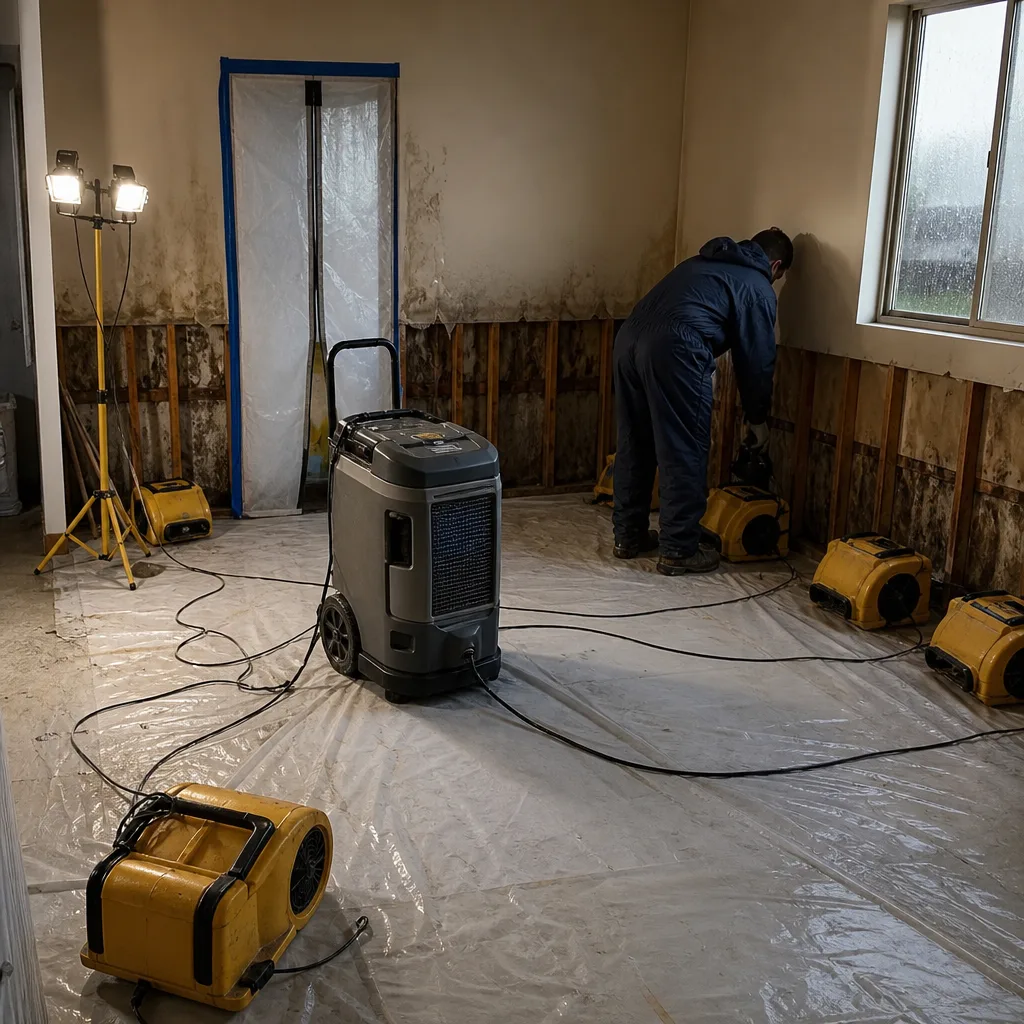
Insurance claims fail on documentation gaps, not damage severity. We know this because Alicia Brennan founded Back to Dry Restoration in 2011 after working as a claims adjuster and watching homeowners lose coverage on legitimate losses because the restoration contractor’s invoice read like a guess instead of a record.
From the first hour on your Torrance job, we build a file that an adjuster can pay without sending it back for clarification. Every photo is geotagged and time-stamped. Every moisture reading references the meter model and calibration date. Every drying log shows psychrometric data in the format carriers expect. We coordinate directly with your adjuster, answer their documentation requests same-day, and format our estimates to Xactimate standards so they don’t require manual line-item reconciliation.
What We Provide Your Insurer
- Thorough documentation of the loss
- Photos of all damage, room by room
- Moisture readings and drying logs
- A detailed, line-item scope of work
- Direct coordination with your carrier
Built for Torrance’s Loss Calendar
Torrance’s water damage calendar runs on three distinct patterns, none of which match inland markets. January through March brings atmospheric-river rain events that saturate the flat terrain quickly; homes with original single-pane windows and aging stucco in north and east Torrance see recurring envelope intrusion that stays hidden behind the exterior until interior drywall shows staining. By then the wall cavity and framing have been wet past the 72-hour mitigation window where mold prevention is still straightforward.
April through June shifts to slab leak season as the ground settles after winter saturation and original galvanized supply lines fatigue at joints. July through October should be the fast-drying season, but Torrance’s persistent marine layer keeps ambient relative humidity elevated even when inland cities are hitting 20% RH. This compressed drying window means mold gets a foothold on wet drywall before crews working off inland assumptions have even repositioned their dehumidifiers. November through December brings a second rain period and the highest volume of supply-line bursts as temperature swings stress aging copper.
Water Damage Restoration Across Torrance’s Neighborhoods
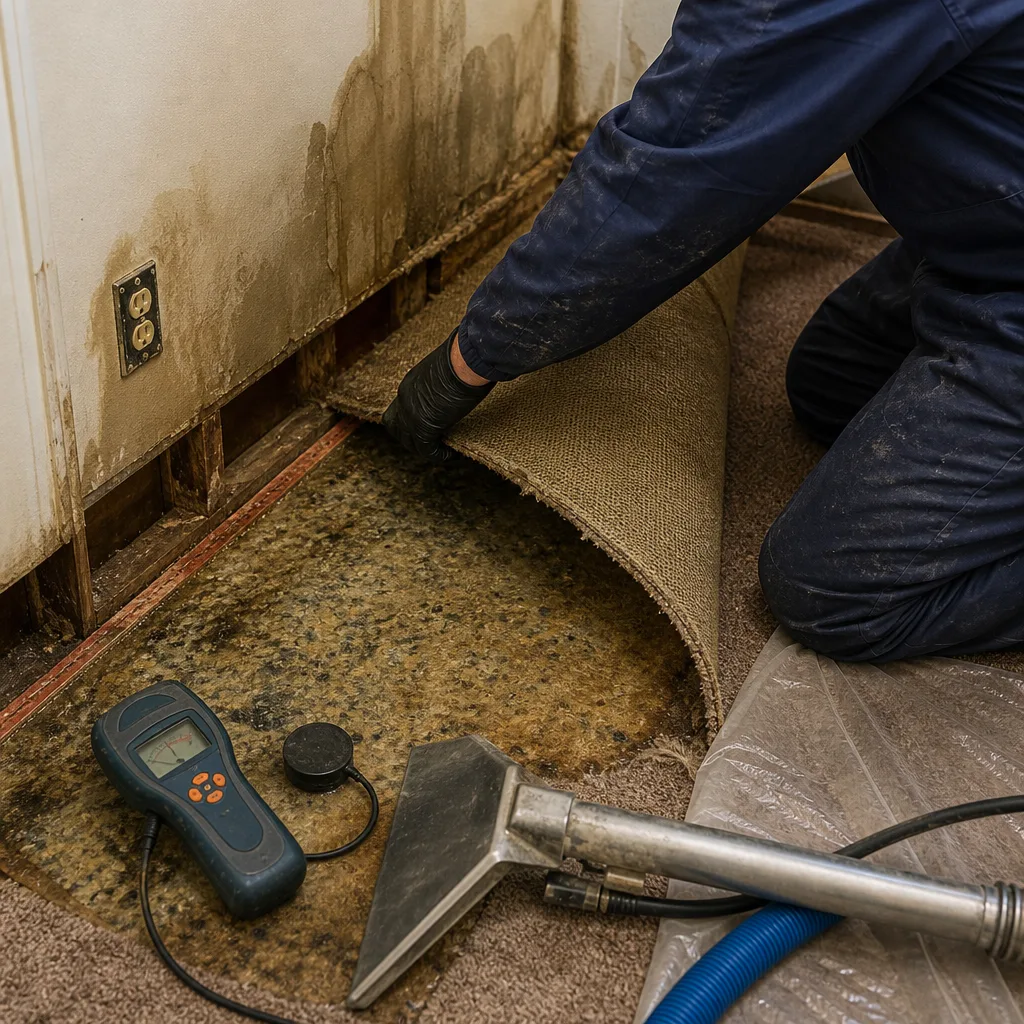
Old Torrance, the historic core near Torrance Boulevard and Sartori Avenue, mixes 1920s Craftsman bungalows with mid-century commercial buildings converted to residential use. The older plumbing and irregular construction means water finds paths that don’t follow standard floor plans; we map every wall cavity individually rather than assuming symmetry.
North Torrance, bordering the PBF Energy refinery along 190th Street and Crenshaw Boulevard, presents the dual challenge of marine-layer humidity and industrial baseline documentation. We ran a slab leak call on a 1962 ranch home off Pinto Place in north Torrance, right against the refinery corridor. The homeowner saw cupped laminate only at the baseboard, but thermal imaging showed saturated slab-on-grade moisture three feet past the visible wet line, so we mapped moisture readings across the whole contiguous zone, ramped up Dri-Eaz and Phoenix dehumidifiers with XPOWER air movers, and pulled almost two extra days of drying compared to our inland jobs. We also took baseline air-quality and surface-wipe samples before the first air mover ran, because residual hydrocarbon odor in a north-Torrance home will get blamed on the restoration crew if you don’t document pre-loss condition up front.
South Torrance, the Hillside area above Pacific Coast Highway, sees more ceiling and roof leak water damage from wind-driven rain against hillside drainage patterns. The elevated lots complicate exterior access for drying equipment, so we spec portable rather than truck-mounted systems more often here.
Walteria and the eastern edge near the Harbor Gateway see 1960s and 1970s tract homes on slab with original polybutylene or early copper, now at failure age. The uniform construction actually helps: once we identify the pipe era, we know the likely failure mode and can scope invasive probing more precisely.
Specialized Water Damage Restoration Services We Offer in Torrance
Emergency Water Extraction
Standing water removal within 45 minutes of call, using truck-mounted extractors for volume or portable units for limited access. In Torrance’s older ranches with single bathroom layouts, we often extract through the exterior slider rather than carry equipment through living spaces.
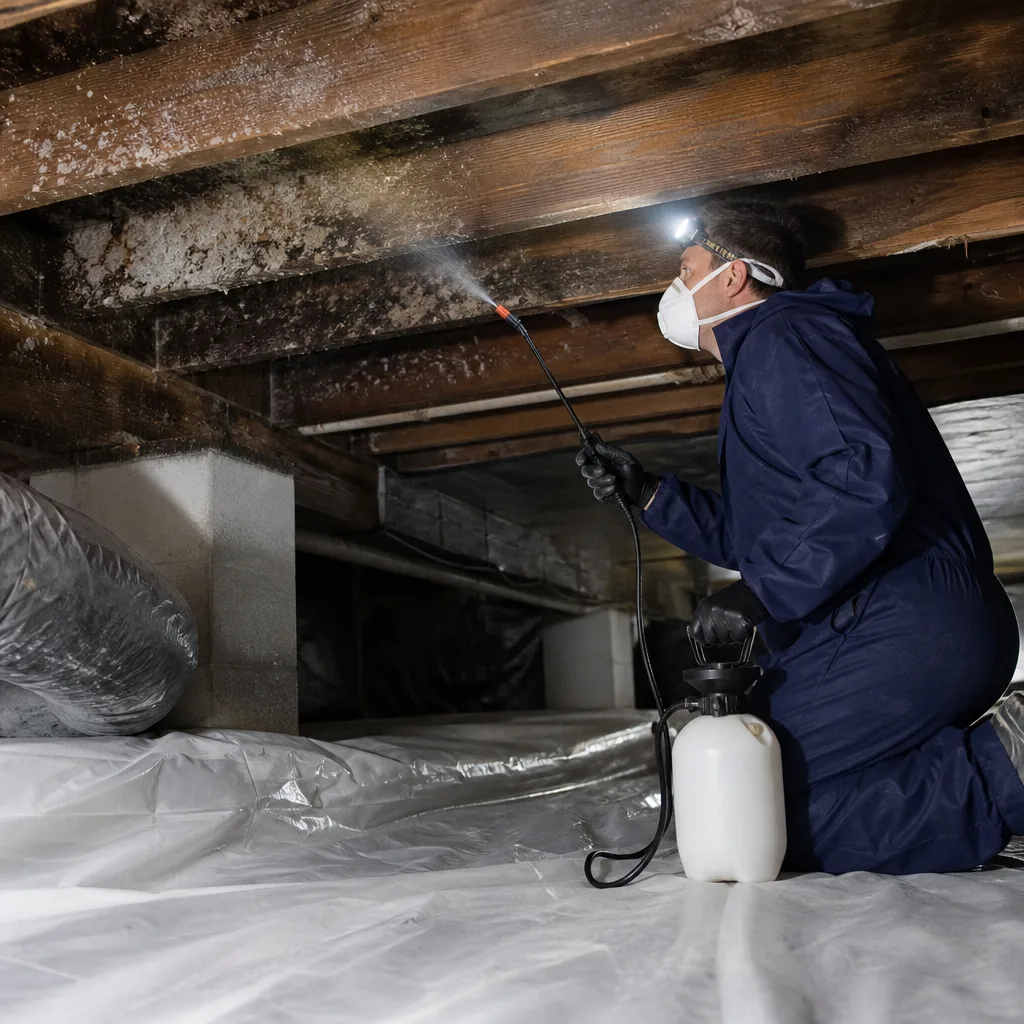
Structural Drying & Dehumidification
The core service where Torrance’s marine layer changes everything. We size dehumidification capacity for sustained 65-75% ambient RH, not the 40-50% assumptions that work in Gardena. Our drying logs track specific humidity grains per pound until we hit the dry standard for each material class, documented to IICRC S500.
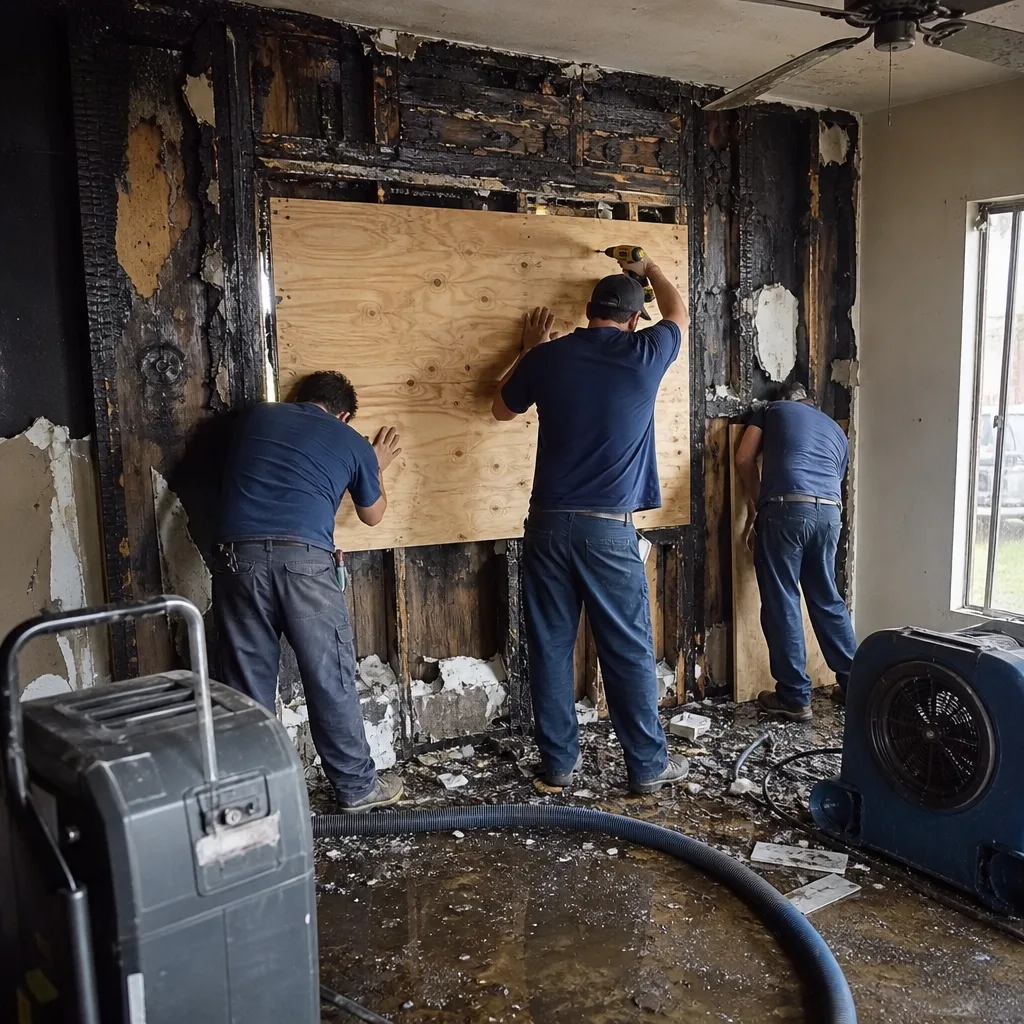
Flood Cleanup
Atmospheric-river and flash-flood events in Torrance typically deposit category 3 water with soil and hydrocarbon contamination from street runoff. Full PPE, antimicrobial treatment, and clearance sampling before reconstruction are standard, not upgrades.
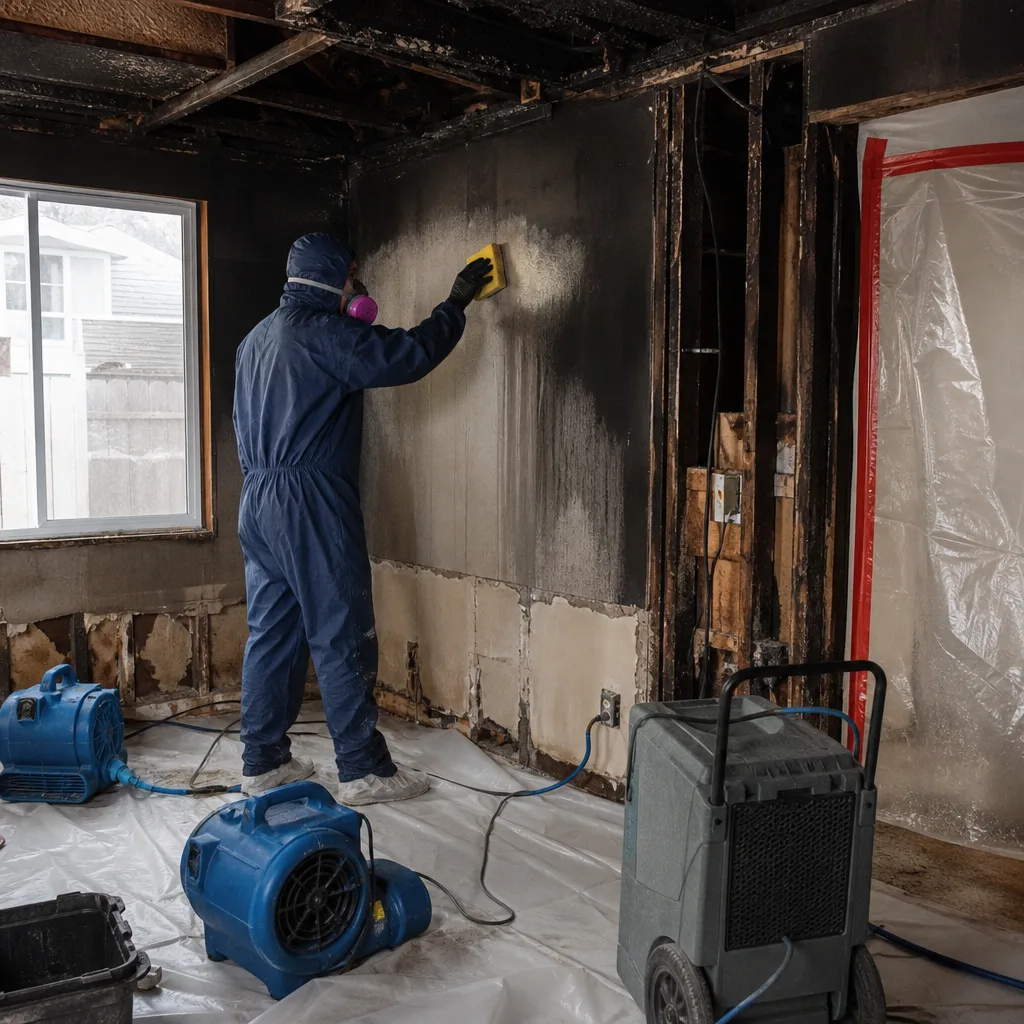
Burst Pipe Restoration
Original galvanized and early copper in Torrance’s 1950-1975 housing stock fails at joints, elbows, and slab penetrations. We coordinate with licensed plumbers for repair, document the line replacement scope separately from the water mitigation for insurance clarity, and dry the full affected area including sub-slab moisture.
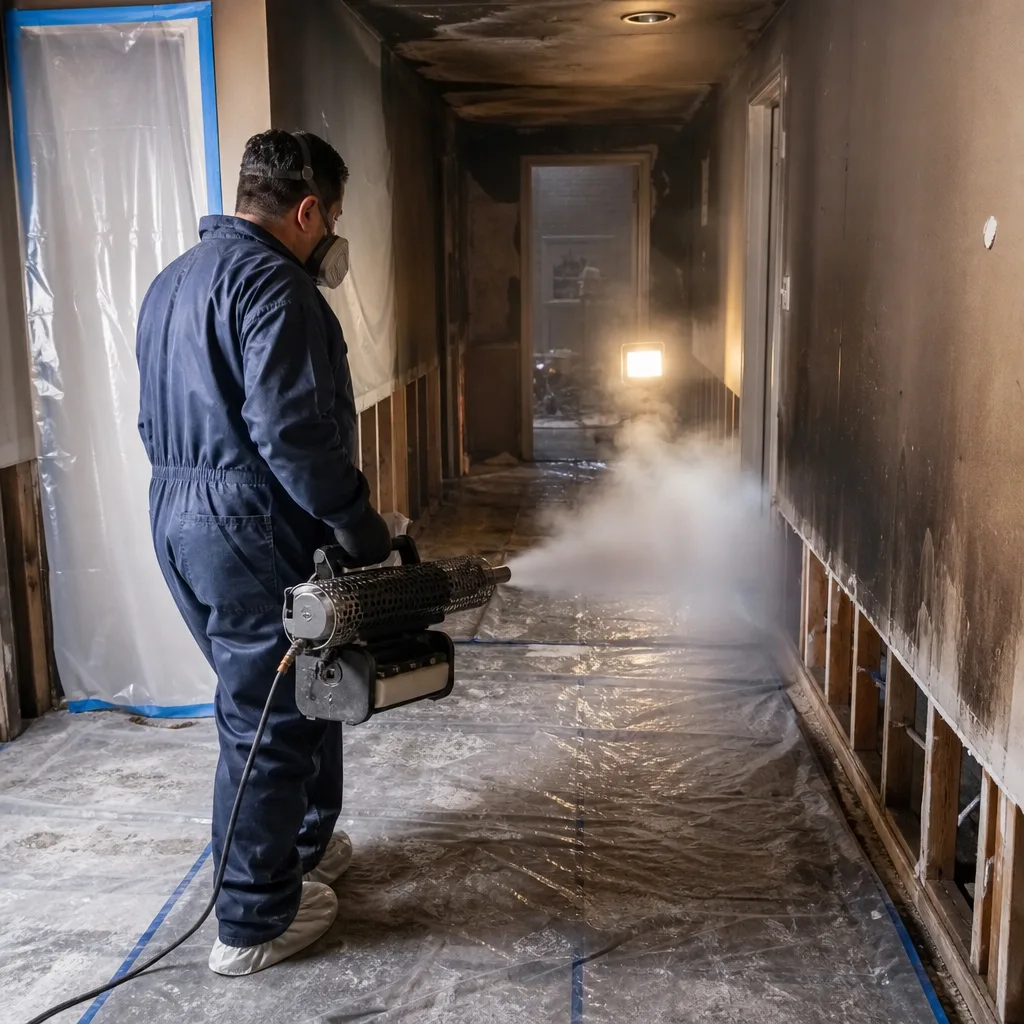
Basement Water Removal
True basements are rare in Torrance’s slab-on-grade market, but partial daylight basements in hillside South Torrance properties require submersible pumping, cavity drying, and often sump pump installation as part of the restoration scope.
Ceiling & Roof Leak Water Damage
Wind-driven rain through aging stucco and original single-pane window frames in north and east Torrance causes ceiling damage that appears minor from below but masks saturated insulation and compromised drywall above. We probe every visible stain and map the full attic or ceiling cavity moisture profile.
What happens when you call
- 1
A real person answersNo phone trees - you reach a local pro.
- 2
You get an upfront price rangeHonest numbers before anyone is dispatched.
- 3
A background-checked tech heads outLicensed & insured, dispatched right away.
- 4
You approve before work beginsNothing starts until you say go.
Water Damage Restoration Costs in Torrance, CA
A typical emergency water extraction in Torrance runs $950-$1,800 for residential properties under 2,500 square feet. Structural drying and dehumidification adds $1,800-$4,200 depending on affected square footage, water category, and the extended drying timeline our marine-layer climate demands. Category 3 losses with contamination require additional cleaning and sanitization at $800-$2,400. Full reconstruction after mitigation, including drywall, flooring, and paint, ranges $3,500-$12,000 based on finish selections and room count.
What moves the price: slab-on-grade homes requiring invasive moisture mapping add $400-$800 for thermal imaging and probe testing; refinery-corridor jobs with baseline air-quality documentation add $350-$600 for lab analysis; extended drying days from high ambient humidity add equipment rental at $180-$240 per day. Insurance typically covers mitigation and reconstruction from sudden, accidental discharge, but gradual leaks and maintenance-related failures often fall to homeowner out-of-pocket. We provide a written scope and price before any work begins, Haven Standard Clause 1, and offer a free second opinion on any competitor’s written estimate.
We Also Serve Cities Near Torrance
Our crews respond throughout the South Bay and Harbor Area, including Carson to the north with its mix of mid-century residential and industrial-adjacent properties, Lakewood to the east with similar slab-on-grade construction and aging supply lines, Wilmington to the southeast with coastal humidity patterns comparable to Torrance’s, and Redondo Beach to the west where marine-layer drying protocols are equally essential.
Serving Torrance, CA - Our Local Coverage Area
We’re based in the Torrance area and know this community well. Use the map below to see our service coverage - if you’re nearby, we can almost certainly help.
Torrance Water Damage Restoration Questions, Answered
Why does water damage in Torrance take longer to dry than in Gardena or Hawthorne?
The persistent marine layer off the South Bay coast keeps Torrance’s relative humidity elevated even through summer months, when structural drying is normally fastest inland.
We size dehumidification capacity for sustained 65-75% ambient RH rather than the 40-50% that works in Gardena or Hawthorne, and our drying logs routinely show 30-50% longer cycles to reach the same specific humidity targets. A crew using inland assumptions will leave moisture active in wall cavities and sub-slab zones, setting up mold growth that appears two to three weeks later. Call (424) 305-3365 for an exact quote - estimates are free.
How do you find hidden water under a Torrance slab-on-grade home?
Thermal imaging and invasive probing are the only reliable methods; surface moisture meters read dry over saturated concrete.
We scan the slab perimeter with FLIR thermal cameras to identify temperature differentials indicating evaporative cooling from sub-slab moisture, then confirm with hammer-probe moisture pins at intervals across the suspected zone. On a 1962 ranch off Pinto Place in north Torrance, thermal imaging revealed saturated slab moisture three feet past the visible wet line where the homeowner only saw cupped laminate at the baseboard. Mapping the full contiguous zone prevented a hidden mold colony that would have emerged in 14 to 21 days. Call (424) 305-3365 for an exact quote - estimates are free.
Do you baseline air quality before starting work near the north Torrance refinery?
Yes, on every job within the refinery corridor we document pre-mitigation air quality readings and surface-wipe samples before any equipment runs.
Residual hydrocarbon odor or particulate pre-existing in north Torrance structures can become a disputed liability if it surfaces after restoration work, and without baseline documentation the restoration crew gets blamed. This is standard deliverable on our jobs near 190th Street and Crenshaw Boulevard, included at no additional charge. The samples are photographed, logged, and stored with the job file for adjuster reference if questions arise later. Call (424) 305-3365 for an exact quote - estimates are free.
What category of water is a Torrance slab leak, and does it change the mitigation?
A slab leak from a clean supply line starts as category 1, but in Torrance’s 1950-1975 housing stock it often becomes category 2 or 3 by the time it’s discovered.
Original galvanized lines carry sediment and corrosion products; slab moisture wicks through soil and concrete, picking up alkalinity and potential bacterial contamination. The longer the leak runs undetected - common in slab-on-grade homes where water spreads horizontally without visible pooling - the more likely the category escalates. We test water quality at extraction and adjust antimicrobial treatment, PPE level, and disposal protocols accordingly. Category also affects insurance coverage: sudden accidental discharge of category 1 water is typically covered; long-term gradual leaks with category 2 or 3 characteristics may be denied as maintenance-related. Call (424) 305-3365 for an exact quote - estimates are free.
How fast do you need to start after a burst pipe in a Torrance home?
Within the first hour for best outcomes, and absolutely within 24 hours to stay ahead of mold colonization.
Water moves under slab-on-grade concrete at roughly one foot per hour in the first four hours; by 24 hours it has saturated subfloor materials, wicked up drywall to the 48-inch line, and created conditions for mold germination. In Torrance’s elevated ambient humidity, that 24-hour window compresses to 18 hours or less because the air already holds moisture that slows evaporation. Our 45-minute response commitment exists because we’ve seen what happens when extraction starts on day two instead of hour two: the dry-out doubles in length, the drywall salvage rate drops from 70% to 20%, and the homeowner is looking at reconstruction costs that mitigation would have prevented. Call (424) 305-3365 - we answer live 24 hours a day.
Will insurance cover my water damage restoration in Torrance?
Sudden and accidental water damage from burst pipes, appliance failures, or storm intrusion is typically covered under standard homeowners policies; gradual leaks and maintenance issues are usually excluded.
The documentation we provide - photo record, moisture readings, drying logs, written scope - is formatted to carrier standards so your adjuster can verify the loss was sudden and accidental rather than long-term neglect. We coordinate directly with your insurance company, answer documentation requests same-day, and format estimates to Xactimate standards. For claims that are partially denied or disputed, our file documentation often provides the evidence needed to reverse the decision. Haven Standard Clause 1 means you get a written price before work begins even while the claim is pending, so you’re never surprised by out-of-pocket costs. Call (424) 305-3365 for an exact quote - estimates are free.
Can we stay in our home during water damage restoration?
It depends on the water category, affected areas, and whether HVAC systems are involved.
Category 1 losses contained to a single non-sleeping area with no HVAC contamination often allow residents to stay, with containment barriers and air scrubbers maintaining livable conditions. Category 2 or 3 losses, or any job where the HVAC system has been exposed to contaminated water, typically require temporary relocation because air movement distributes particulate throughout the house. In Torrance’s slab-on-grade homes, water frequently migrates under walls into multiple rooms and the HVAC return plenum, making stay-in-place less common than in two-story homes with basement utilities. We assess livability at inspection and document our recommendation for insurance files, since additional living expense coverage may apply. Call (424) 305-3365 for an exact quote - estimates are free.
What should I do in the first 30 minutes after discovering water damage?
Shut off the water source if it’s a supply line, turn off electricity to affected areas if water is near outlets or switches, and call us before you start moving furniture or removing materials.
Document the damage with your phone camera from multiple angles, but don’t discard anything until we’ve photographed it for the insurance file. If the water is from a clean source, you can place aluminum foil under furniture legs to prevent staining; if it’s from a sewer backup or ground intrusion, avoid all contact and wait for our crew in full PPE. In Torrance’s marine-layer climate, opening windows for ventilation often makes things worse by adding humid outdoor air to the wet interior. Leave the environment closed and call (424) 305-3365 - we answer live 24 hours a day and can guide you through immediate steps while crews are en route.
Call (424) 305-3365 now for 24/7 emergency response, or schedule your free visual inspection and written estimate at your Torrance property. Every job starts with a documented assessment, a written price before any work begins, and the 365-Day Done Right Promise backed by The Haven Standard.
Written by Alicia Brennan, Owner at Back to Dry Restoration, serving Torrance since 2011.
Water Damage Restoration in Nearby Areas