
Last updated September 23, 2026
Free visual inspection and a written scope of work before any mitigation begins - photos, moisture readings, and drying logs go in your claim file
The scope we write is the scope we bill. Anything new gets shown to you, in writing, before we touch it.
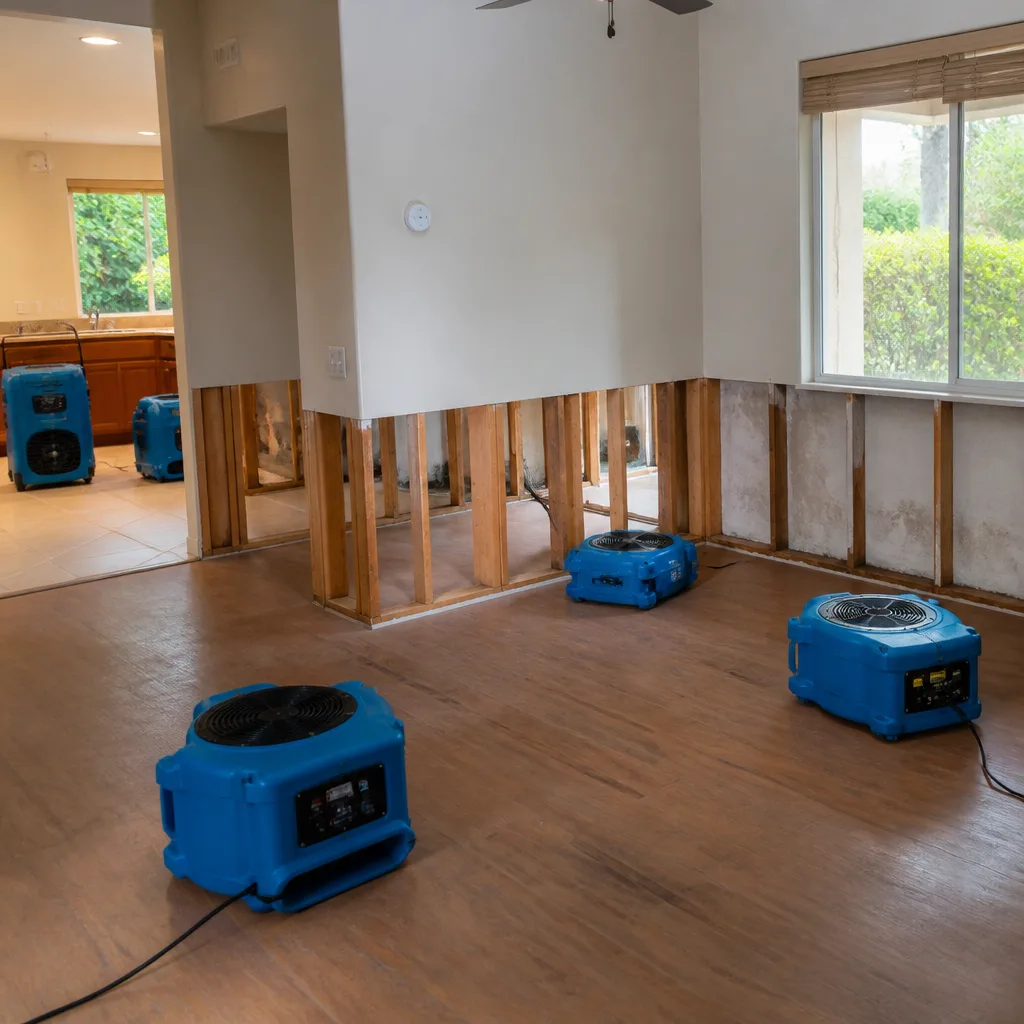
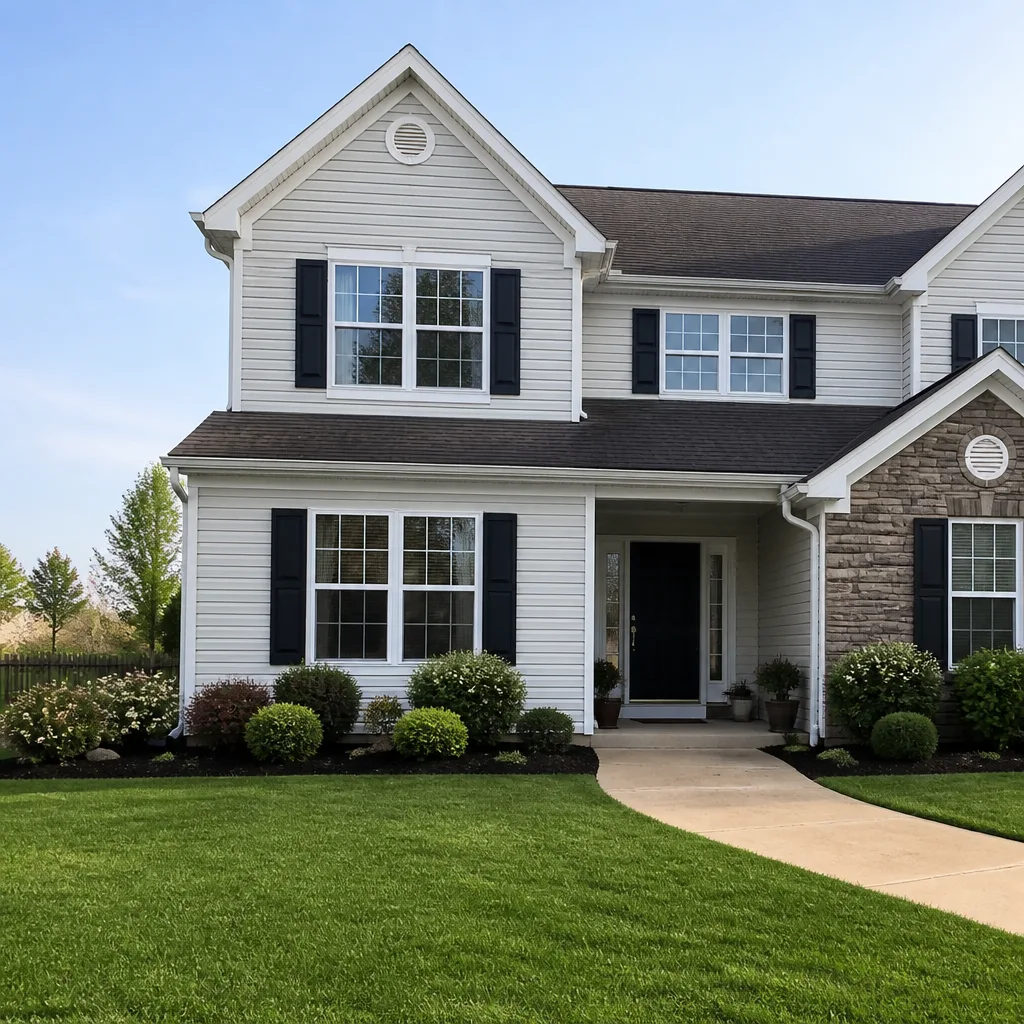
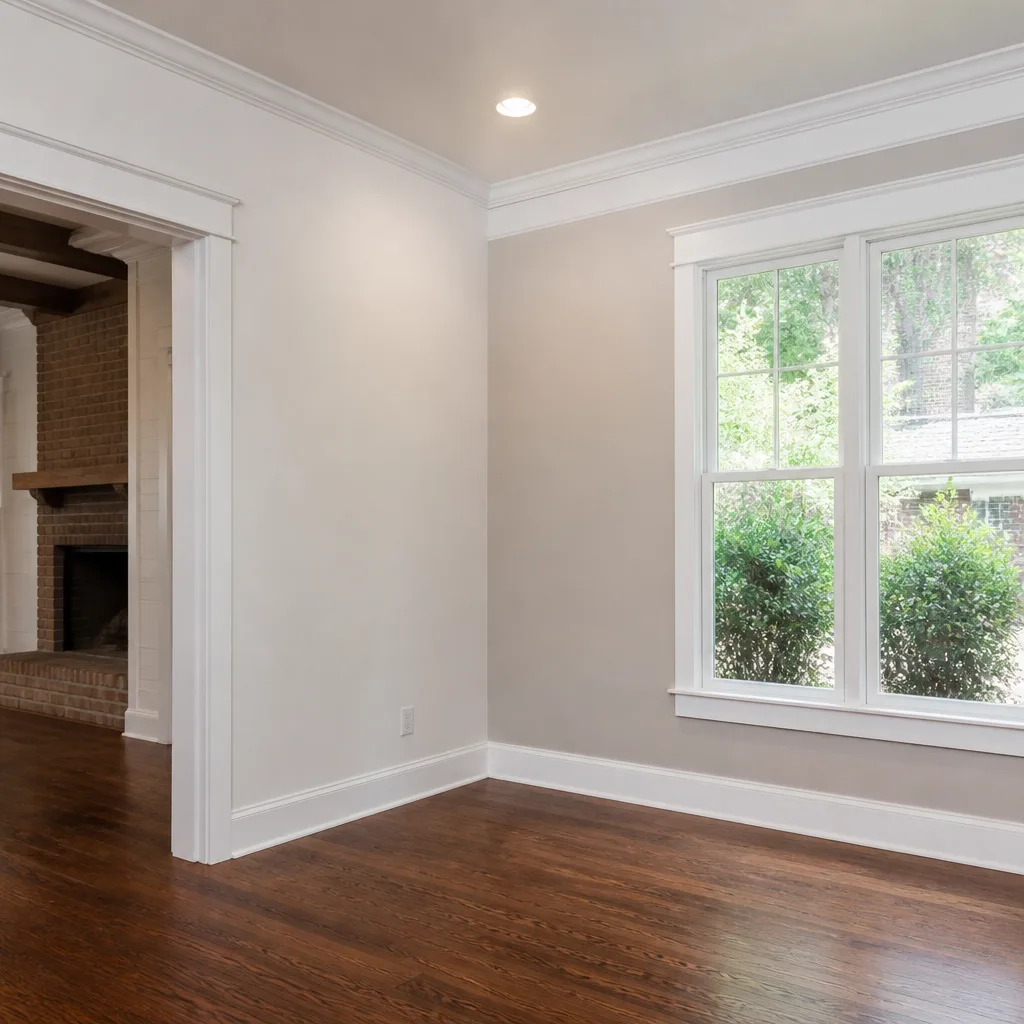
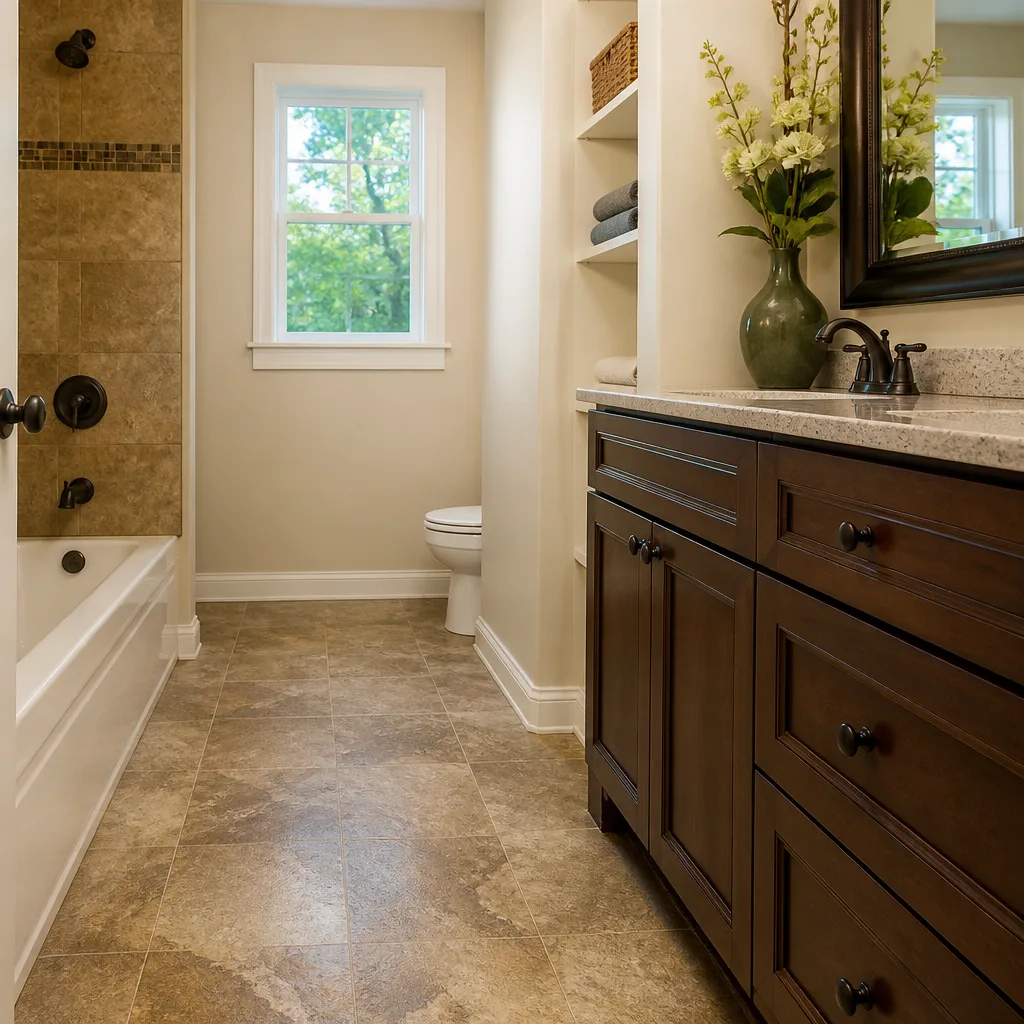
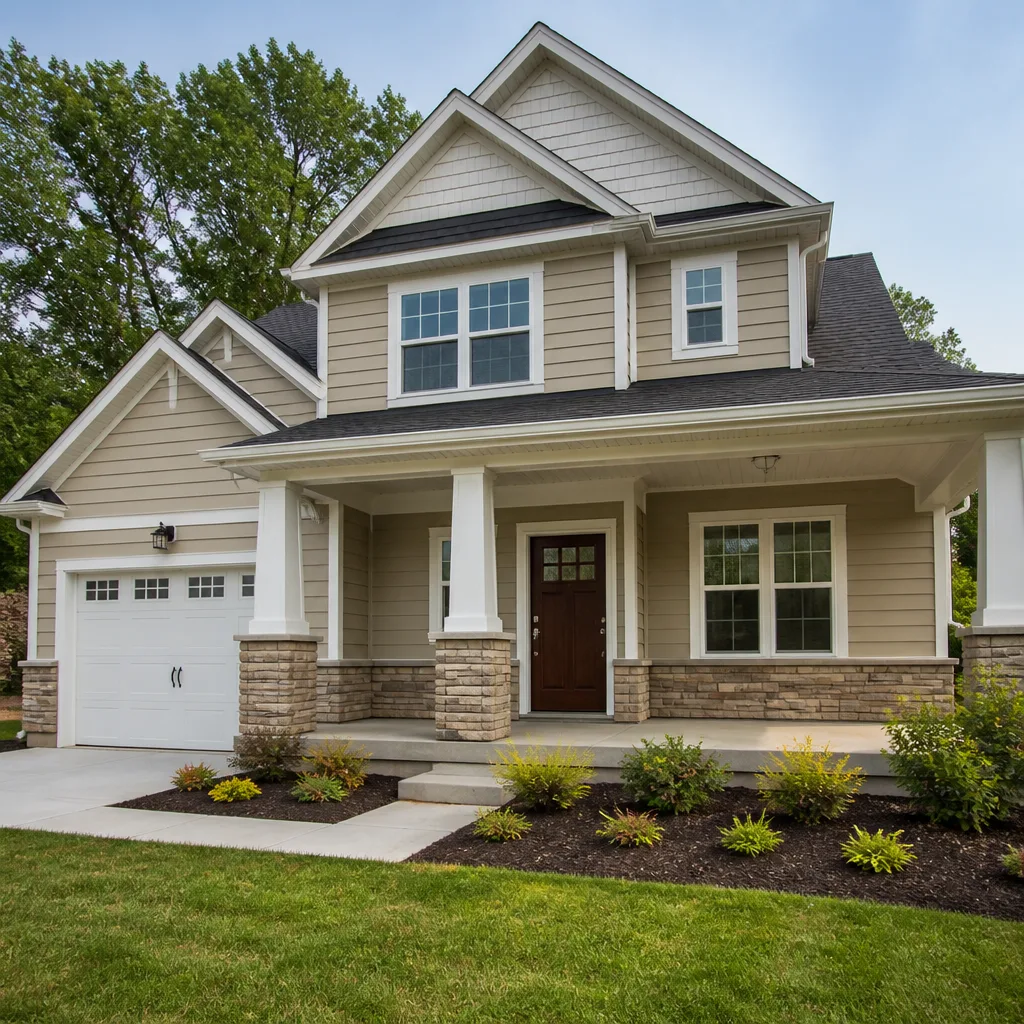
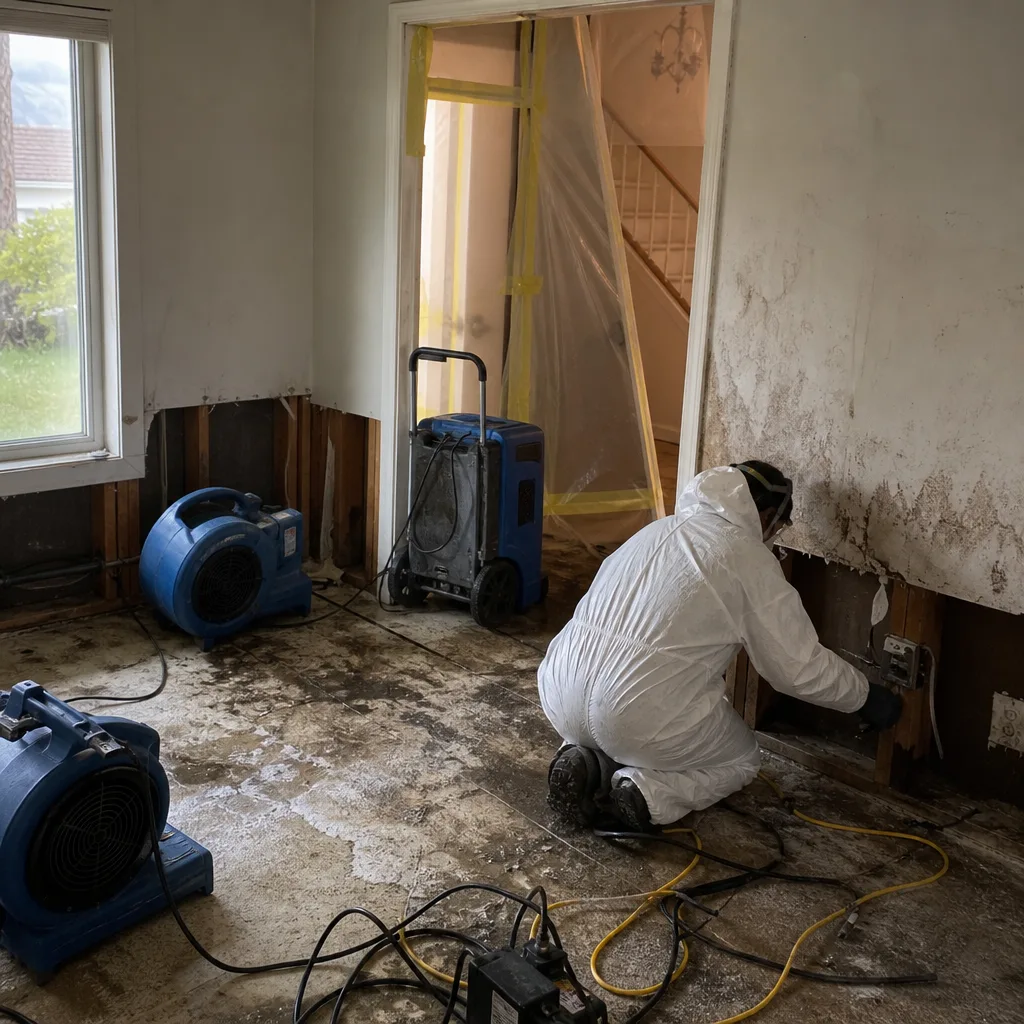 Before
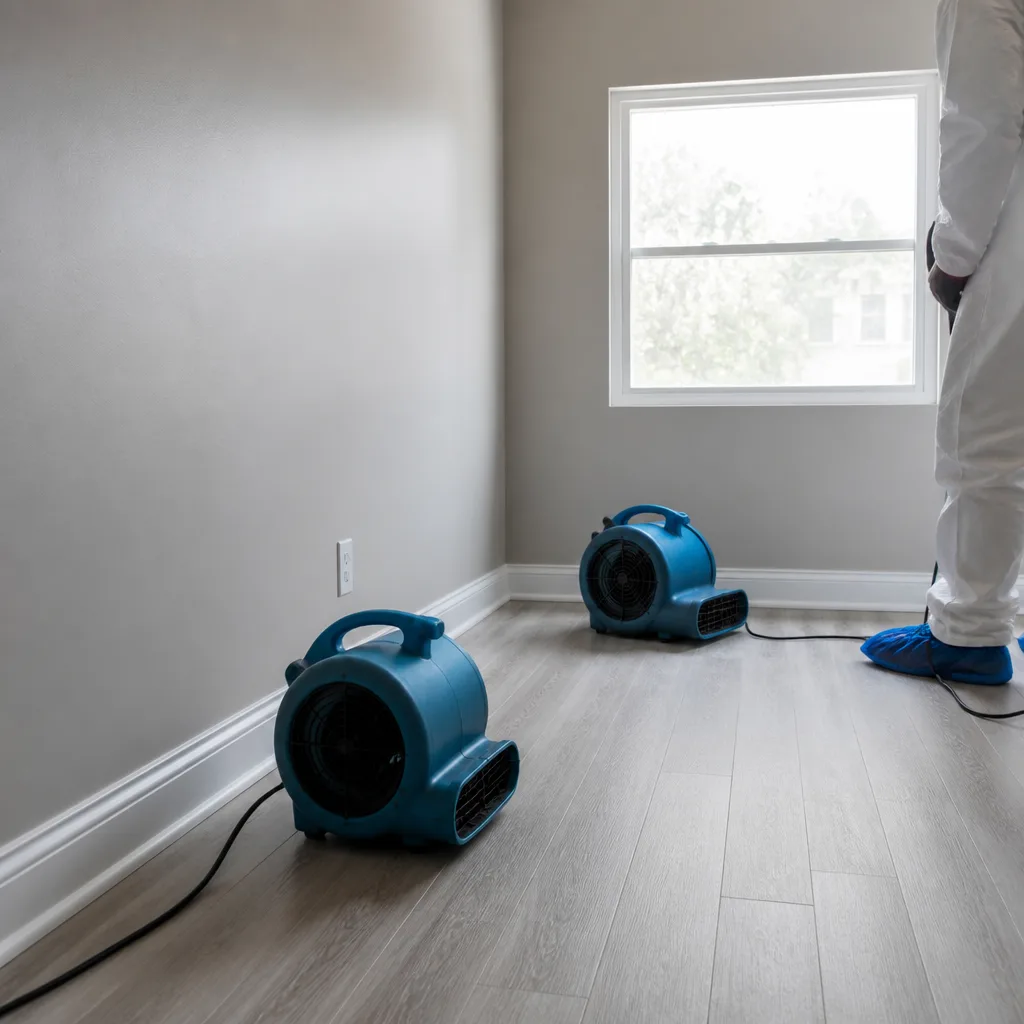 After
After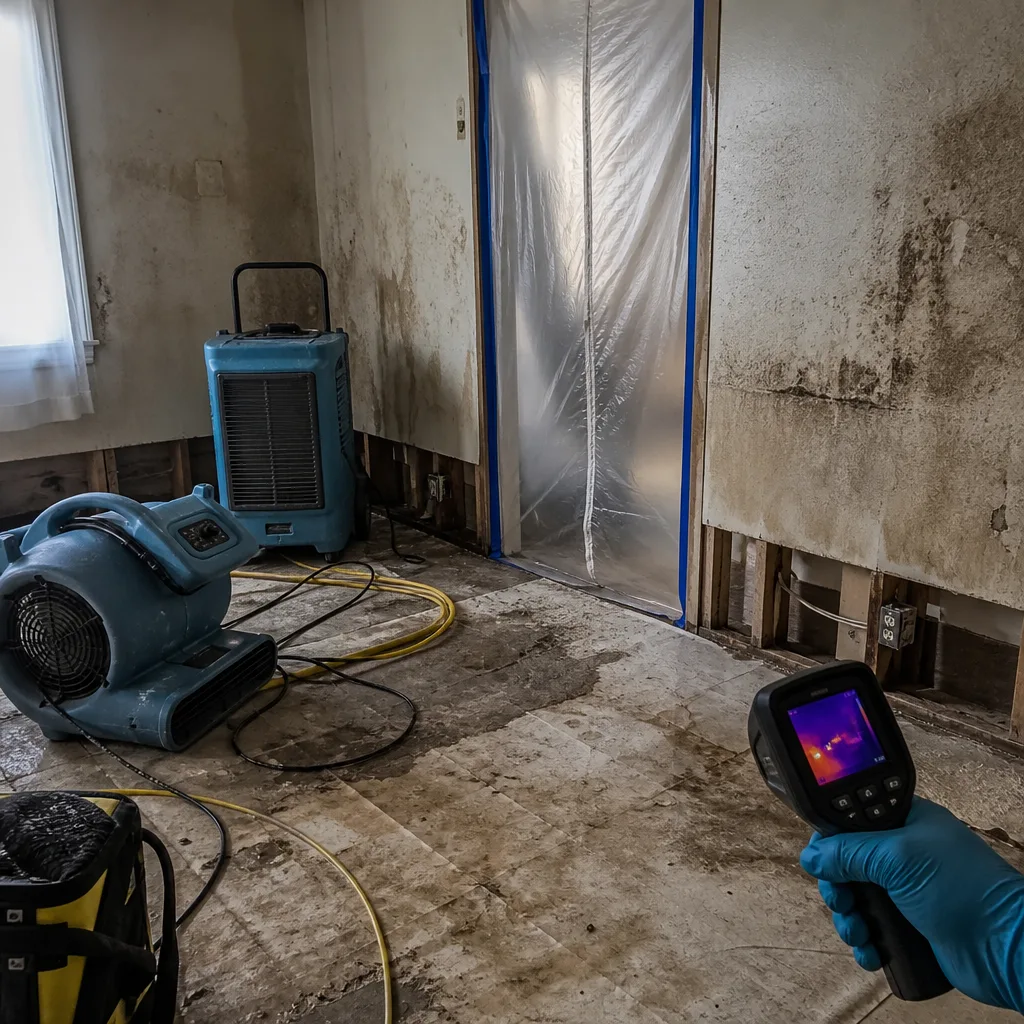 Before
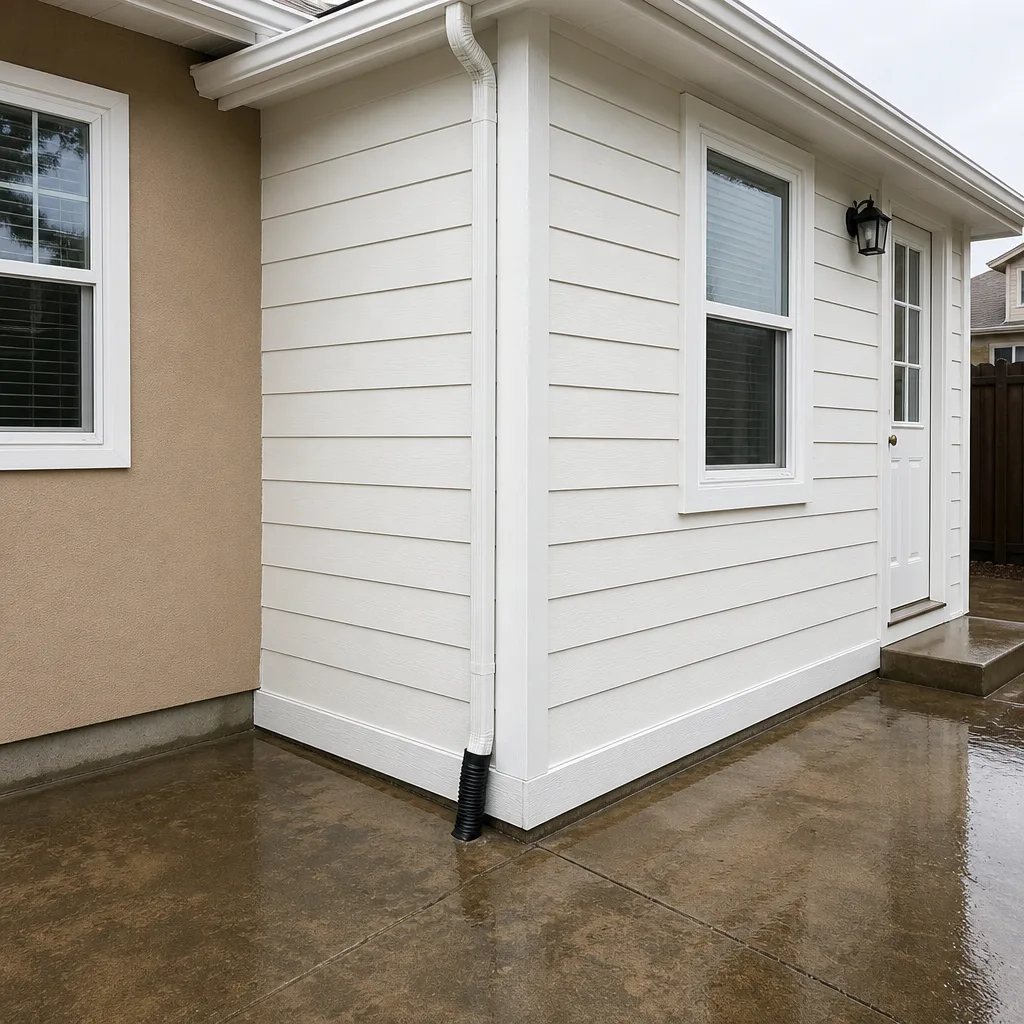 After
After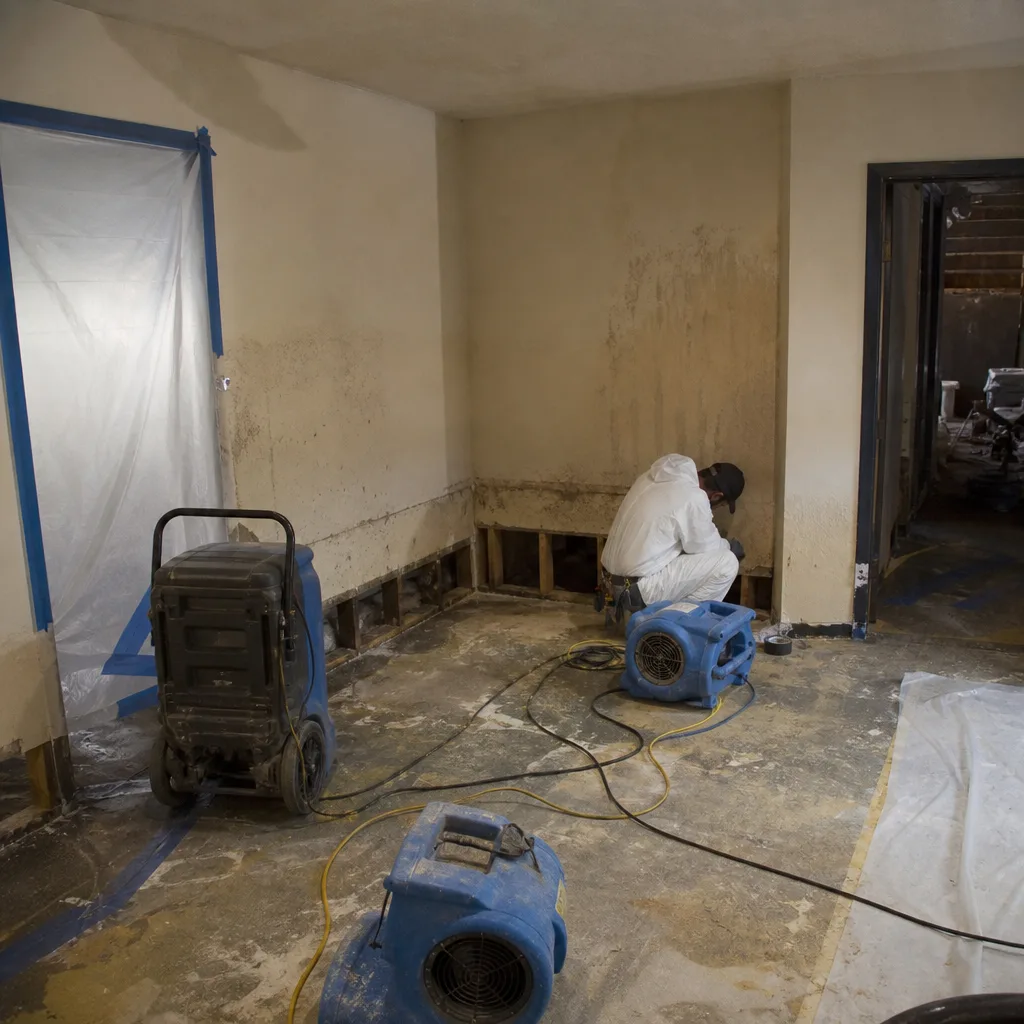 Before
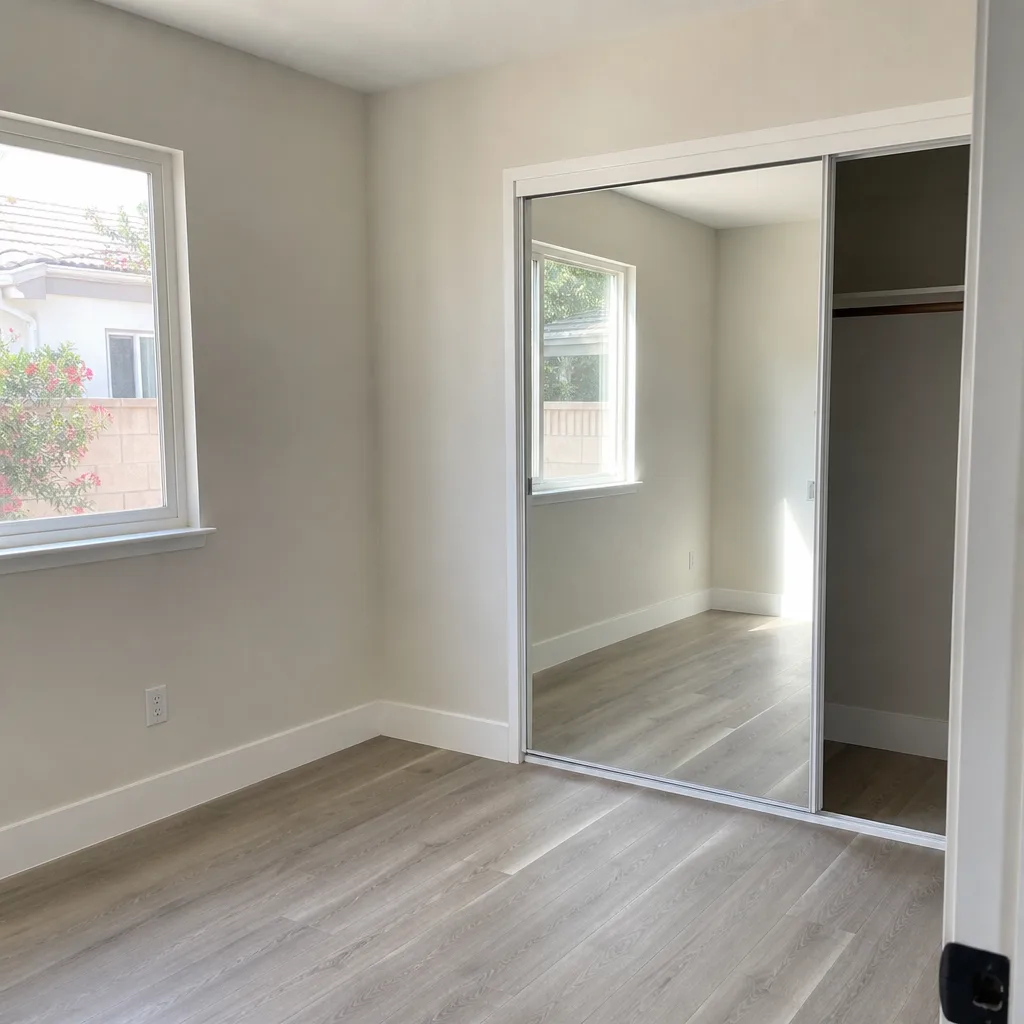 After
AfterDamage Restoration Cost Breakdown: The Carson Homeowner’s Reference for 2026
The average gap between a Carson water damage contractor’s invoice and the insurer’s approved payment in 2024 was $6,200. Not because the work wasn’t done, but because the invoice contained labor hours and material quantities that could not be cross-referenced to a daily drying log or a signed scope. In our experience reviewing competitor estimates through our Free Second Opinion service, that gap falls on the homeowner roughly 70% of the time. This guide-along with our more guides & resources-explains what restoration actually costs in Carson, what documentation each line item requires to survive an insurer’s desk audit, and which costs contractors routinely omit from their invoices, leaving you to cover the difference.
Quick Answer
Water damage restoration in Carson typically ranges from $2,800 for a contained kitchen leak to $18,000+ for a whole-house category 3 loss with reconstruction. Most Carson homeowners with documented drying logs and a signed scope see 85-95% of costs covered by insurance; those without proper documentation average $4,000-$8,000 in out-of-pocket gaps. The key variable is not the damage itself, but whether your contractor produces daily moisture readings, photo records, and a written price before work begins.
Table of Contents
- How Xactimate Pricing Works in Carson
- Line-Item Breakdown: A Typical Carson Water Loss
- Three Costs Carson Homeowners Pay Out of Pocket
- The Written Scope as Financial Protection
- What 365-Day Callback Coverage Actually Costs
- Carson-Specific Factors That Move the Price
- Equipment, Documentation, and Why the Brand Matters
- Common Mistakes to Avoid
- When to Call a Professional
- Frequently Asked Questions
 Before
 After
AfterHow Xactimate Pricing Works in Carson
Most insurers serving Carson, including those writing policies in the South Bay and Harbor Area, use Xactimate to calculate restoration reimbursements. This software sets unit prices by ZIP code based on regional labor rates, material costs, and equipment rental benchmarks. For Carson’s 90745, 90746, and 90747 ZIP codes, Xactimate 2024 pricing reflects Los Angeles County labor rates but applies a slight adjustment for the local contractor market.
Here’s what homeowners rarely understand: Xactimate has two categories of line items. Automatic items require minimal documentation. Documentation-dependent items unlock only when the contractor submits photos, moisture logs, and scope notes that prove the work was necessary and performed.
Automatic line items include:
- Emergency water extraction (per square foot, category 1 or 2)
- Standard dehumidifier rental (first 3 days)
- Basic antimicrobial application (first application)
- Minimal demo (up to 4 linear feet of baseboard)
Documentation-dependent line items include:
- Extended drying beyond day 3 (requires daily psychrometric data showing the structure had not reached dry standard)
- Content pack-out and storage (requires itemized inventory with photos)
- Temporary housing or displacement costs (requires proof the home was uninhabitable, documented by the contractor’s moisture readings)
- Specialty drying for hardwood floors (requires moisture content readings at multiple depths, documented with pin and pinless meter readings)
- Tertiary drying phase (requires vapor pressure differential calculations showing the environment supported continued evaporation)
Psychrometric data, for those unfamiliar, is the measurement of temperature, relative humidity, and specific humidity that proves drying progress. Vapor pressure differential measures the force driving moisture out of wet materials into the air. Without these numbers, Xactimate rejects the line item and the insurer denies the charge. We’ve reviewed competitor estimates where $3,400 in extended drying was denied because the contractor logged “still wet” instead of actual grain-per-pound readings.
The contractor’s daily drying log is the key that turns a rejected line item into a paid one. This is why Water Damage Restoration in Carson through DryMark Restoration Carson includes documented moisture readings on every visit as a standard deliverable, not an upsell.
Line-Item Breakdown: A Typical Carson Water Loss
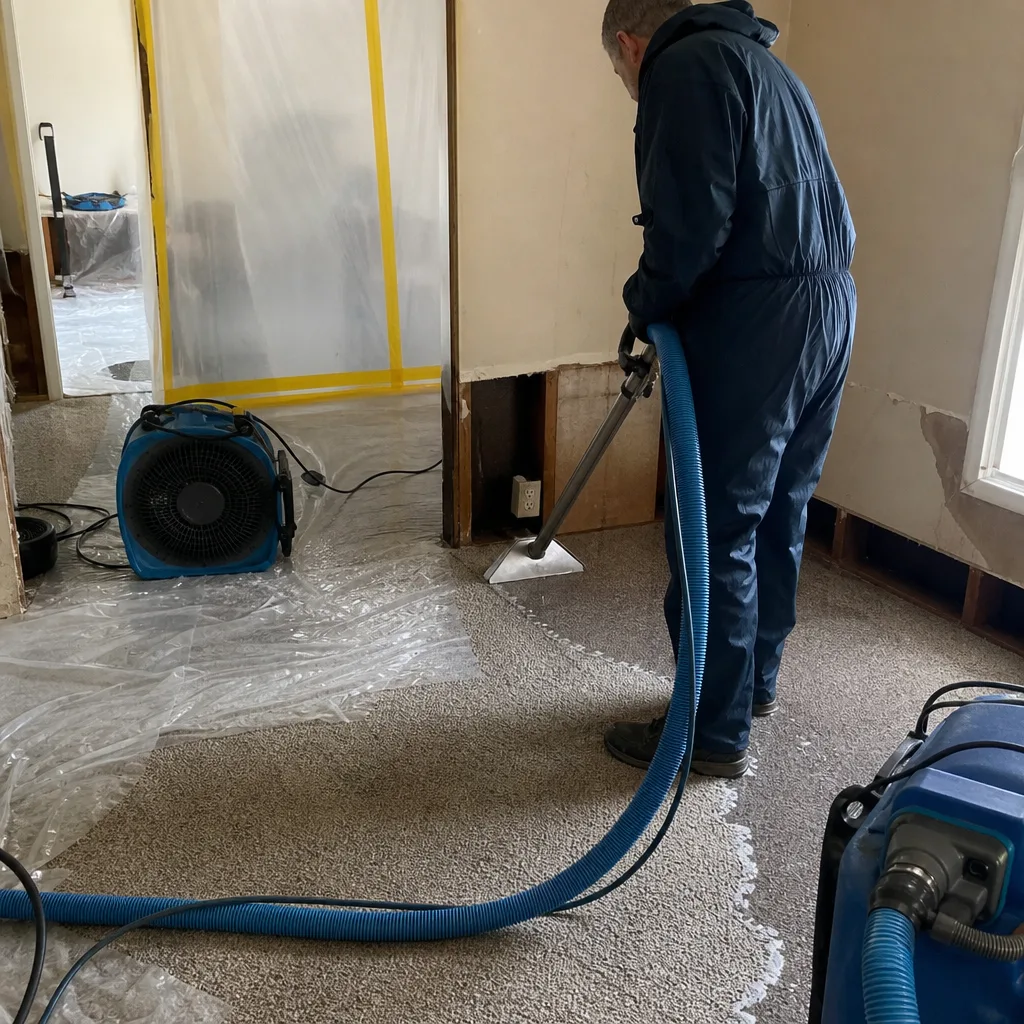
Consider a 1,200-square-foot single-story home in Carson’s Dominguez Hills area with a category 2 water loss from a failed washing machine supply line. The water sat for roughly 18 hours before discovery. This is a common scenario we see, particularly in homes built during the 1960s and 1970s with original copper or galvanized supply lines reaching end of service life.
Here’s how the costs break down, with documentation requirements for each:
Emergency Extraction: $450-$780
Truck-mounted extraction of standing water from flooring and carpet. Xactimate pays this automatically if the square footage is documented. Most Carson contractors charge $0.35-$0.65 per square foot for extraction. The documentation required: pre-extraction photos showing water depth and affected area dimensions.
Structural Drying (Days 1-3): $1,800-$2,600
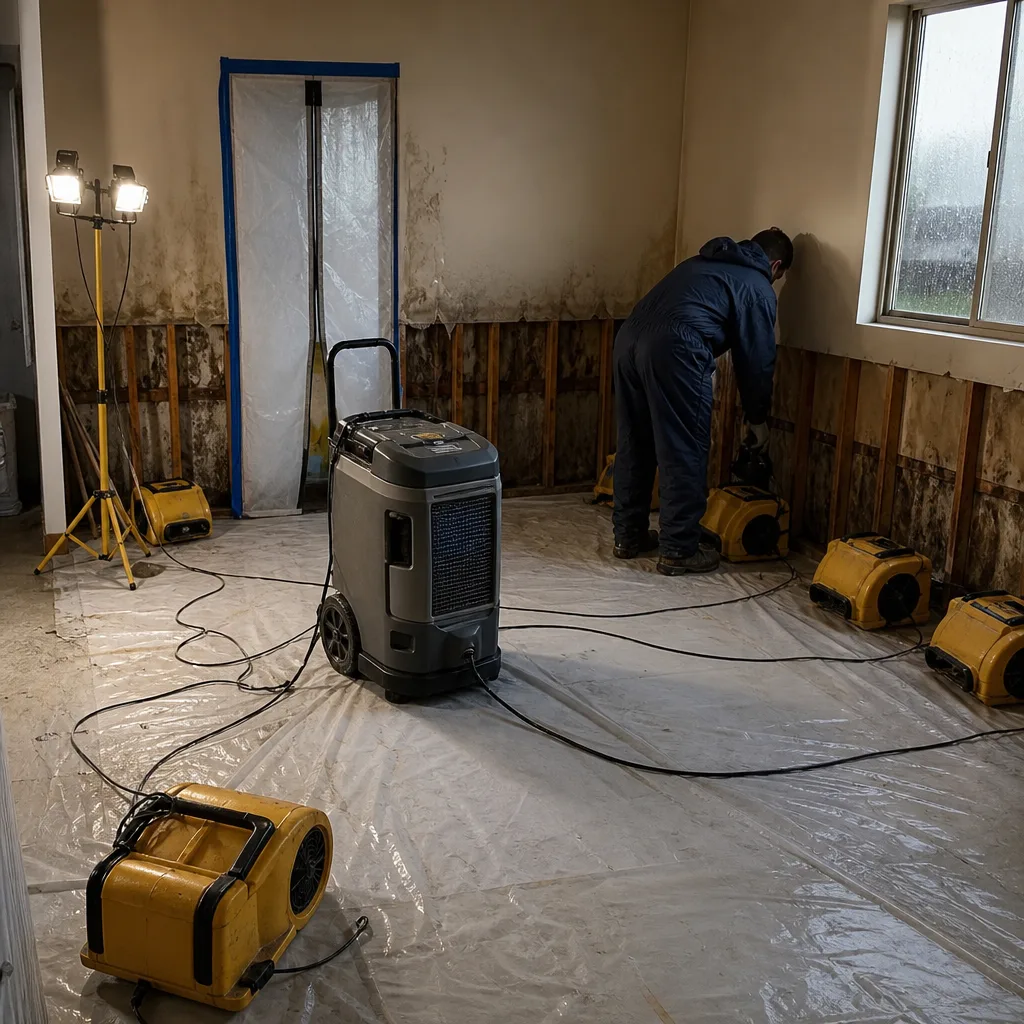
Placement of air movers and dehumidifiers. In Carson’s mild coastal climate, standard refrigerant dehumidifiers (like the Dri-Eaz LGR 7000XLi or Phoenix R200) typically suffice. The count is determined by the IICRC S500 formula: one air mover per 50-70 square feet of affected space, plus one for each wall cavity with moisture intrusion. Documentation required: equipment placement diagram, initial moisture content readings, and daily psychrometric logs.
Extended Drying (Days 4+): $280-$420 per day
This is where claims fail. Xactimate only pays extended drying if the daily log proves the structure hasn’t reached dry standard. For Carson’s climate, dry standard is typically 12-16% moisture content for wood framing and below 4% for concrete subfloors. Documentation required: daily moisture readings at identical locations, grain-per-pound calculations, and justification for continued equipment rental. Without this, the homeowner pays $280-$420 per day out of pocket.
Demolition and Disposal: $1,200-$3,400
Removal of unsalvageable drywall, insulation, flooring, and baseboards. In Carson, disposal costs run higher than national averages due to Los Angeles County waste facility fees. Documentation required: pre-demo photos, moisture readings proving materials were beyond salvage, and disposal receipts with weight tickets.
Antimicrobial Treatment: $180-$340
Application of EPA-registered antimicrobial to affected surfaces. First application is often automatic; second application requires documentation of visible microbial growth or elevated spore counts. Documentation required: photos before application, product SDS sheets, and application logs.
Content Pack-Out: $1,400-$4,200
Inventory, pack, transport, and store salvageable contents. This is the most frequently denied line item in Carson claims. Documentation required: itemized inventory with photos of each item’s condition, signed chain of custody, and storage facility documentation. Most contractors skip the itemized inventory and bill a lump sum. Insurers reject lump sums.
Temporary Housing: $120-$280 per night
ALE, or Additional Living Expenses, coverage applies when the home is uninhabitable. Documentation required: contractor’s written assessment of inhabitation status, supported by moisture readings showing sleeping areas are compromised, plus receipts for hotel or rental unit. The contractor’s word alone is insufficient; the moisture data must support the conclusion.
Reconstruction: $4,200-$18,000+
Return to pre-loss condition. This is scoped separately from mitigation and requires its own written estimate. Documentation required: line-item scope with material specifications, permit applications (required in Carson for electrical, plumbing, or structural work), and progress photos. DryMark Restoration Carson home services include reconstruction with permit coordination, which many mitigation-only contractors do not offer.
Total typical range: $9,530-$34,220
The lower end assumes a fast response, category 1 or 2 water, minimal contents affected, and no reconstruction. The upper end includes extended drying, full pack-out, temporary housing, and significant rebuild. The homeowner’s out-of-pocket cost depends almost entirely on documentation quality, not damage severity.
Three Costs Carson Homeowners Pay Out of Pocket
Through our Free Second Opinion reviews of competitor estimates, we’ve identified three categories-detailed in our Damage Restoration Warning Signs: A Carson Homeowner’s Reference Guide-where Carson homeowners most frequently absorb costs their insurance should have covered. In each case, the common factor is missing or inadequate documentation from the restoration contractor.
Content Pack-Out and Storage
The average denied pack-out in Carson is $2,800. Contractors routinely bill “contents cleaning and storage” as a single line item without itemized inventory. Insurers require a documented list: “12 dinner plates, Lenox Autumn pattern, water-stained but intact” with photos. The contractor who says “we cleaned the kitchen stuff” gets $0. The contractor who produces a 200-line inventory with condition photos gets paid. We’ve seen homeowners pay $4,200 for storage because their contractor’s “miscellaneous contents” description triggered an automatic denial.
Temporary Housing During Extended Drying
Carson’s coastal humidity means some structures take longer to reach dry standard, particularly homes near the Dominguez Channel or in low-lying areas with limited cross-ventilation. When drying extends past day 5, ALE coverage often applies. But the contractor must document that the home is uninhabitable with moisture readings from sleeping areas, not just assert it. The average denied ALE claim we review is $1,600 for 8-12 nights of hotel costs. The documentation that would have unlocked it: a daily log showing bedroom moisture content above 16% and relative humidity above 60%.
Extended Drying Beyond Day Three
This is the largest single category of denied charges. Xactimate assumes three days of standard drying will achieve dry standard in most losses. Days 4 through 10 require proof that the environment still supported evaporation and that the structure had not yet reached equilibrium. The contractor needs vapor pressure differential calculations, not opinions. At $280-$420 per day in Carson, a 7-day extended drying adds $1,960-$2,940. Without grain-per-pound logs and dew point tracking, the homeowner pays every dollar. We’ve reviewed cases where contractors billed 11 days of extended drying with no documentation beyond “equipment still needed.” All 11 days were denied.
The pattern is consistent: the work was done, but the file didn’t prove it was necessary. Insurance doesn’t pay for work. Insurance pays for documented work.
The Written Scope as Financial Protection
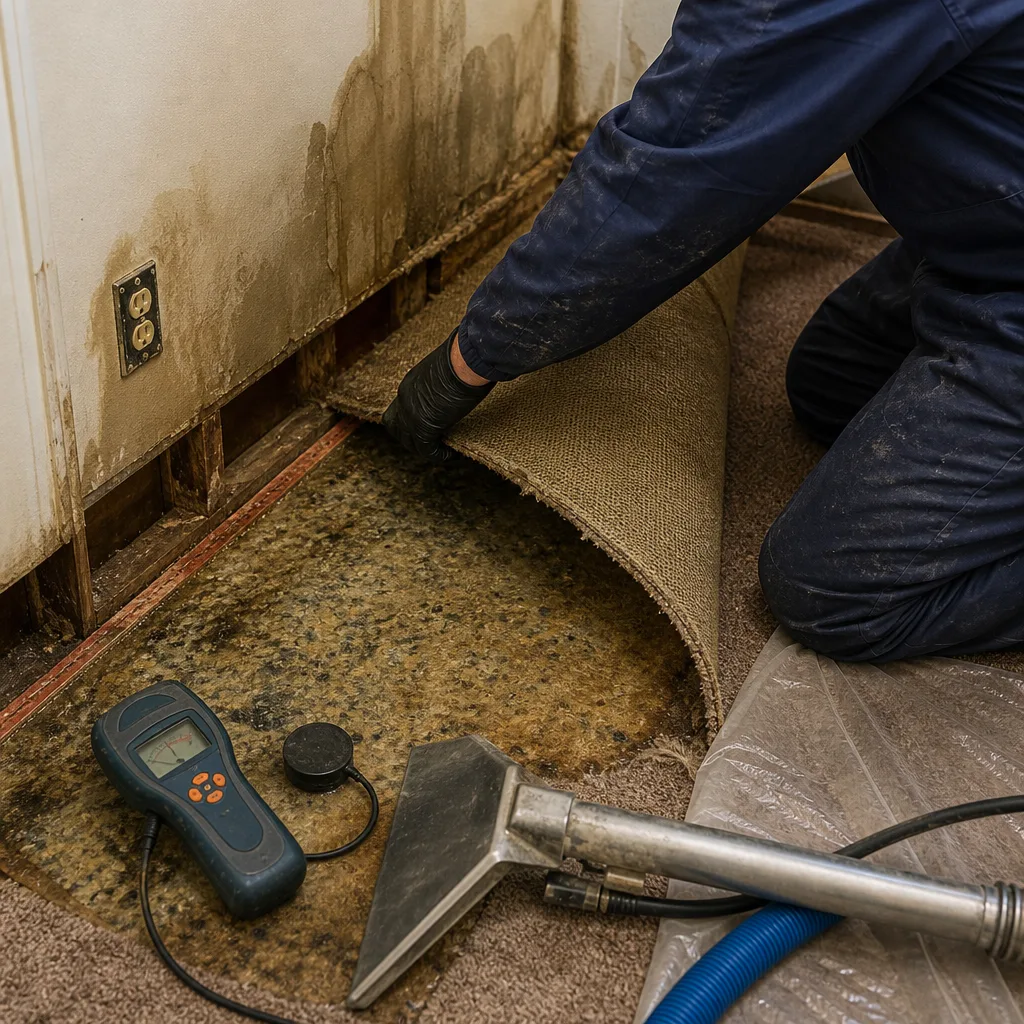
Haven Standard, Clause 1: written price before work begins. This exists because scope creep is the most common source of disputes between homeowners, contractors, and insurers in Carson.
Here’s how scope creep happens. A contractor arrives at a water loss, begins extraction, and discovers wet subflooring. They add subfloor replacement to the invoice. The insurer reviews the file and asks: was the subfloor wet when the scope was signed, or did the contractor discover it after work began? If after, the charge is often denied as an undocumented addition. The homeowner pays.
Or a contractor begins demo and finds mold behind baseboards. They add mold remediation. The insurer asks: was the mold visible and documented in the initial scope? If not, the mold line item may be denied as a secondary loss not related to the covered peril.
The written scope signed before work begins solves this. It documents the full extent of visible damage, lists all anticipated line items, and establishes a baseline. If concealed damage is found during work, the contractor produces a supplemental scope with photos of the newly discovered condition, and both parties sign before work continues. This is standard practice at DryMark Restoration Carson; for help evaluating your options, see our DIY vs Professional Damage Restoration: The Carson Homeowner’s Decision Guide.
A signed scope also prevents the more subtle form of scope creep: material upgrades billed at premium prices without homeowner approval. “We used the better drywall because the cheap stuff was backordered” is a $400-$800 surprise that insurers reject and homeowners absorb. The written scope specifies material grades by manufacturer and product line. Any substitution requires written approval.
For Carson homeowners, the written scope is particularly important because of local Damage Restoration Permits, Codes & Inspections in CA: What You Need to Know. The City of Carson requires permits for electrical, plumbing, and structural repairs. A scope that omits permit costs and the associated inspection delays creates a $300-$800 surprise and a 2-3 week schedule extension. Our scopes include permit line items when applicable, with the permit type and estimated city fee.
What 365-Day Callback Coverage Actually Costs
The 365-Day Done Right Promise under The Haven Standard is a signed warranty, not a marketing phrase. It states: if it’s not done right, we make it right, for 365 days from completion. This has a real cost to the contractor, and that cost is evidence of documentation confidence.
Consider what a callback requires. A homeowner calls in month 8 with a musty odor in a previously dried wall cavity. The contractor must:
- Pull the original file: drying logs, moisture readings, photos, scope, and completion documentation
- Compare current conditions to the documented dry standard at completion
- Determine whether the callback represents incomplete initial work, new unrelated damage, or normal building settlement
- If incomplete initial work, return at no charge with crew, equipment, and materials
The average callback costs a contractor $800-$1,400 in labor, equipment, and materials. A company doing 200 jobs annually with a 3% callback rate budgets $4,800-$8,400 for warranty work. A company with sloppy documentation cannot afford this. They cannot determine whether the callback is their responsibility, and they cannot defend themselves if the homeowner or insurer claims the initial work was incomplete. The result: they disappear after the final invoice.
The 365-Day Done Right Promise is expensive to offer. That’s precisely why it signals a contractor whose documentation can survive scrutiny. In our experience, the contractors who cannot produce daily drying logs are the same contractors whose phone numbers stop working when a callback occurs.
For Carson homeowners, this matters because the local climate creates specific callback risks. The marine layer that rolls in from the Pacific can reintroduce moisture to structures that were dried to borderline levels. Homes near the Harbor Freeway corridor or in the Victoria Park area with older stucco exteriors are particularly susceptible to vapor drive issues. A contractor who documented true dry standard, not just surface dryness, can prove the job was done correctly. One who didn’t, can’t.
Carson-Specific Factors That Move the Price
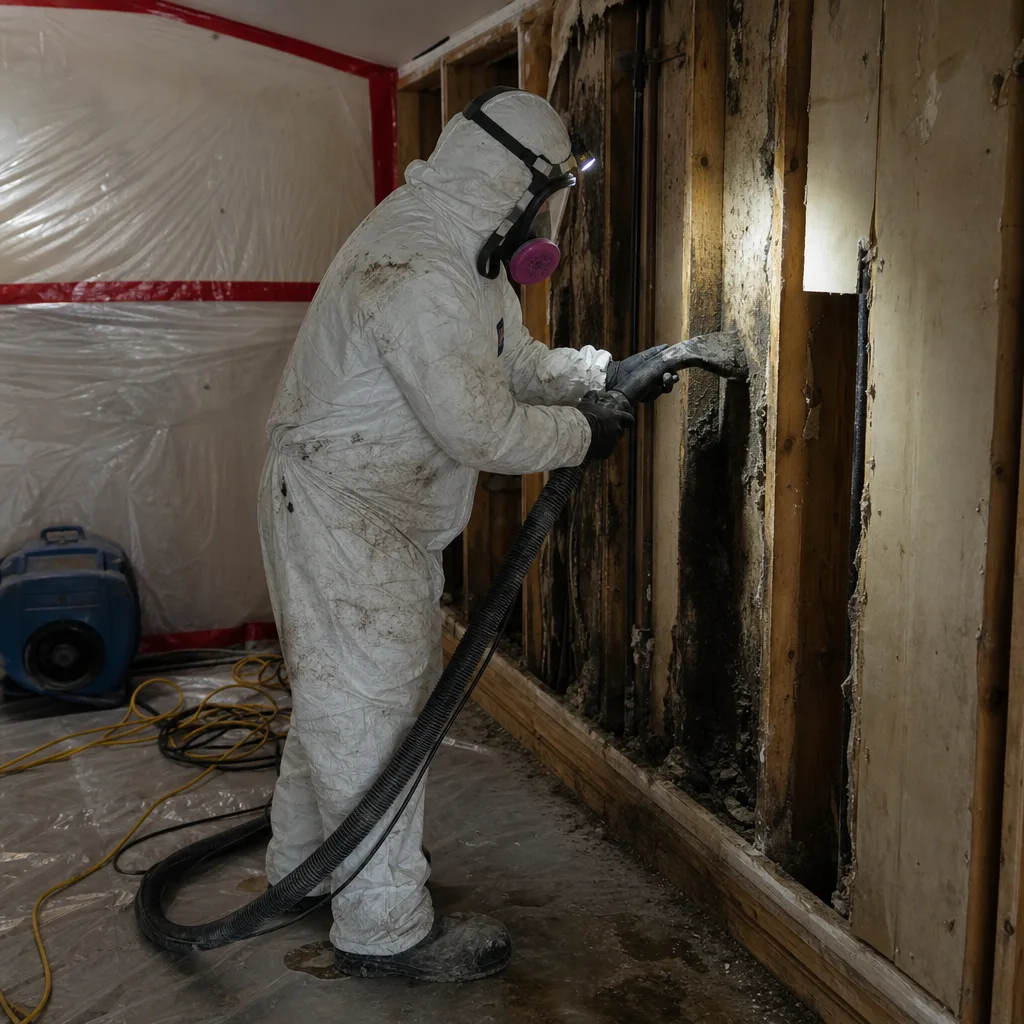
Several local conditions affect restoration costs in ways that generic national guides miss entirely.
Soil and Foundation Types
Carson’s soil is predominantly alluvial fill and compacted clay, with high water tables in areas near the Dominguez Channel and Carson Street corridor. Slab-on-grade homes common in the 1950s-1970s construction periods are susceptible to capillary moisture wicking. A water loss that appears contained to flooring may actually involve moisture migration through the slab. This requires extended drying with specialized equipment like the Injectidry HP60 for positive-pressure wall cavity drying, or in severe cases, slab moisture barrier installation. Neither is visible in a standard scope; both require moisture mapping with thermohygrometers to detect.
Ventilation and Drying Rates
Carson’s coastal climate means mild temperatures but elevated humidity compared to inland Los Angeles County. Summer drying is slower than in the San Fernando Valley; winter drying is faster than in Pacific Palisades due to less marine layer intrusion. These variations affect equipment selection and rental duration. A contractor using national averages instead of local psychrometric data will underestimate drying time in July and overestimate it in January.
Permit and Inspection Requirements
The City of Carson Building and Safety Division requires permits for electrical, plumbing, and structural repairs. Reconstruction after significant water damage typically triggers at least two of these categories. Permit fees run $300-$800 depending on project value. Inspection scheduling adds 3-7 business days to reconstruction timelines. Contractors who omit permit costs from scopes create delays and surprise charges.
Neighborhood Construction Eras and Typical Issues
In our work across Carson, we’ve documented distinct patterns by neighborhood era:
- Pre-1960 homes in the Avalon Gardens and Carson Street areas: galvanized steel supply lines, ungrounded electrical, plaster and lath construction that holds moisture longer than drywall
- 1960s-1980s homes in Dominguez Hills and Victoria Park: copper supply lines reaching end of life, original polybutylene in some subdivisions, single-pane aluminum windows that contribute to condensation issues
- 1990s-2000s homes near Cal State Dominguez Hills: PEX or copper supply, but frequent slab leak issues due to soil movement
Each era requires different documentation approaches to support insurance claims. Plaster and lath construction, for example, requires longer drying documentation because the material’s hygric mass holds more moisture than standard drywall.
Equipment, Documentation, and Why the Brand Matters
The equipment deployed on a Carson water loss directly affects both drying speed and documentation quality. Insurers increasingly recognize specific equipment capabilities when evaluating extended drying claims.
Refrigerant Dehumidifiers
The Dri-Eaz LGR 7000XLi and Phoenix R200 are standard for residential losses in Carson’s climate. Both produce documented grain depression data that insurers accept for extended drying claims. Lower-grade equipment may dry the structure but lack the data output required for claim support. We specify equipment by model in our scopes so the documentation trail is clear.
Air Movers
XPOWER and B-Air axial and centrifugal air movers are common in Carson restoration. The count and placement matter for documentation: IICRC S500 standards require specific air mover densities based on affected square footage and class of water loss. A scope that specifies “air movers as needed” fails under insurer review. Our scopes state: “14 XPOWER P-230AT axial air movers, placement per attached diagram.”
Specialty Drying Systems
Hardwood floor drying with the Injectidry HP60 panel system or wall cavity drying with the Injectidry Vac-It panel system requires additional documentation. These systems create positive or negative pressure in enclosed spaces, accelerating drying but requiring pressure differential logs. Not all contractors own this equipment; many subcontract specialty drying, creating documentation gaps when the subcontractor’s logs don’t integrate with the primary contractor’s file.
Moisture Detection Equipment
Documentation starts with detection. Pinless meters (like the Delmhorst BD-2100 with wood scale) for initial surveys, pin-type meters (like the Protimeter Surveymaster) for verification of dry standard, and thermohygrometers (like the Dri-Eaz HT-4000) for ambient condition logging. Each produces data that populates the daily drying log. A contractor who arrives with a single “moisture meter” and handwritten notes is not producing claim-supporting documentation.
The brand names matter because insurers maintain databases of equipment capabilities. A claim for 5 days of extended drying with a Dri-Eaz LGR 7000XLi, supported by grain-per-pound logs, is processed differently than the same claim with unbranded “dehumidifier” and no data. The equipment is the documentation infrastructure.
Common Mistakes to Avoid
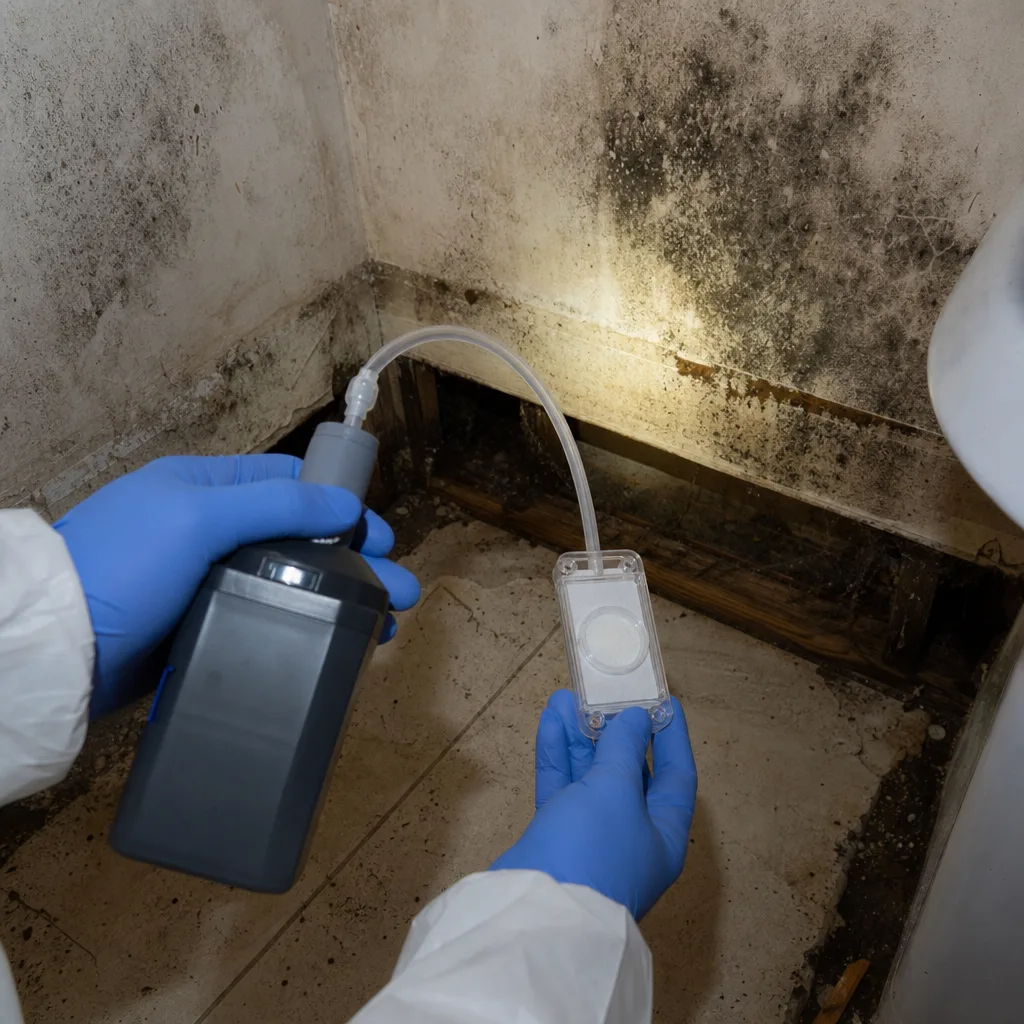
- Accepting a verbal estimate or “ballpark” figure. Haven Standard, Clause 1 exists precisely because verbal estimates become inflated invoices. Every restoration job in Carson should begin with a written, signed scope. If a contractor says “we’ll figure it out as we go,” the homeowner will pay the difference.
- Allowing work to start before photo documentation. Pre-loss condition photos are the baseline for every insurance evaluation. A contractor who begins extraction before photographing water depth, affected materials, and source of loss cannot prove the scope was accurate. Insurers deny undocumented line items.
- Neglecting to request daily drying logs. The homeowner has the right to receive documentation, not just assurances that “it’s drying.” Daily logs should include moisture content readings at identical locations, equipment readings, and technician initials. Without these, extended drying is denied.
- Failing to verify permit requirements. Carson requires permits for electrical, plumbing, and structural work. Unpermitted reconstruction can void insurance coverage, trigger city penalties, and complicate future home sales. A contractor who says “we don’t need a permit for this” without checking with the city is risking the homeowner’s liability.
- Overlooking content documentation. The pack-out inventory is tedious but essential. Homeowners who rely on contractor summaries rather than itemized lists with photos routinely absorb $2,000-$4,000 in denied content claims. Request the inventory; review it; keep a copy.
- Assuming mold is automatically covered. Mold remediation in Carson requires documentation linking the mold to the covered water loss. If the contractor discovers mold but cannot prove it resulted from the reported incident, the mold line item may be denied as a pre-existing condition. Pre-loss photos and moisture mapping establish the connection.
- Choosing price over documentation capability. The lowest bid is often the most expensive choice. A contractor who underprices extraction but lacks documentation discipline will produce a denied claim that costs the homeowner thousands more than a higher initial bid with complete file support. Mold Remediation in Carson through DryMark Restoration Carson includes the documentation that supports insurance coverage, not just the remediation itself.
When to Call a Professional
Call for professional assessment when water has affected more than a single, easily accessible surface; when the water source is category 2 (gray water) or category 3 (black water); when moisture has entered wall cavities, subflooring, or ceiling spaces; when you detect musty odors after initial cleanup; or when your insurance company requests documented mitigation. In Carson’s climate, water that isn’t properly dried within 48-72 hours typically supports microbial growth, turning a $3,000 extraction job into an $8,000+ remediation.
DryMark Restoration Carson offers free estimates in Carson. Our assessments include moisture mapping, a written scope with line-item pricing, and documentation guidance for your insurance claim. Call (424) 305-3365 to schedule. Live phone coverage is available 24 hours a day, 7 days a week with no voicemail on emergency lines.
Frequently Asked Questions
A typical Carson water damage restoration ranges from $2,800 for a contained category 1 leak to $18,000+ for a category 3 loss with reconstruction, with most documented claims falling between $5,500 and $12,000. The final cost depends on water category, affected square footage, drying duration, and whether contents and reconstruction are involved. Call (424) 305-3365 for a written estimate specific to your loss.
Insurance typically covers 85-95% of documented restoration costs when the contractor produces daily drying logs, photo records, and a signed scope. The 5-15% gap usually represents deductibles, policy limits, or items excluded by the policy. Homeowners see much larger gaps, often $4,000-$8,000, when documentation is incomplete. The key is not the damage; it’s the file.
DryMark Restoration Carson maintains live phone coverage 24 hours a day, 7 days a week with no voicemail on emergency lines. For active water losses, same-day response is standard. The critical window is the first 24-48 hours, when extraction and drying setup prevents microbial growth and reduces total claim cost. Delays beyond 48 hours typically increase restoration costs by 40-60% due to secondary damage.
Category 1 water affecting less than 50 square feet of hard surface, with no wall cavity intrusion, can sometimes be handled by a homeowner with proper extraction and ventilation. Any category 2 or 3 water, any moisture in wall cavities or subflooring, or any loss affecting more than a single room requires professional assessment. The risk is incomplete drying that supports mold growth, which insurers may then classify as maintenance-related and exclude from coverage. For Fire & Smoke Damage Restoration in Carson, professional assessment is always required due to toxic combustion byproducts.
The restoration contractor should coordinate directly with your adjuster, providing documentation that supports each line item. This includes the initial scope, daily drying logs, photo records, and supplemental scopes for concealed damage. DryMark Restoration Carson provides this coordination as standard practice, with direct adjuster communication and photo-documented assessments that reduce claim disputes. The homeowner’s role is to authorize the scope and provide policy information; the contractor handles documentation and negotiation.
The Haven Standard is the operating framework for DryMark Restoration Carson, established in 2011. It includes Clause 1 (written price before work begins), documented photo records on every visit, daily drying logs, and the 365-Day Done Right Promise. It matters for costs because it prevents the documentation gaps that lead to denied claims and out-of-pocket surprises. A contractor working under The Haven Standard produces the file that gets the claim paid.
The Bottom Line
Restoration cost in Carson is not primarily about water, fire, or mold. It’s about documentation. The $6,200 average gap between invoice and approved payment exists because contractors do work without proving it was necessary. Xactimate pricing, insurer desk audits, and claim denials all respond to the same input: what the file can show.
The homeowner who receives a written scope before work begins, daily drying logs during the job, and a photo record on every visit has the documentation that unlocks insurance payment. The homeowner who receives assurances and a final invoice has a negotiation problem.
Key takeaways: demand a written price before work starts; request daily moisture readings in writing; verify that your contractor’s equipment produces claim-supporting data; and understand that the 365-Day Done Right Promise is evidence of documentation confidence, not marketing language. In Carson’s restoration market, the contractor who documents thoroughly costs less than the contractor who bids low.
Written by Alicia Brennan, Owner at DryMark Restoration Carson, serving Carson since 2011.