
Last updated September 23, 2026
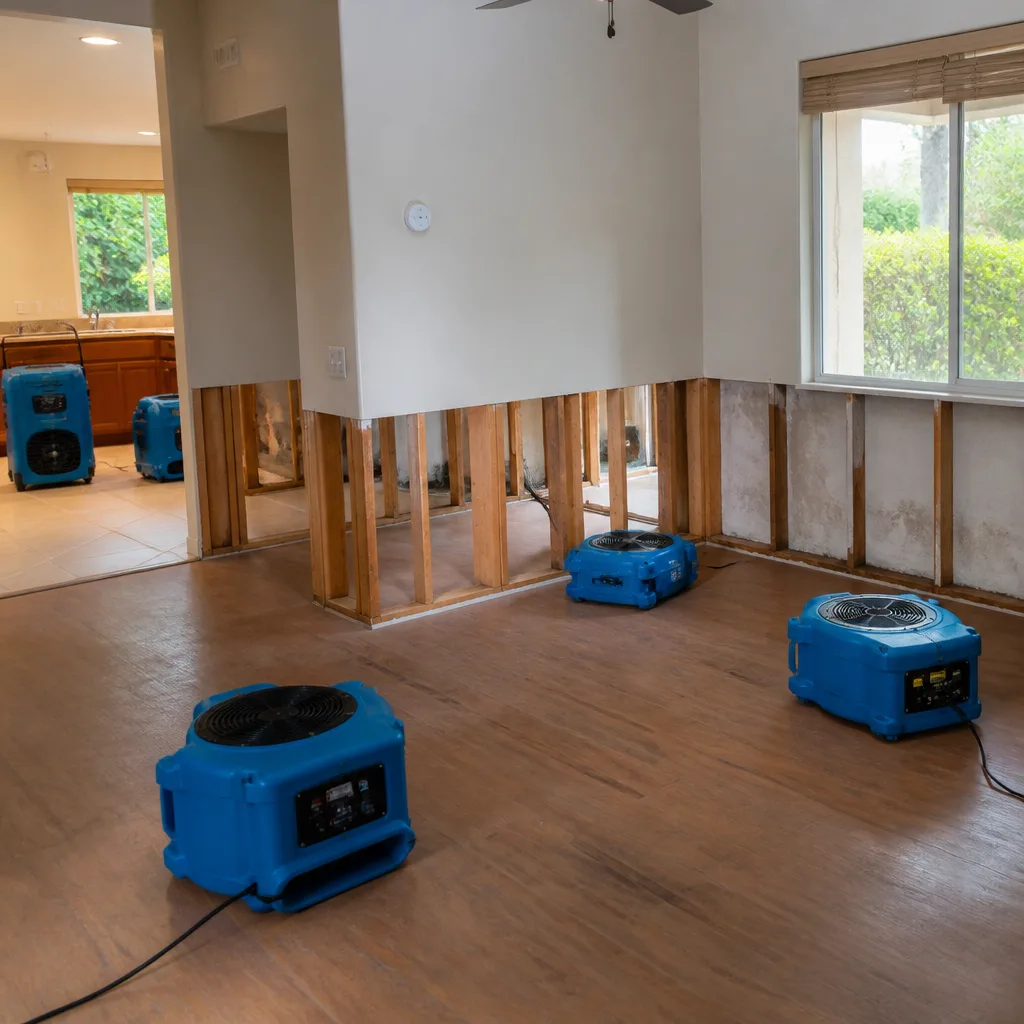
Free visual inspection and a written scope of work before any mitigation begins - photos, moisture readings, and drying logs go in your claim file
The scope we write is the scope we bill. Anything new gets shown to you, in writing, before we touch it.
 Before
 After
After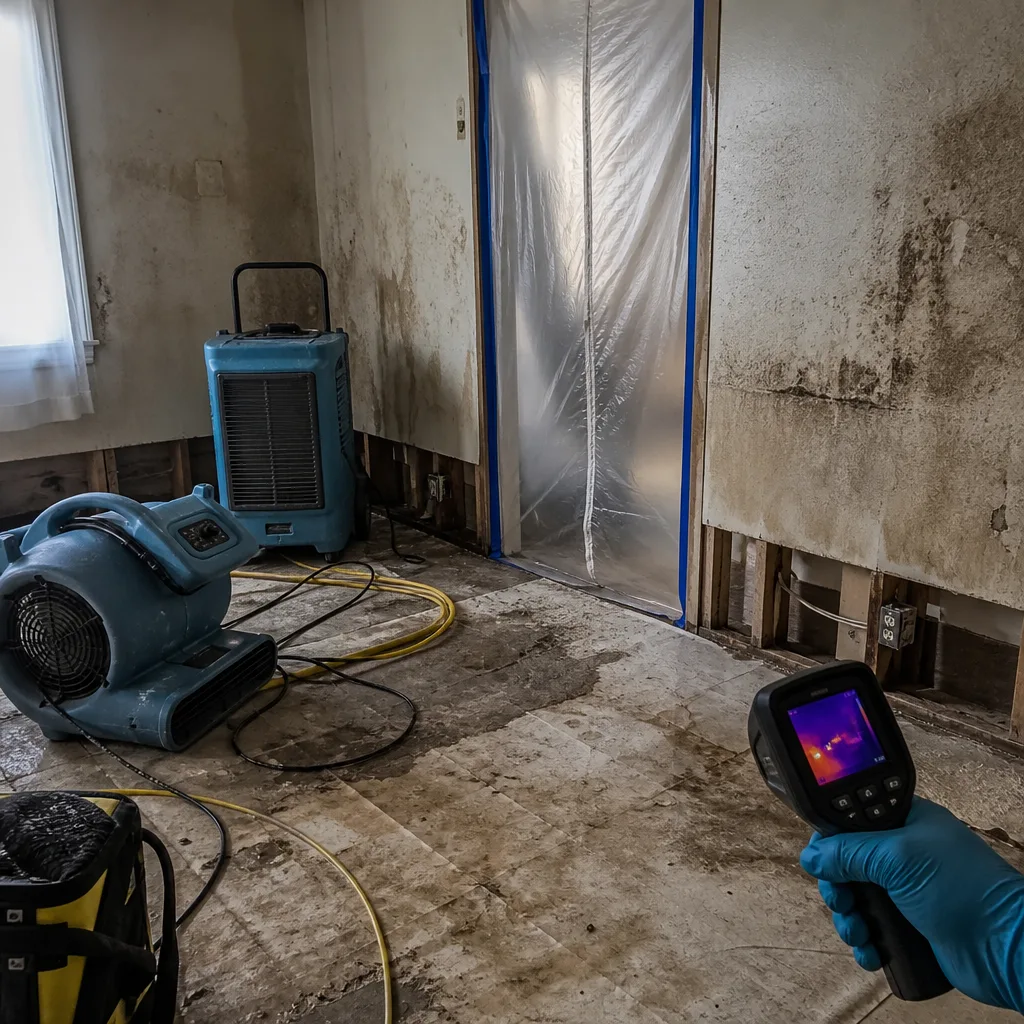 Before
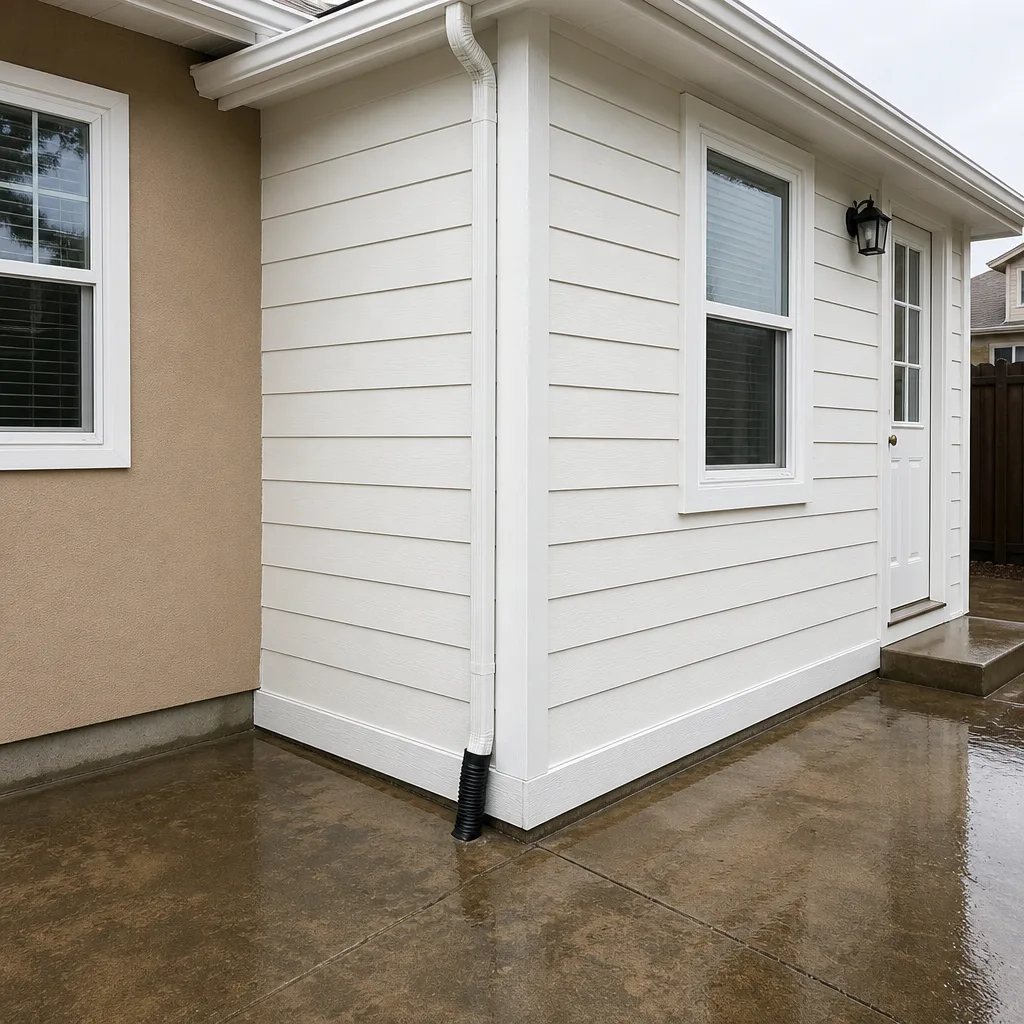 After
After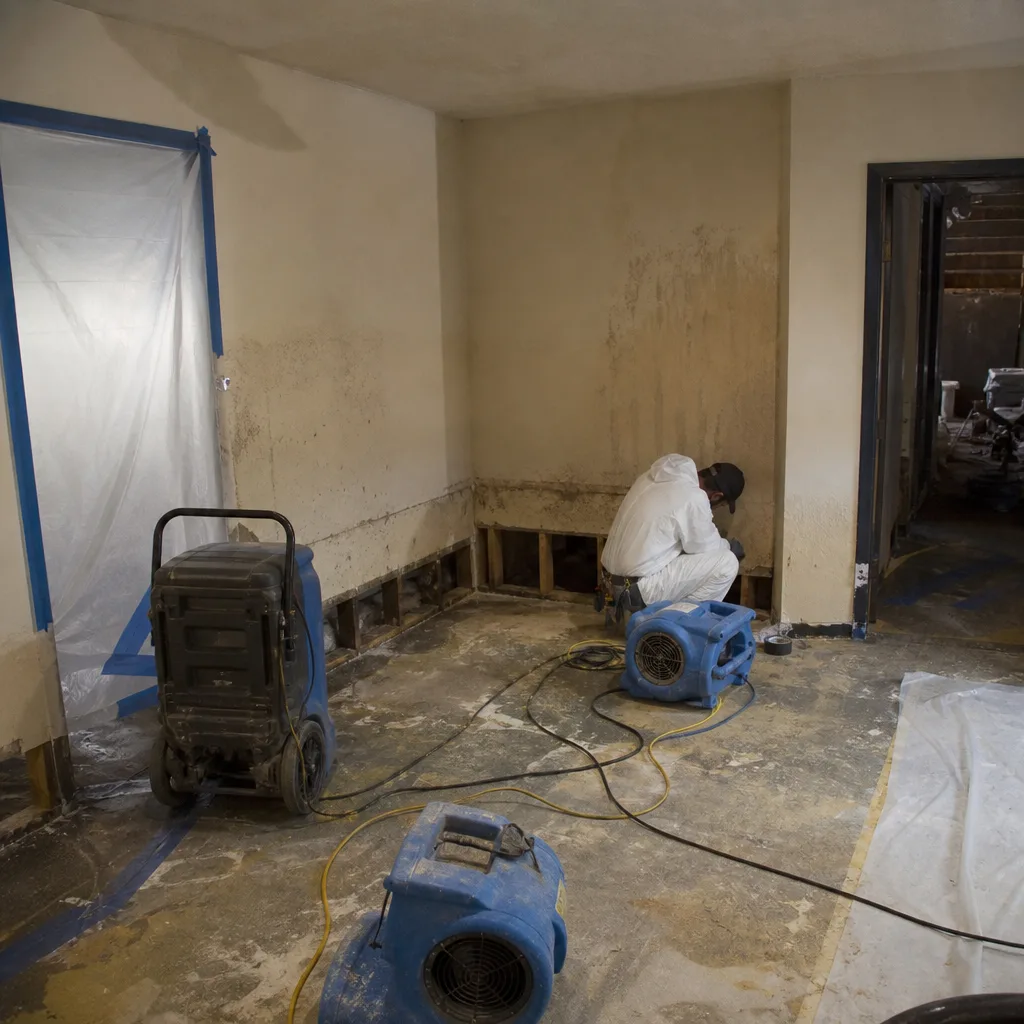 Before
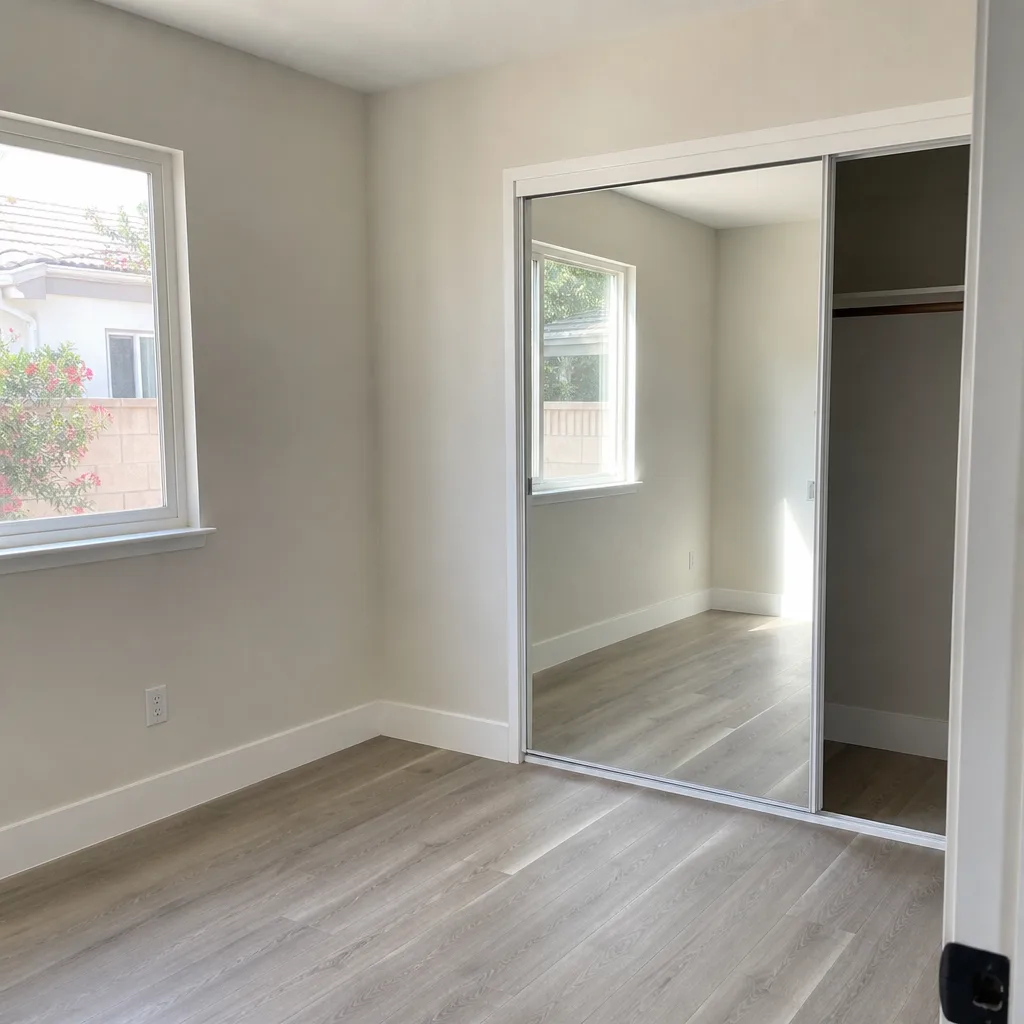 After
AfterDamage Restoration Warning Signs: A Carson Homeowner’s Reference Guide
A musty odor in a Carson home registered 68% relative humidity inside the wall cavity when measured - a reading that meets the IICRC S500 threshold for active microbial growth - but the homeowner’s insurance claim was initially denied because the file contained a description of the smell and no instrument data. The adjuster had nothing to date, nothing to photograph, and no number to reference against the policy’s sudden-and-accidental clause. In our experience restoring over 12,000 homes since 2011, the claims that move fastest are the ones that arrive with documentation already attached. This guide teaches Carson homeowners to spot warning signs with the same precision we use on every job: measurable, datable, and defensible.
Quick Answer
Damage restoration warning signs fall into two categories: visible indicators like staining, warping, and odor, and measurable indicators like moisture content above 16% in wood or relative humidity above 60% in wall cavities. Carson homeowners who document both types - with dates, photographs, and instrument readings when possible - establish a clear date of loss that protects their insurance claim. The most commonly missed warning signs in Carson homes are efflorescence on slab foundations near drainage channels, stucco map cracking after Santa Ana wind events, and HVAC condensate overflow during marine-layer months.
Table of Contents
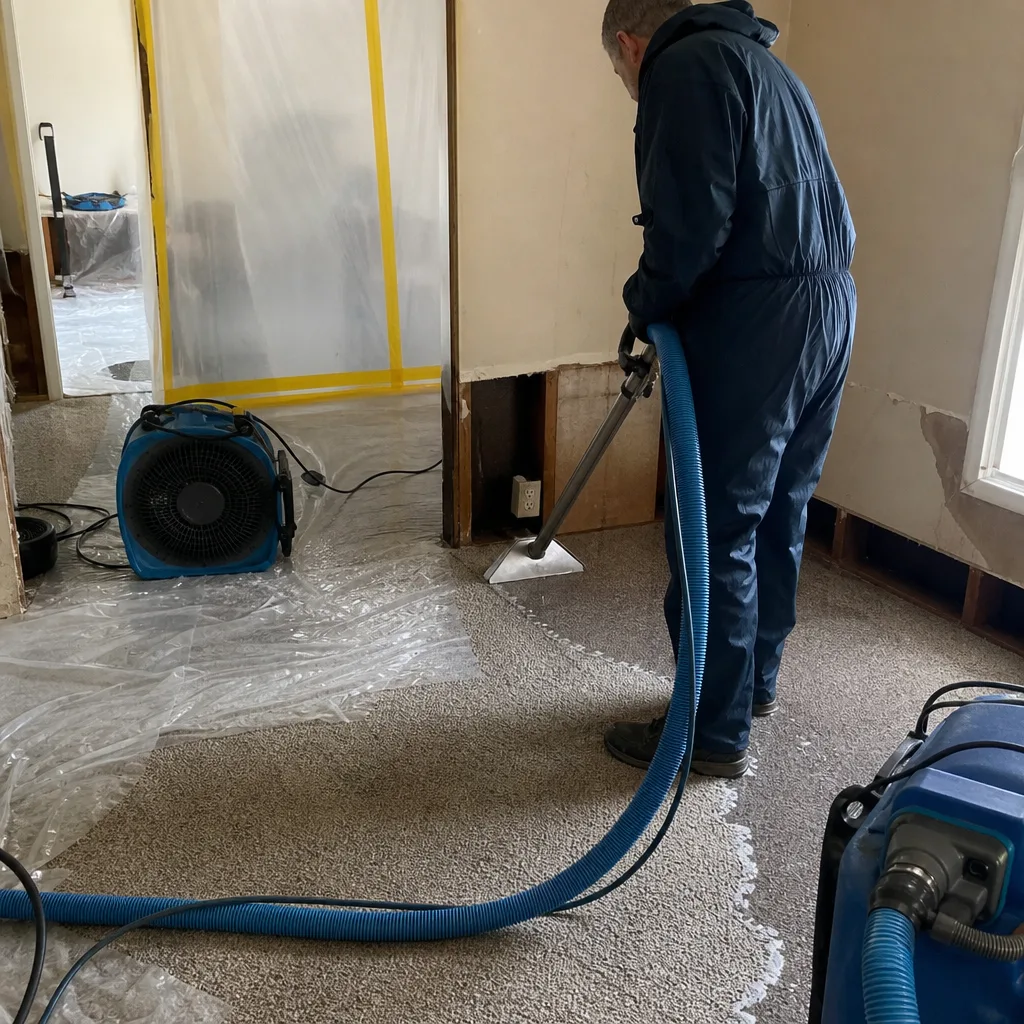
- Visible vs. Measurable Warning Signs: Why a Photo Isn’t Enough
- Carson-Specific Warning Sign Patterns by Climate and Geography
- How to Document a Warning Sign the Moment You Notice It
- Warning Signs That Void an Insurance Claim When Ignored
- Room-by-Room Reference: First Signs by Construction Era
- Water Damage Warning Signs: Carson CA Home Focus
- Mold, Fire, and Storm Warning Signs
- Common Mistakes to Avoid
- When to Call a Professional
- Frequently Asked Questions
 Before
 After
AfterVisible vs. Measurable Warning Signs: Why a Photo Isn’t Enough
Every smartphone camera can capture a water stain. What it cannot capture is whether that stain represents active moisture migration or a resolved event from three seasons ago. Insurance adjusters see photographs daily. What moves a claim from questioned to approved is instrument data that establishes the loss is current, ongoing, and sudden.
Visible warning signs include discoloration on drywall, buckling laminate, peeling paint, and visible mold growth. These matter for initial detection. But they are interpretive - a dark patch might be old roof tar, new seepage, or shadowing from inadequate lighting.
Measurable warning signs include:
- Moisture content in wood framing above 16% (measured with a pin-type meter)
- Relative humidity inside wall cavities above 60% (measured with a thermo-hygrometer probe)
- Vapor pressure differential exceeding 0.5 inches of mercury between affected and unaffected areas
- Specific humidity readings that persist above 55 grains per pound across 48 hours
Psychrometric data - the measurement of air and material moisture relationships - is how professional restoration contractors prove to insurers that drying is complete. A homeowner who can provide even basic readings at discovery creates continuity with the professional documentation that follows.
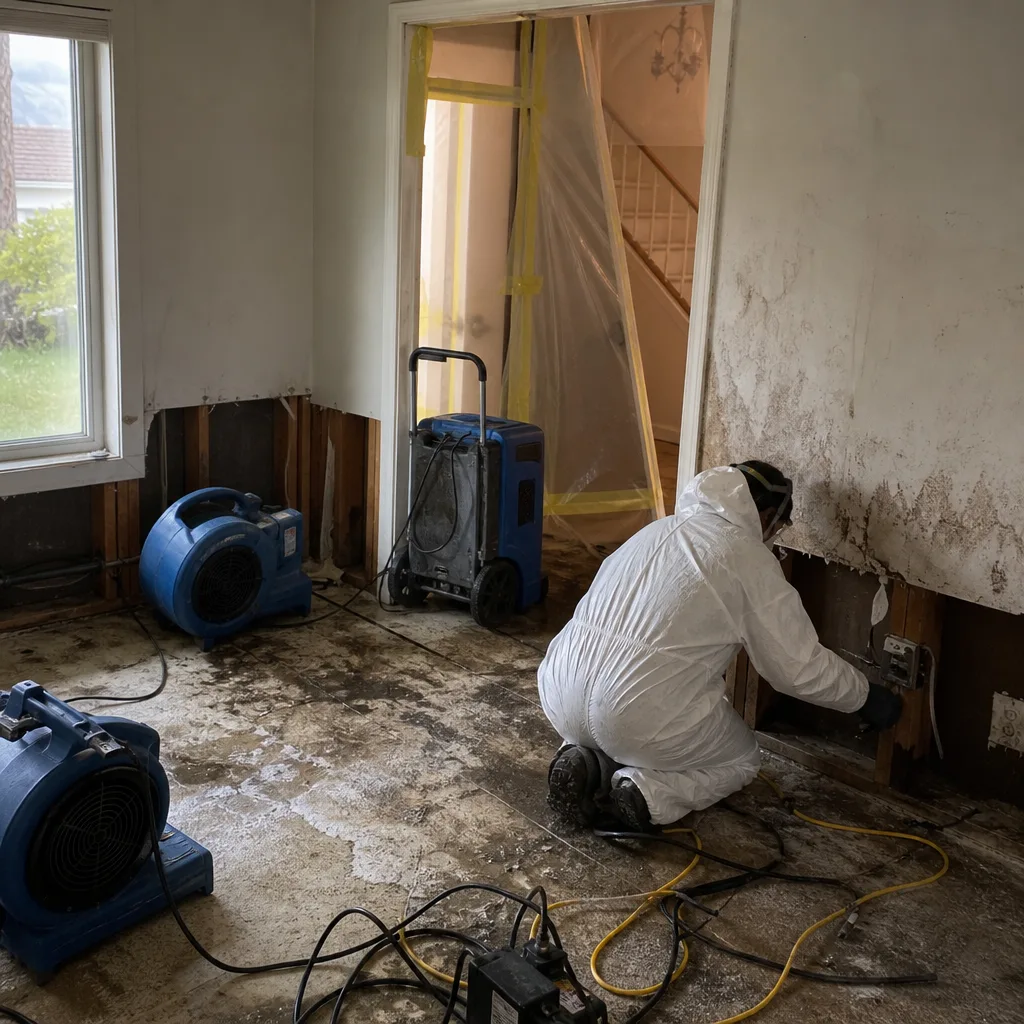
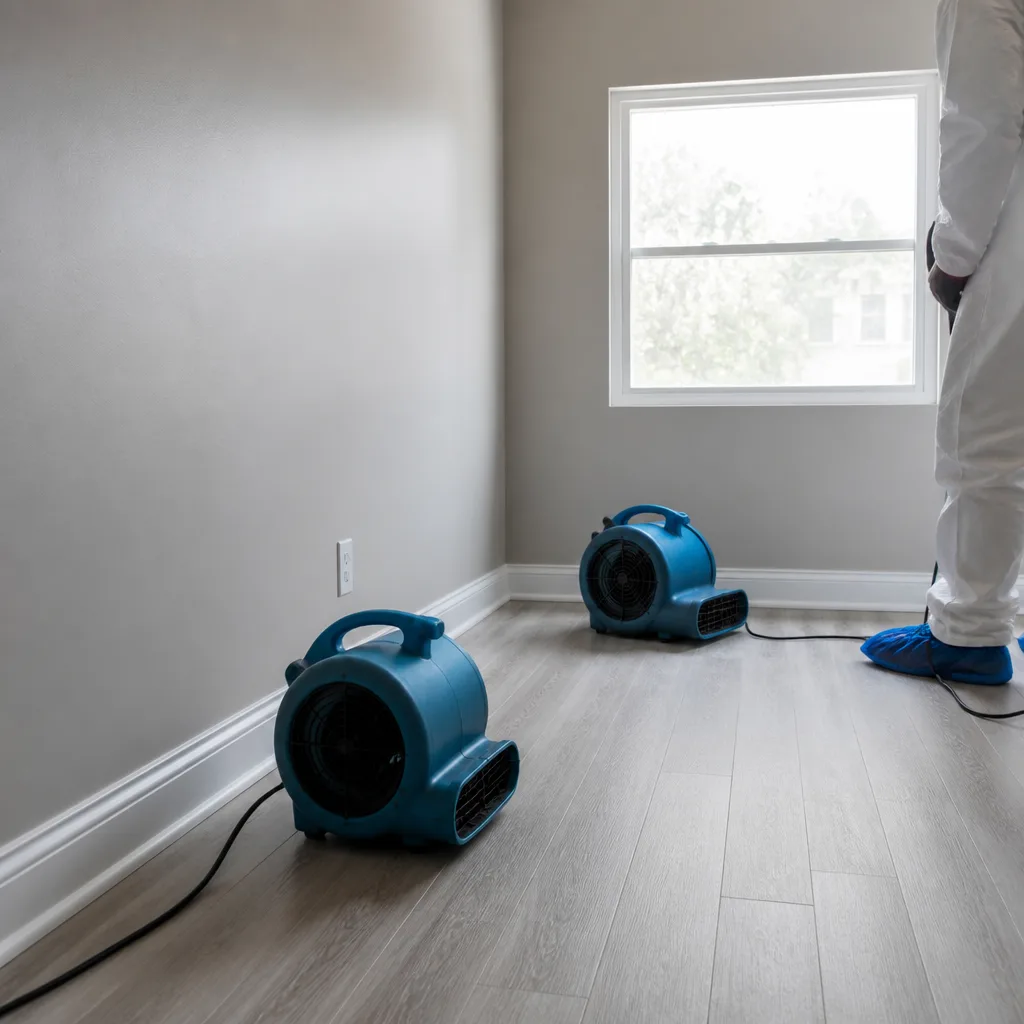
We deploy Dri-Eaz and Phoenix dehumidification systems on Carson jobs precisely because these units generate daily psychrometric logs: temperature, relative humidity, and specific humidity recorded at set intervals. Those logs become part of the claim file. A homeowner who photographs a moisture meter reading at discovery - even a $25 hardware-store pin meter - creates the first data point in that same chain of evidence.
The Haven Standard, Clause 1 requires a written price before work begins on every job. Part of that written scope is a baseline moisture reading for every affected material. Homeowners who arrive with their own baseline reading shorten our assessment time and strengthen their claim simultaneously.
Carson-Specific Warning Sign Patterns by Climate and Geography
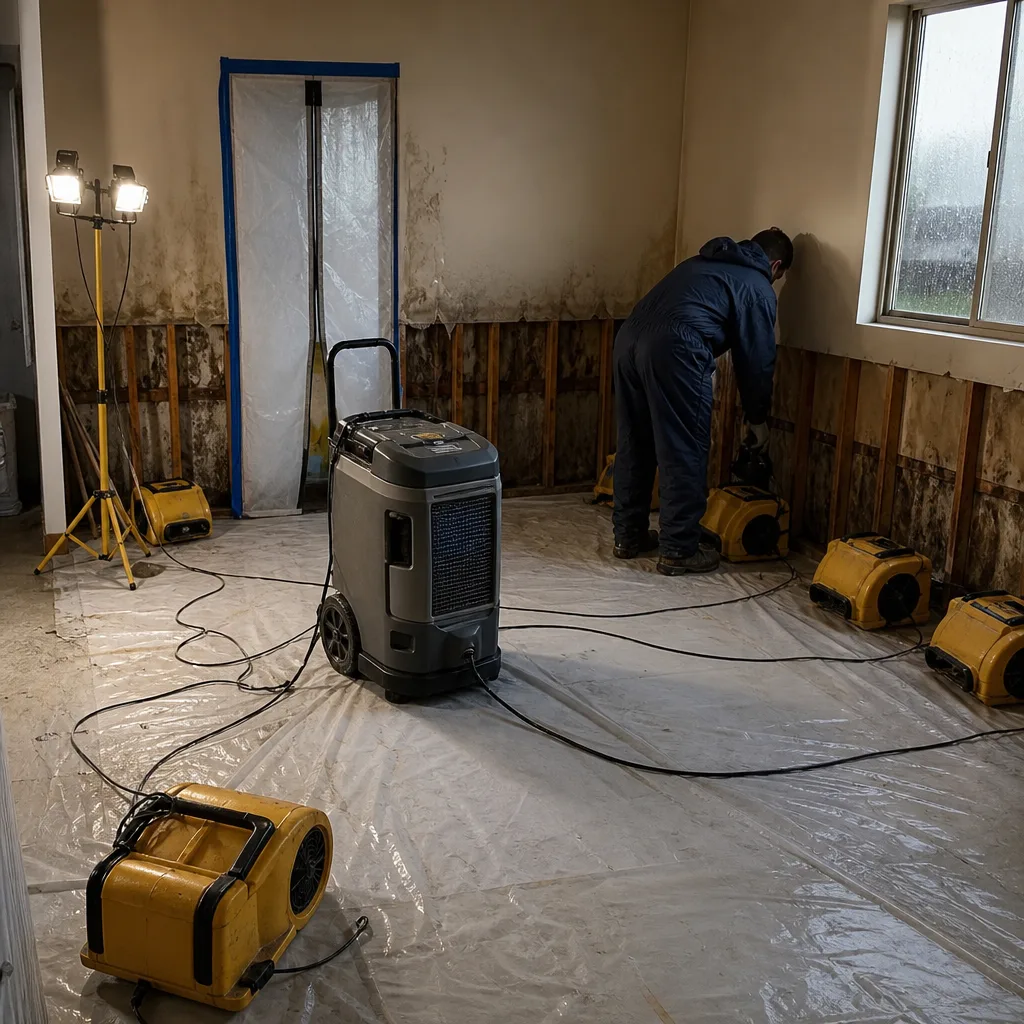
Carson’s location between the Dominguez Hills and the Port of Los Angeles creates microclimates and drainage patterns that produce predictable damage signatures. Recognizing these patterns helps homeowners distinguish between normal wear and active loss.
Efflorescence on Slab-on-Grade Foundations Near the Dominguez Channel
Homes south of Carson Street and east of the 110 Freeway, particularly in the DryMark Restoration Carson home service area near the Dominguez flood control channel, regularly show white crystalline deposits on garage floors and perimeter slab edges. This efflorescence is not “settling concrete.” It is soluble salts deposited by evaporating moisture - evidence that groundwater is migrating through the slab or footing.
Measure it: if the deposit reappears within 72 hours of cleaning, and a moisture meter reading at the slab edge exceeds 4.5% for concrete or 16% for any wood in contact, you have active moisture migration, not historical residue. Document the date of cleaning, photograph the recurrence, and record the reading.
Stucco Map Cracking at Window Headers After Santa Ana Season
The Santa Ana winds that reach Carson each fall through the New River Pass create rapid desiccation of stucco exteriors. When followed by winter rain, water enters hairline cracks that formed during drying stress. The signature pattern is a “map crack” network - irregular polygonal cracking concentrated above window and door headers where framing movement concentrates stress.
Check these cracks with a moisture probe at the interior drywall directly behind the header. A reading above 1.0% on a drywall scale, or any detectable elevation above baseline in the same room, indicates water has crossed the assembly. The critical documentation: photograph the exterior crack pattern, note the wind event date, and probe the interior. Insurance claims for Santa Ana-related water intrusion are frequently contested as “maintenance issues”; a dated crack photograph paired with an interior moisture reading establishes the weather event as the proximate cause.
HVAC Condensate Pan Overflow in Marine-Layer Months
Carson’s June-through-August marine layer produces extended periods of 80%+ outdoor relative humidity. Attic-mounted air handlers and high-velocity systems in newer Carson tract homes generate condensate at rates that overwhelm undersized drain pans or clogged primary drains. The first warning sign is not water - it is a sustained operational odor from the vents, followed by ceiling staining below the air handler.
The measurement that matters: check the secondary drain pan with a flashlight during a cooling cycle. If it contains standing water, or if the float switch has been bypassed, the primary drain is compromised. Document the water level with a photograph including a date stamp, and measure the ceiling drywall moisture at the stain if accessible. Condensate overflow claims are often denied as “long-term maintenance failure”; a dated photograph of a full secondary pan during operation proves sudden system failure.
How to Document a Warning Sign the Moment You Notice It
The “date of loss” is the anchor of every property insurance claim. Establish it with documentation that a contractor can reference and an adjuster can verify. Follow this sequence:
- Record the date and time. Use your phone’s timestamp. If you noticed the sign earlier but are documenting now, state both: “First observed [date], documented [date].”
- Photograph the sign in context. Include a reference object for scale (ruler, coin, hand) and a wider shot showing the room location. Take a close-up, a mid-range, and a room-context shot minimum.
- Note the location precisely. “North wall of kitchen, 18 inches from floor, below east window” - not “kitchen wall.”
- Record any measurement available. Moisture meter reading, humidity reading from a thermostat or standalone hygrometer, temperature, odor intensity (mild/moderate/strong), and whether it varies with HVAC operation or time of day.
- Document any recent events. Last rain, last irrigation cycle, recent appliance use, recent maintenance - anything that might establish causation.
- Store in two locations. Cloud backup and local storage. Email the file to yourself with a descriptive subject line that becomes searchable.
This six-step documentation protocol is what our technicians perform on every initial assessment at Water Damage Restoration in Carson jobs. Homeowners who arrive with comparable documentation receive faster scope approval and more accurate initial pricing under Haven Standard, Clause 1.
Warning Signs That Void an Insurance Claim When Ignored
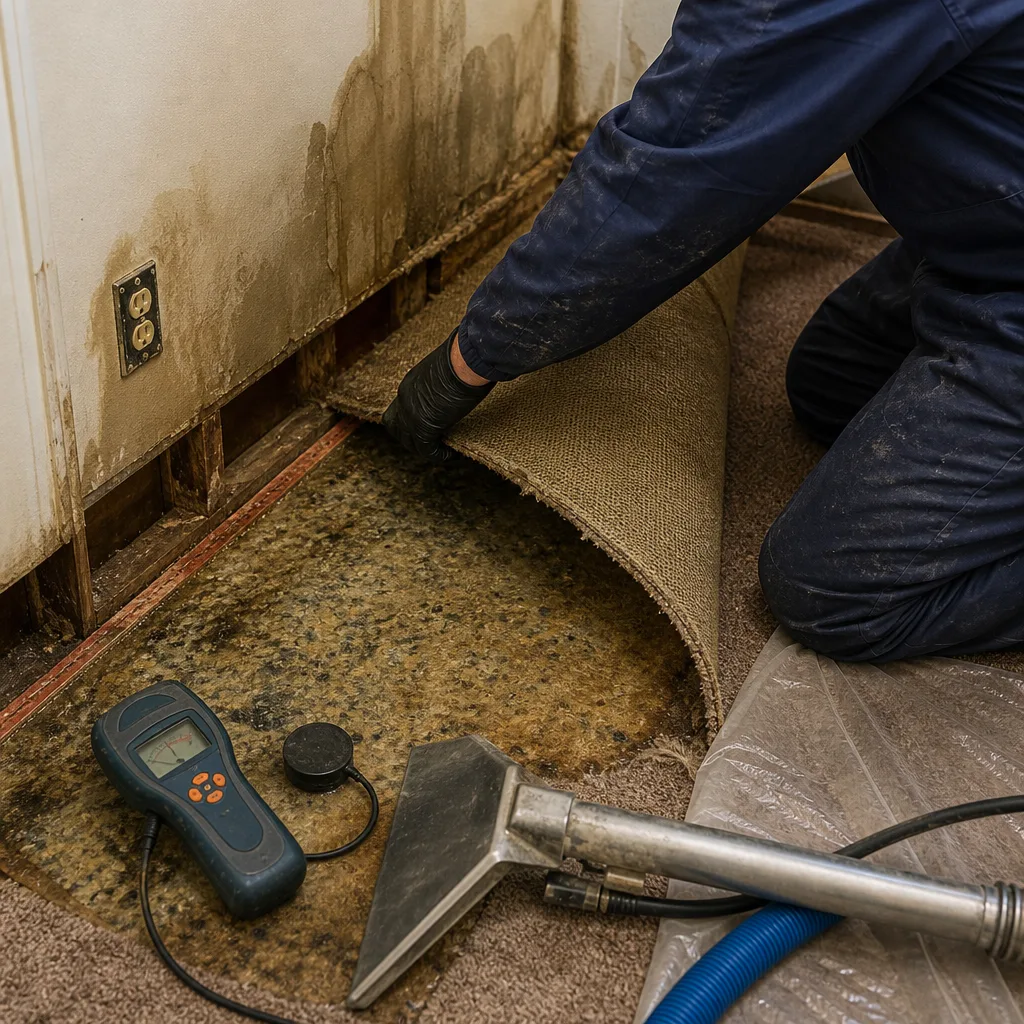
Insurance policies cover sudden and accidental damage. They exclude damage that results from failure to maintain the property or from long-term seepage. Certain warning signs, if documented in the claim file as having been visible before the reported loss date, will result in denial.
Evidence of long-term seepage: Multiple paint layers over water staining, indicating repeated painting without repair; rusted nail heads in baseboards with staining halos; calcium deposits on plumbing fixtures that have built visible thickness. These show months or years of exposure, not a sudden event.
Paint bubbling over repeated cycles: Paint that has bubbled, been cut or sanded, and re-bubbled in the same location indicates previous moisture events that were cosmetically addressed. An adjuster will request maintenance records; absent proof of professional repair, the new claim is treated as continuation of the old.
Subfloor deflection that indicates months of moisture exposure: A spongy or crowned floor with finish damage extending across multiple boards, not a single point of entry, suggests chronic moisture rather than a single incident. In Carson’s older pier-and-beam construction, this often appears as differential settlement - one corner of a room sinking while adjacent areas remain level - caused by rotted sill plates from sustained groundwater exposure.
The critical action: document the first observation of any warning sign immediately, even if you do not plan to file a claim. If the condition worsens and you later need coverage, your early documentation establishes that you did not ignore a known problem. We have reviewed competitor estimates for Carson homeowners where a three-month-old photograph on the homeowner’s phone - never shared with the initial contractor - became the evidence that reversed a claim denial.
Room-by-Room Reference: First Signs by Construction Era
Carson’s housing stock spans three distinct construction periods, each with characteristic failure modes. Knowing your home’s era helps you inspect the right locations.
Pre-1960: Pier-and-Beam with Plaster and Lath
Found in neighborhoods north of Carson Street and near Victoria Park. These homes have perimeter foundations with crawl spaces, original plaster walls, and galvanized steel supply lines at end of service life.
First water signs: Efflorescence on interior plaster at baseboard level; rust-colored staining at ceiling medallions where galvanized nipples fail; cupping of original hardwood floors from crawl space humidity above 70% relative humidity.
First mold signs: Musty odor from crawl space vents in morning hours; white or gray surface growth on plaster behind furniture placed on exterior walls.
Inspect: Crawl space quarterly with a flashlight and moisture meter on sill plates. Readings above 20% in wood indicate conditions conducive to wood-destroying organisms.
1960-1985: Slab-on-Grade with Stucco and Single-Pane Windows
The majority of Carson’s housing inventory. Slab construction with perimeter stem walls, original aluminum or early vinyl windows, and copper supply lines transitioning to early PEX in 1980s remodels.
First water signs: Staining at slab perimeter in garages and laundry rooms; tile delamination in wet areas where slab moisture breaks bond; window sill rot at lower corners of fixed panes where condensation pools.
First mold signs: Dark speckling on acoustic ceiling tiles in bathrooms; persistent condensation on single-pane windows that does not clear by mid-morning; musty odor from wall cavities behind tub enclosures.
Inspect: Window tracks with a moisture probe after heavy rain. Any reading above ambient interior conditions indicates seal failure or flashing compromise.
Post-1985: Tract Construction with Drywall and Forced-Air HVAC
Developments south of the 91 Freeway and east of the 110. These homes have slab floors, textured drywall, and attic-mounted HVAC with flex duct distribution.
First water signs: Ceiling staining at duct boots where condensate forms on uninsulated metal; nail pops in drywall following roof events; garage drywall staining at hose bib locations where slab settlement cracked copper.
First mold signs: Operational odor from HVAC vents in first cooling cycle of season; staining on ceiling texture around bathroom exhaust fans where duct disconnects in attic; wall cavity moisture detected as cool spots on exterior walls during heating season.
Inspect: Attic access during cooling season. Check primary and secondary drain pans with flashlight; photograph any standing water in secondary pan as documentation of primary drain failure.
Water Damage Warning Signs: Carson CA Home Focus
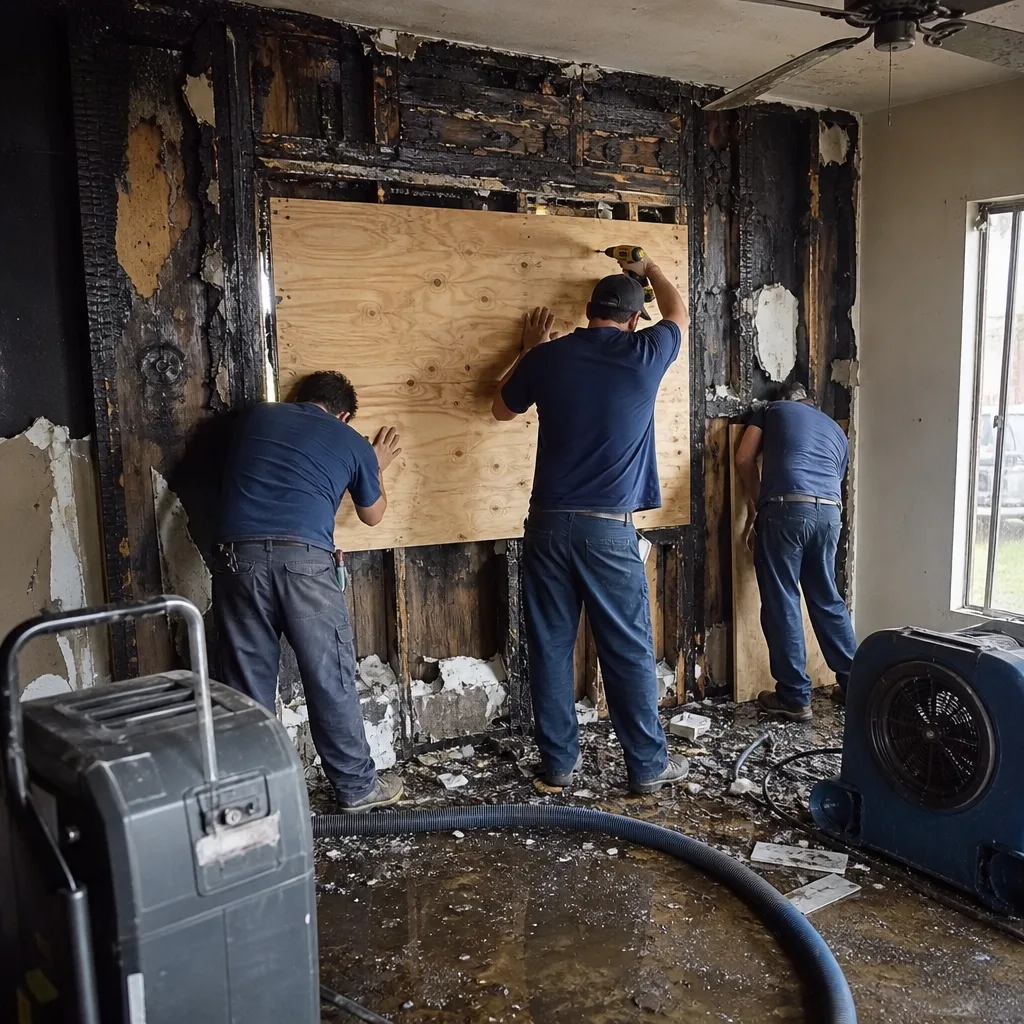
Water damage is the most common loss type we address in Carson, and the most frequently disputed by insurers. The primary target query - water damage warning signs Carson CA home - reflects homeowner need for actionable, location-specific guidance.
Active leak indicators (require immediate response):
- Sound of running water when all fixtures are off - indicates supply line breach, often slab leak in Carson’s copper-era homes
- Water meter movement with all valves closed - confirms pressurized leak, typically within 24-hour discovery window for coverage
- Sudden pressure drop at multiple fixtures - indicates main line or manifold failure
- Warm spots on slab floors - classic signature of hot water line leak under slab
Concealed moisture indicators (require instrument verification):
- Baseboard separation from wall - moisture swelling in drywall or sole plate
- Door binding in frame - seasonal moisture variation is normal; persistent binding indicates elevated equilibrium moisture content
- Crown molding gaps at ceiling - truss uplift from attic moisture or ceiling drywall saturation
- Tile grout darkening that does not clean - indicates moisture behind tile, not surface soiling
Carson-specific water damage patterns:
Homes near the Dominguez Channel experience hydrostatic pressure spikes during channel maintenance and high-tide events, producing slab edge moisture that mimics plumbing leaks. The distinguishing measurement: a slab leak typically produces a hot or warm spot with thermal imaging; hydrostatic pressure produces uniform temperature with elevated moisture at perimeter only.
Carson’s water table varies seasonally. January through March, we see increased sump pump failures in homes with below-grade construction near the channel. April through June, the pattern shifts to irrigation backflow and sprinkler line damage from winter ground movement. Document your irrigation startup date and any pressure irregularities; these establish the sudden event versus gradual seepage distinction that determines coverage.
Mold, Fire, and Storm Warning Signs
Each damage type has documentation requirements that parallel water damage but with distinct warning signatures.
Mold Remediation Warning Signs
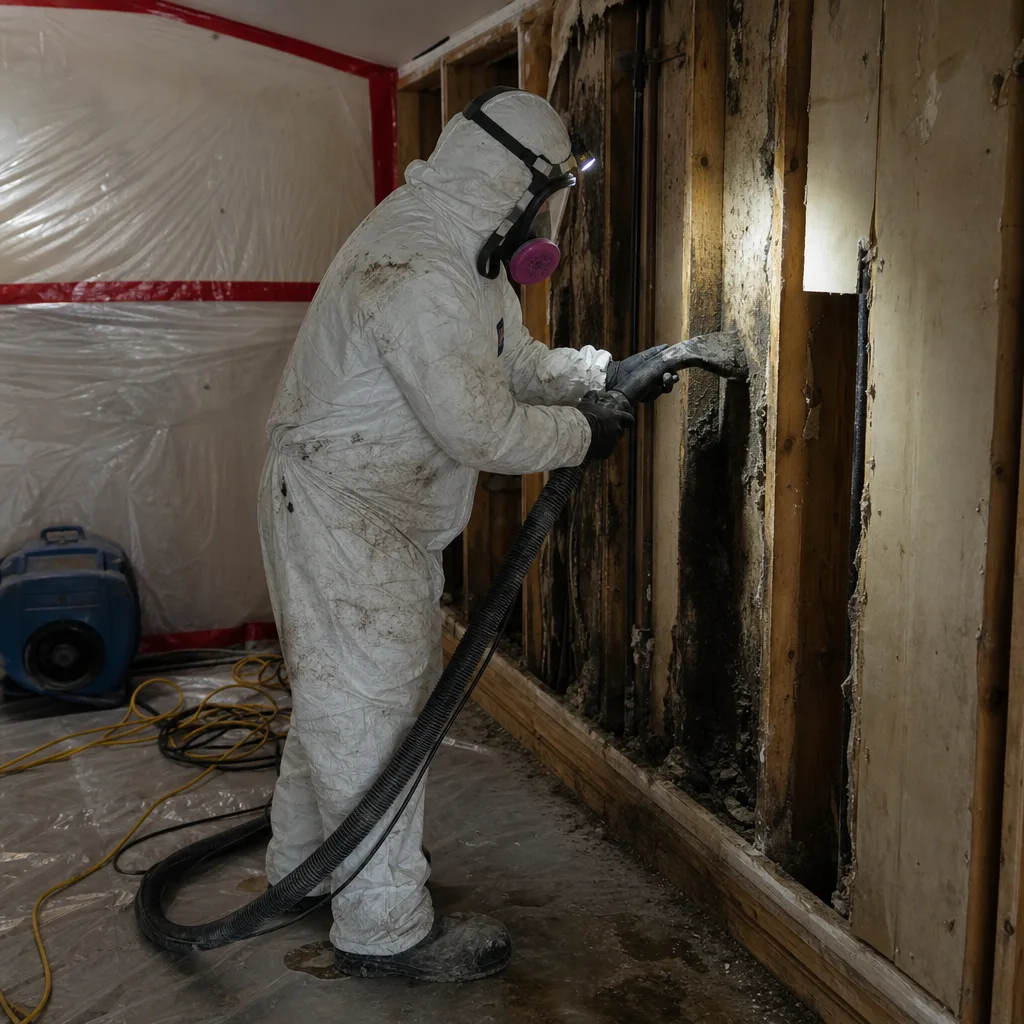
Mold remediation in Carson requires IICRC S520 compliance for any project involving more than 10 square feet of visible growth. The warning signs that precede visible growth are measurable and often misattributed.
Olfactory indicators: A musty odor that intensifies when HVAC operates, or that localizes to specific rooms, indicates active microbial volatile organic compound (MVOC) release. Not all mold produces visible growth before odor. Document odor onset date, intensity variation, and any correlation with humidity events.
Humidity indicators: Sustained relative humidity above 60% in any room for 48 hours creates conditions for spore germination on organic surfaces. Carson’s marine layer months make this threshold achievable without any plumbing failure - closed rooms with no HVAC circulation are particularly vulnerable.
Surface indicators: Fuzzy or powdery growth on organic materials - paper-faced drywall, wood, textiles - with color ranging from white to black. Color is not a reliable toxicity indicator; laboratory analysis is required for species identification.
The documentation that protects your claim: dated photographs of the affected area with a ruler for scale, humidity readings from the room, and any history of water events in that location. We provide documented photo records on every mold remediation visit as a standard deliverable, not an upsell.
Fire and Smoke Damage Warning Signs
Fire & Smoke Damage Restoration in Carson addresses losses from cooking fires, electrical faults, and wildfire intrusion. The warning signs of pre-loss conditions that affect coverage:
Electrical: Discolored outlet covers, persistent breaker trips, or odor from electrical panels indicate conditions that may be classified as maintenance issues if not reported. Document with photographs and electrician consultation records.
Cooking systems: Grease accumulation in range hood filters and ductwork is a maintenance exclusion in most policies. Document professional cleaning dates.
Wildfire preparedness: Carson’s position in the South Bay places it at lower direct wildfire risk than hillside communities, but smoke intrusion from regional events produces particulate damage requiring HEPA filtration and surface remediation. Document HVAC filter changes and any visible ash accumulation after regional fire events.
Storm and Disaster Warning Signs
Storm damage in Carson is primarily wind-driven rain and localized flooding. The warning signs that precede major loss:
- Loose or lifted roof shingles after wind events - photograph from ground level; do not access roof
- Debris accumulation in roof valleys and drains - document before and after cleaning
- Landscape drainage directed toward foundation - photograph grading and any pooling after rain
- Sump pump cycling frequency increase - log cycles per hour during rain events
Common Mistakes to Avoid
- Describing instead of measuring. “The wall felt damp” is not documentation. “North kitchen wall, 18 inches from floor, 22% moisture content in drywall, 9:15 AM, March 3” is documentation that supports a claim.
- Cleaning before documenting. A homeowner who scrubs efflorescence from a garage floor and then calls a contractor has destroyed the evidence of recurrence. Document first, clean after assessment.
- Assuming new construction is immune. Carson’s post-1985 tract homes have specific vulnerabilities: flex duct disconnections in attics, slab settlement at garage thresholds, and window flashing failures in Santa Ana conditions. Age does not eliminate risk.
- Ignoring seasonal patterns. Warning signs that appear only during specific conditions - marine layer humidity, Santa Ana drying stress, channel maintenance periods - are still real and still documentable. Seasonal recurrence is evidence of a systemic issue, not imagination.
- Waiting for “enough” damage to call. Insurance covers sudden events at any scale. A $400 slab leak repair documented properly is a covered loss; a $40,000 mold remediation with no documentation of origin is a contested claim.
- Relying on contractor verbal assurances without written scope. Haven Standard, Clause 1 exists because we have seen homeowners accept verbal estimates that ballooned 300% once work began. A written price before work starts is not a preference; it is the minimum standard for claim integrity.
- Failing to get a second opinion on a competitor’s estimate. We offer free second opinions on any written estimate because we have reviewed competitor scopes that omitted critical drying steps, used inappropriate equipment classifications, or failed to address Category 3 water as health hazard. An estimate is a technical document, not a price tag.
When to Call a Professional
Call a restoration professional when any of the following apply: moisture readings exceed material-specific thresholds; odors persist beyond 48 hours or localize to wall cavities; visible mold exceeds 10 square feet; any water event involves Category 2 or 3 contamination (dishwasher drain line, washing machine overflow, toilet backup, or any water that has crossed ground surface); or your insurance company has requested documentation you cannot provide.
DryMark Restoration Carson offers free estimates in Carson - call (424) 305-3365. Every estimate includes baseline moisture readings, a documented photo record, and a written scope with pricing before any work begins, per Haven Standard, Clause 1. Our live dispatch operates 24 hours a day, 7 days a week with no voicemail on emergency lines.
Frequently Asked Questions
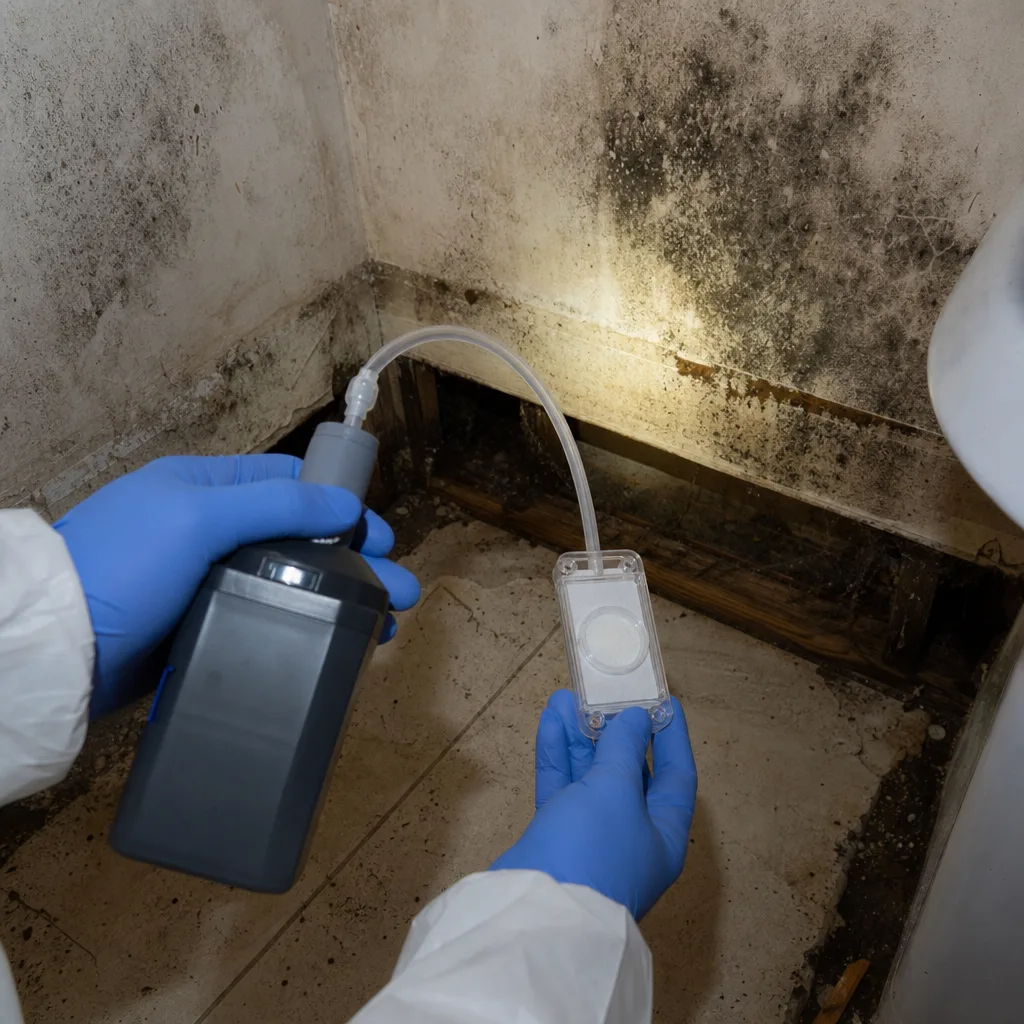
Initial assessments from DryMark Restoration Carson are provided at no charge and include documented moisture readings, thermal imaging, and a written scope with pricing before any work begins. Call (424) 305-3365 to schedule - estimates are free.
Coverage depends on whether the damage is sudden and accidental versus gradual. If you documented the warning sign when first observed - with date, photograph, and any measurement - you have evidence that you did not ignore a known problem. Without documentation, adjusters typically classify delayed reporting as failure to mitigate. Document everything at first observation, regardless of whether you plan to file a claim.
A moisture meter measures liquid water content in a specific material - wood, drywall, concrete - using electrical resistance or capacitance. A humidity meter measures water vapor in air. Both matter: a wall can have normal air humidity but saturated insulation, or high air humidity with dry framing. Professional restoration uses both, plus thermal imaging, to map the full moisture profile.
Live person answers every call, 24 hours a day, 7 days a week - no voicemail trees, no next-business-day callbacks while water is still moving. Emergency dispatch for active water losses deploys within the hour in Carson and surrounding areas. Reconstruction and non-emergency services are scheduled with written scope and pricing confirmed in advance.
Visible mold exceeding 10 square feet, or any mold in HVAC systems, requires professional remediation per IICRC S520 and California Department of Public Health guidance. Disturbing mold colonies without containment releases spores at concentrations that can affect respiratory health and spread contamination to unaffected areas. We have documented photo records on every remediation visit so you and your insurer can verify proper containment and clearance.
DryMark Restoration Carson coordinates directly with adjusters, providing daily drying logs, photo documentation, and written scope updates that meet IICRC, RIA, and IFA standards. Our documentation-first approach - the company’s founding principle - turns restoration invoices into claims that insurers pay without dispute. You are copied on all communications and retain final approval authority.
The Bottom Line
Warning signs are data waiting to be collected. A Carson homeowner who measures moisture, dates photographs, and records locations transforms a vague concern into a documented loss that insurers can process and contractors can scope accurately. The most expensive restoration we encounter is not the largest - it is the one that started small, was described vaguely, and grew while documentation was impossible. Collect the data first. Call second. The written price, photo record, and 365-Day Done Right Promise under The Haven Standard follow from there.
Written by Alicia Brennan, Owner at DryMark Restoration Carson, serving Carson since 2011.