
Last updated September 23, 2026
Free visual inspection and a written scope of work before any mitigation begins - photos, moisture readings, and drying logs go in your claim file
The scope we write is the scope we bill. Anything new gets shown to you, in writing, before we touch it.
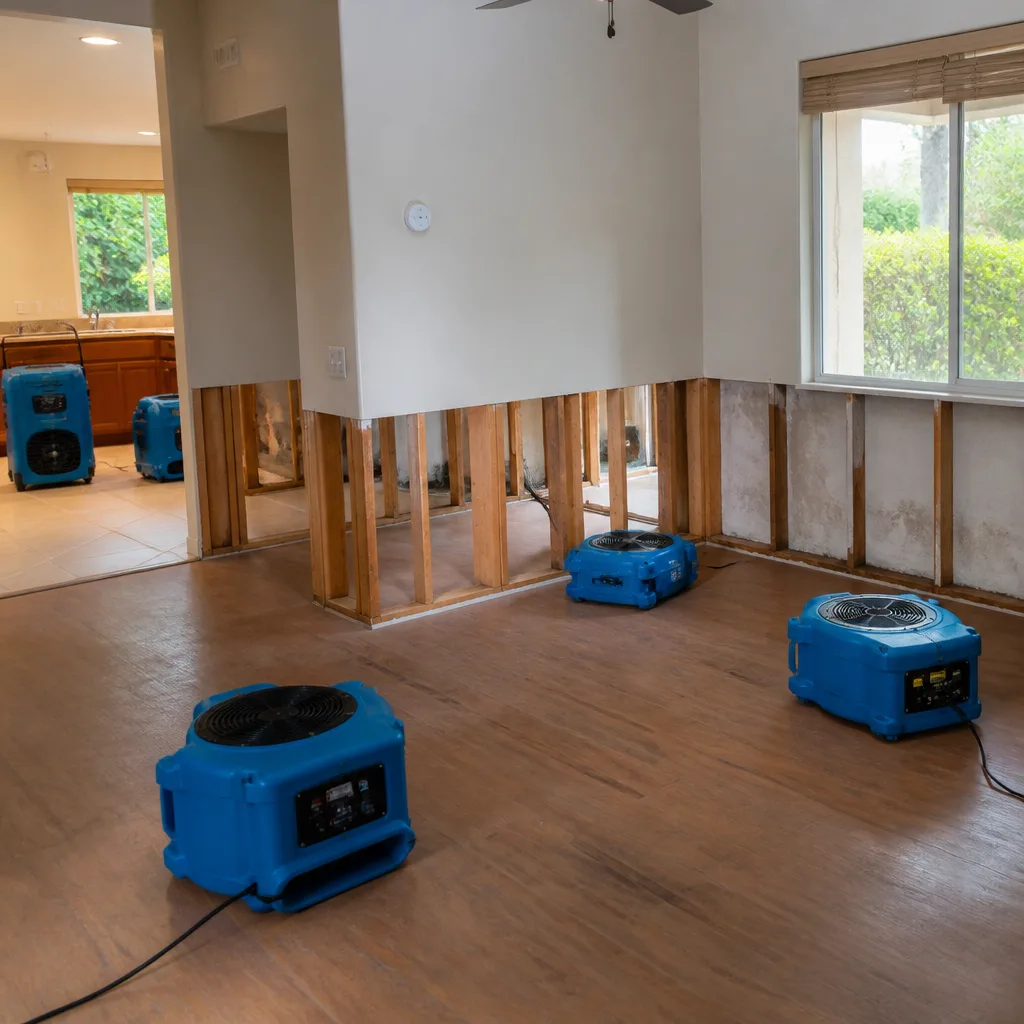
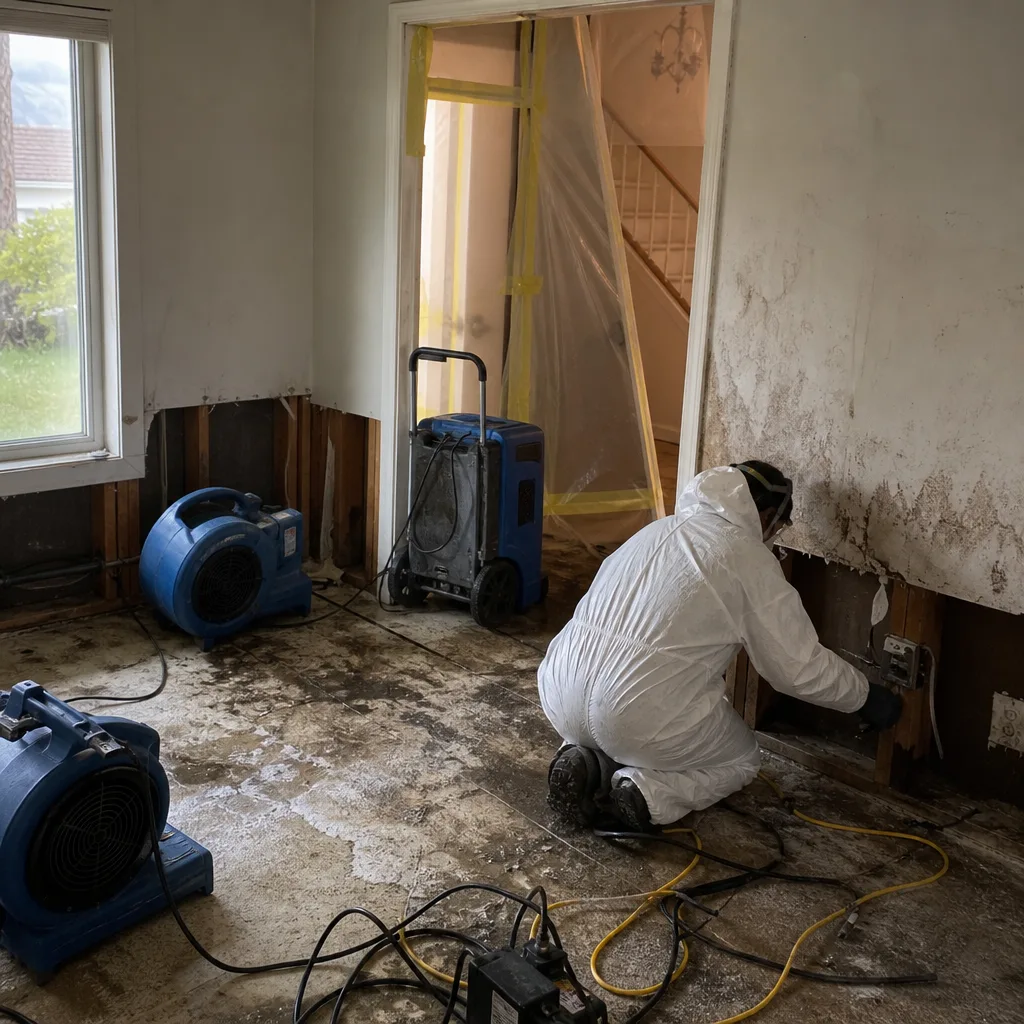 Before
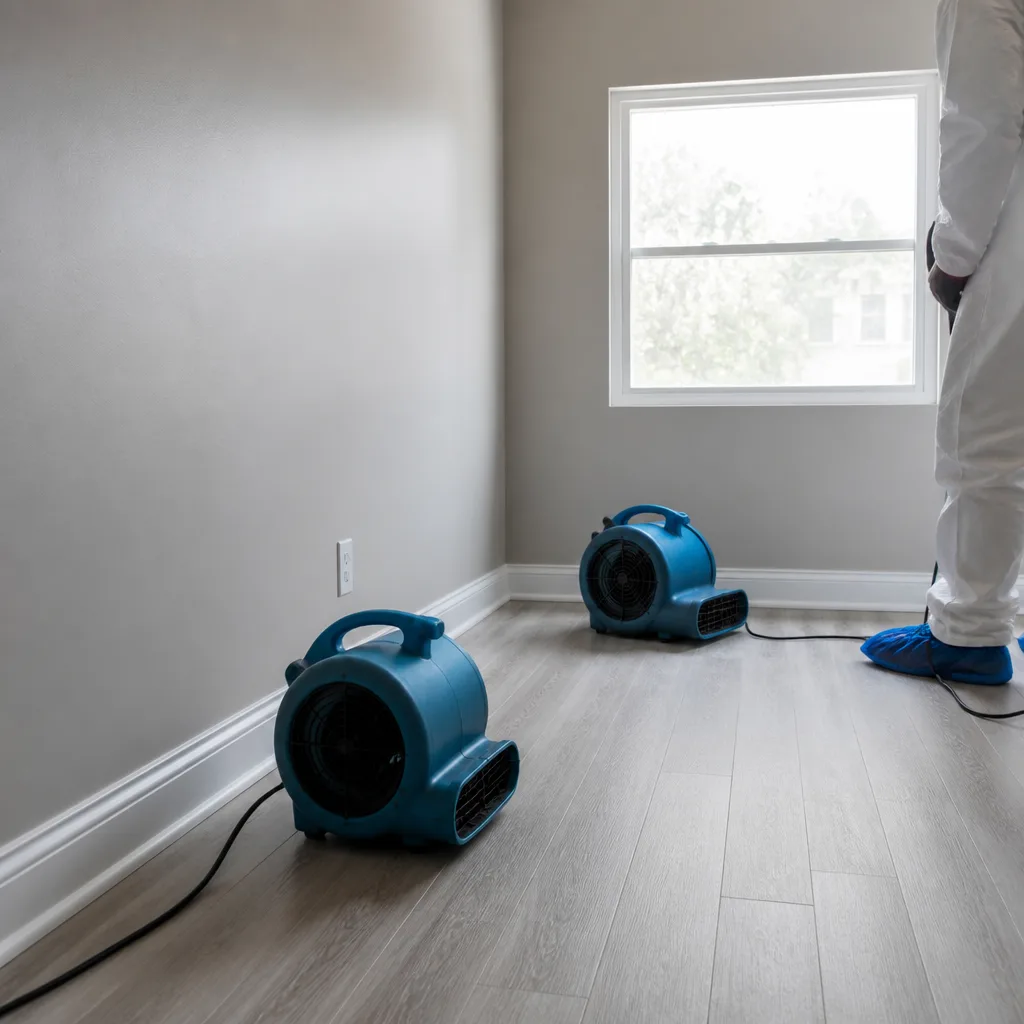 After
After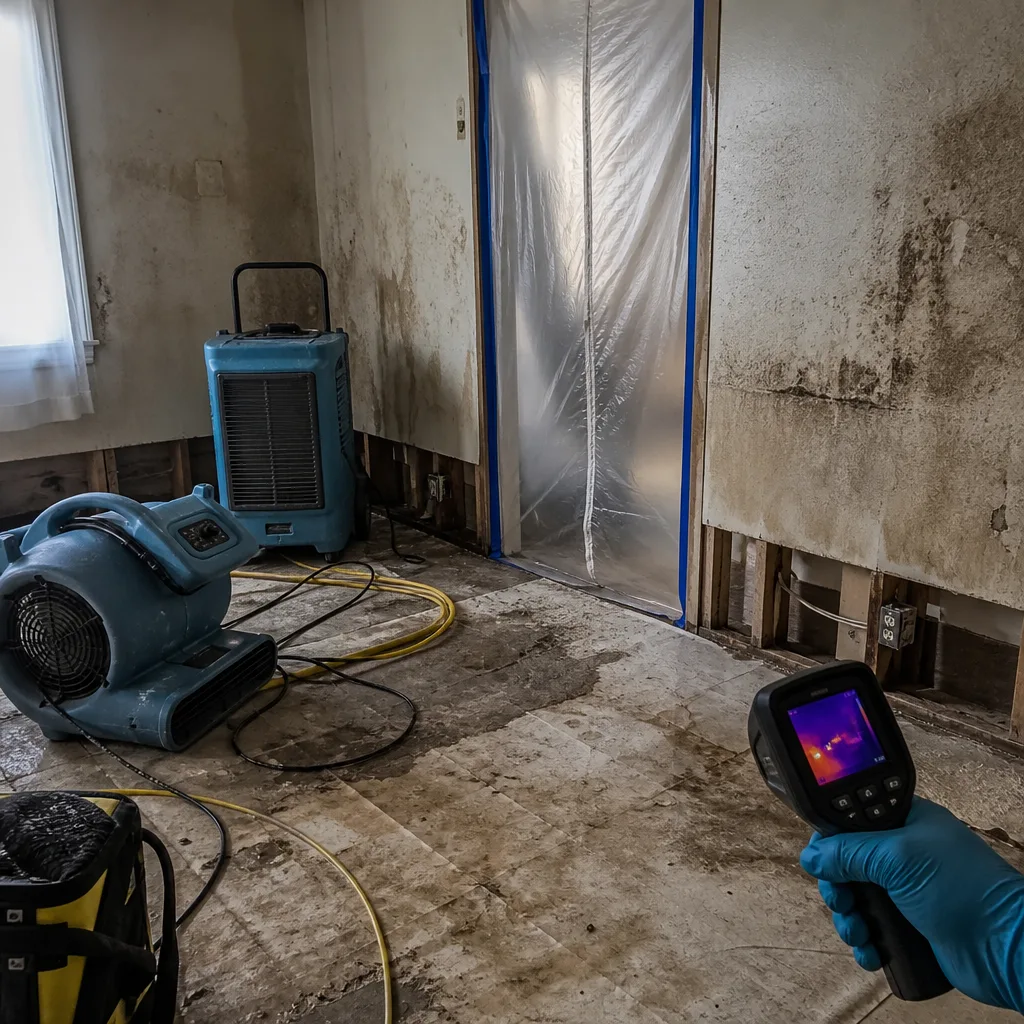 Before
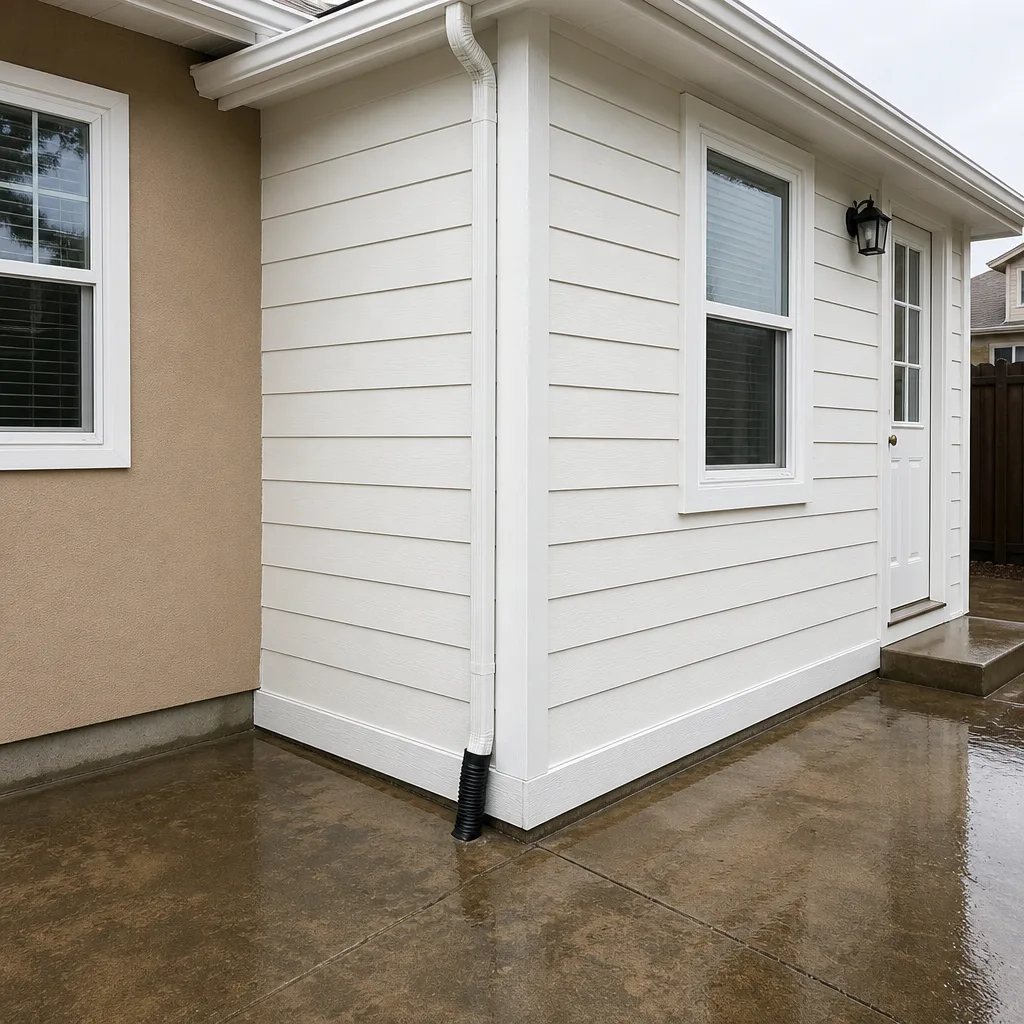 After
After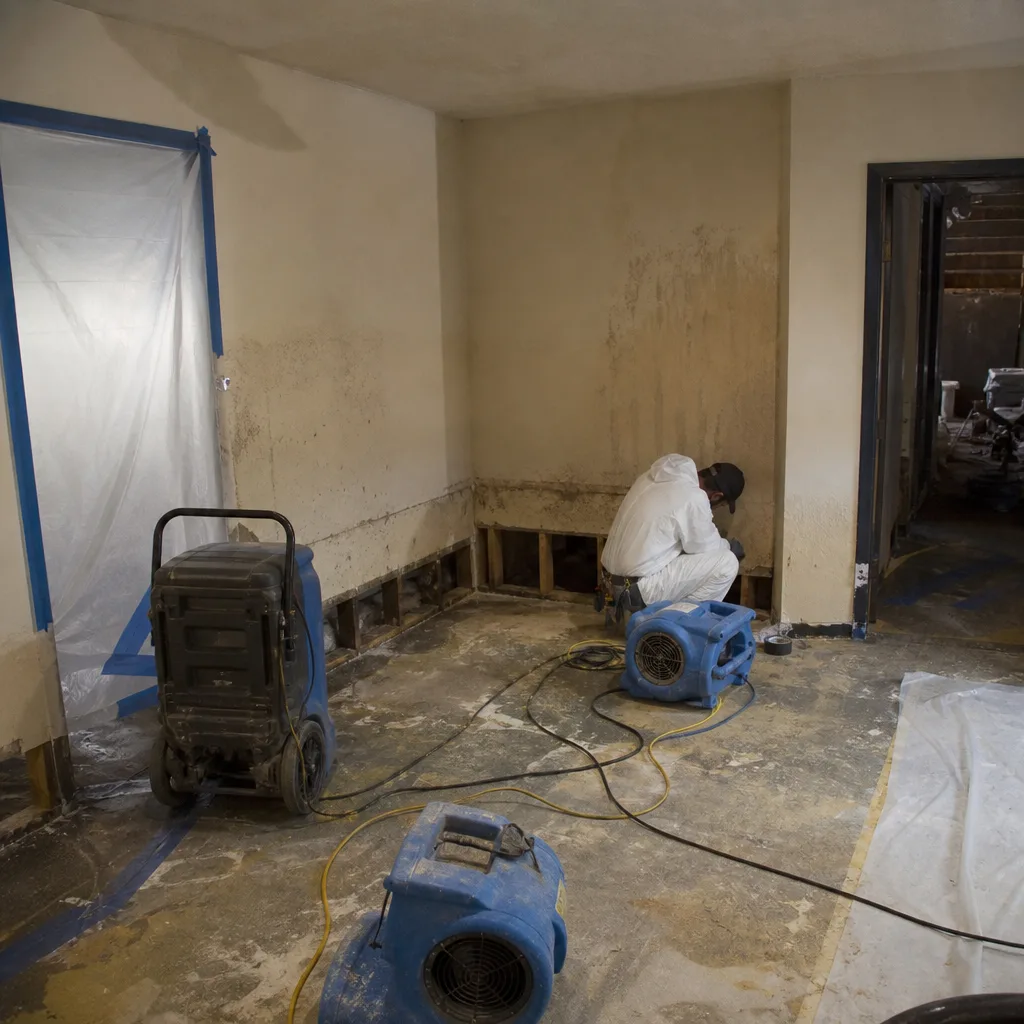 Before
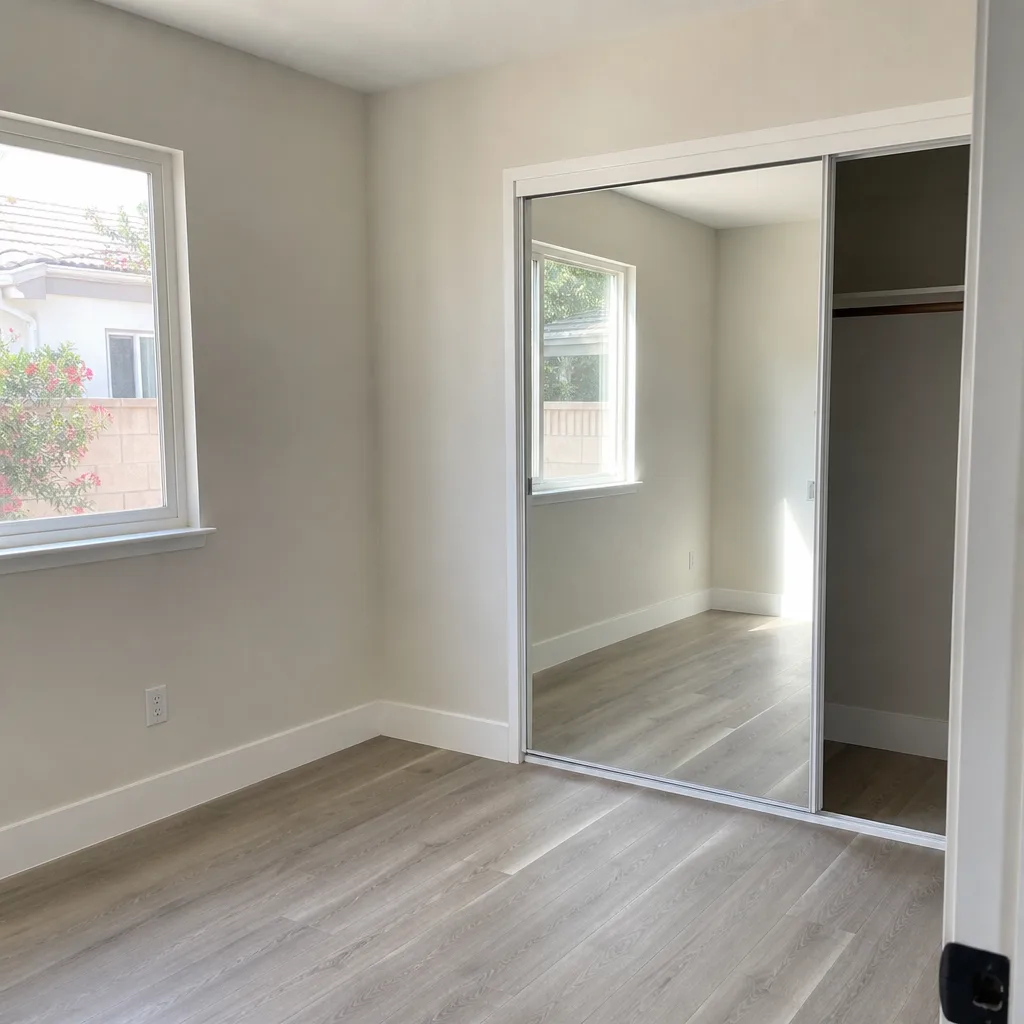 After
AfterSeasonal Damage Restoration Care for Carson: Year-Round Homeowner’s Guide
Carson recorded 14 separate Santa Ana wind events in 2023 that drove exterior humidity below 8% - conditions that crack stucco, open flashing gaps, and create the water intrusion pathways that homeowners don’t discover until the following January rain. Most seasonal maintenance guides written for Carson follow a four-season template borrowed from the Midwest: spring cleaning, summer heat, fall prep, winter freeze. That template fails here. Carson’s climate follows three distinct damage seasons - marine-layer condensation, dry-heat structural stress, and Santa Ana wind intrusion - each producing damage mechanisms that standard checklists miss entirely. In The Complete Guide to Damage Restoration in Carson, we’ll map each season to its specific threat, show you how to document pre-season conditions with photographs and moisture readings, and build a seasonal file that turns potential claim disputes into documented evidence.
Quick Answer
Carson homeowners should follow our Water Damage Restoration Maintenance Checklist for Carson Homeowners with a three-season calendar: June through September for marine-layer condensation and attic ventilation checks, October through December for Santa Ana wind structural stress and exterior sealing, and January through March for rain intrusion at previously opened gaps. Each season requires documented baseline photos, targeted moisture readings, and a written inspection record that establishes pre-loss condition for insurance purposes.
Table of Contents
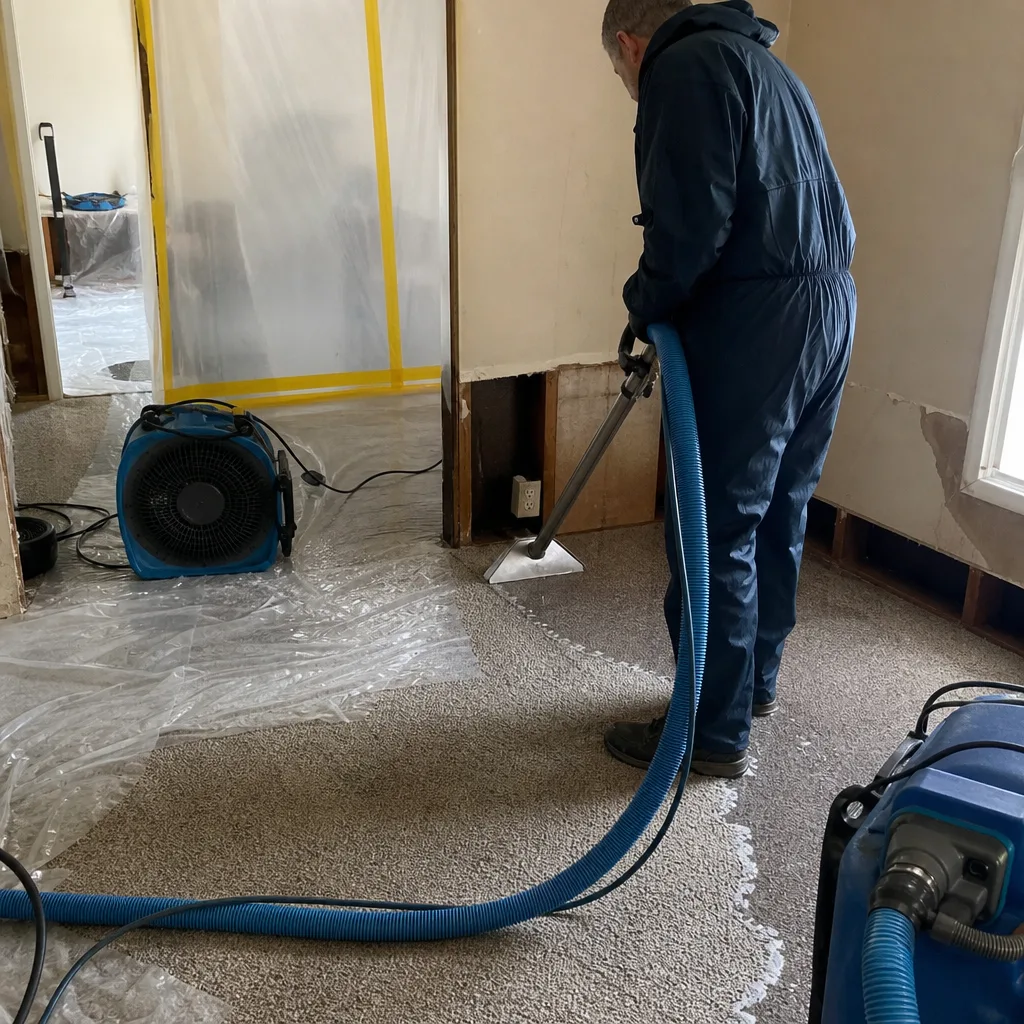
- Why Carson’s Three Climate Seasons Break the Standard Maintenance Calendar
- June-September: Marine-Layer Condensation and Hidden Attic Moisture
- October-December: Santa Ana Wind Season and Structural Stress Documentation
- January-March: Rain Intrusion at Pre-Opened Pathways
- The Three Exterior Inspection Points Carson Stucco Homes Skip
- Building a Seasonal File That Adjusters Read as Evidence
- Common Mistakes to Avoid
- When to Call a Professional
- Frequently Asked Questions
 Before
 After
AfterWhy Carson’s Three Climate Seasons Break the Standard Maintenance Calendar
The standard four-season maintenance guide assumes freeze-thaw cycles, autumn leaf accumulation, and spring snowmelt. Carson’s climate operates on different physics. We’re 12 miles from the Pacific, directly in the path of the marine layer that rolls in overnight from June through September. Our summer highs rarely exceed the low 80s, but our Santa Ana wind events in October through December can strip humidity to desert levels in hours. January through March brings our concentrated rainfall - 85% of Carson’s annual precipitation falls in this window, according to Long Beach Airport records.
Each of these three seasons creates a distinct damage mechanism:
- Marine-layer season (June-September): Cool, saturated air meets warm roof sheathing. Without adequate soffit ventilation, condensation forms on the underside of decking. We’ve measured 22% WME (wood moisture equivalent) in Carson attics during August mornings - well above the 19% threshold where mold colonization accelerates.
- Santa Ana season (October-December): Sustained winds at 25-45 mph with humidity below 15% desiccate exterior materials. Stucco shrinks. Caulk separates from substrates. Roof-to-wall transition tape loses adhesion. These openings remain invisible until January rain finds them.
- Rain intrusion season (January-March): Water enters through gaps created months earlier. The homeowner discovers stains in February, but the actual breach occurred in November. Without documentation, insurers classify this as “long-term damage” and reduce or deny the claim.
This misalignment between cause and discovery is why standard maintenance calendars fail Carson homeowners. The work of preventing February water damage happens in October. The work of preventing August mold growth happens in May. And the documentation that proves diligent maintenance happens at every transition.
Our Water Damage Restoration in Carson team regularly encounters claims where a three-month gap between cause and discovery became the reason for partial denial. A seasonal file with dated photos and moisture readings closes that gap with evidence.
June-September: Marine-Layer Condensation and Hidden Attic Moisture
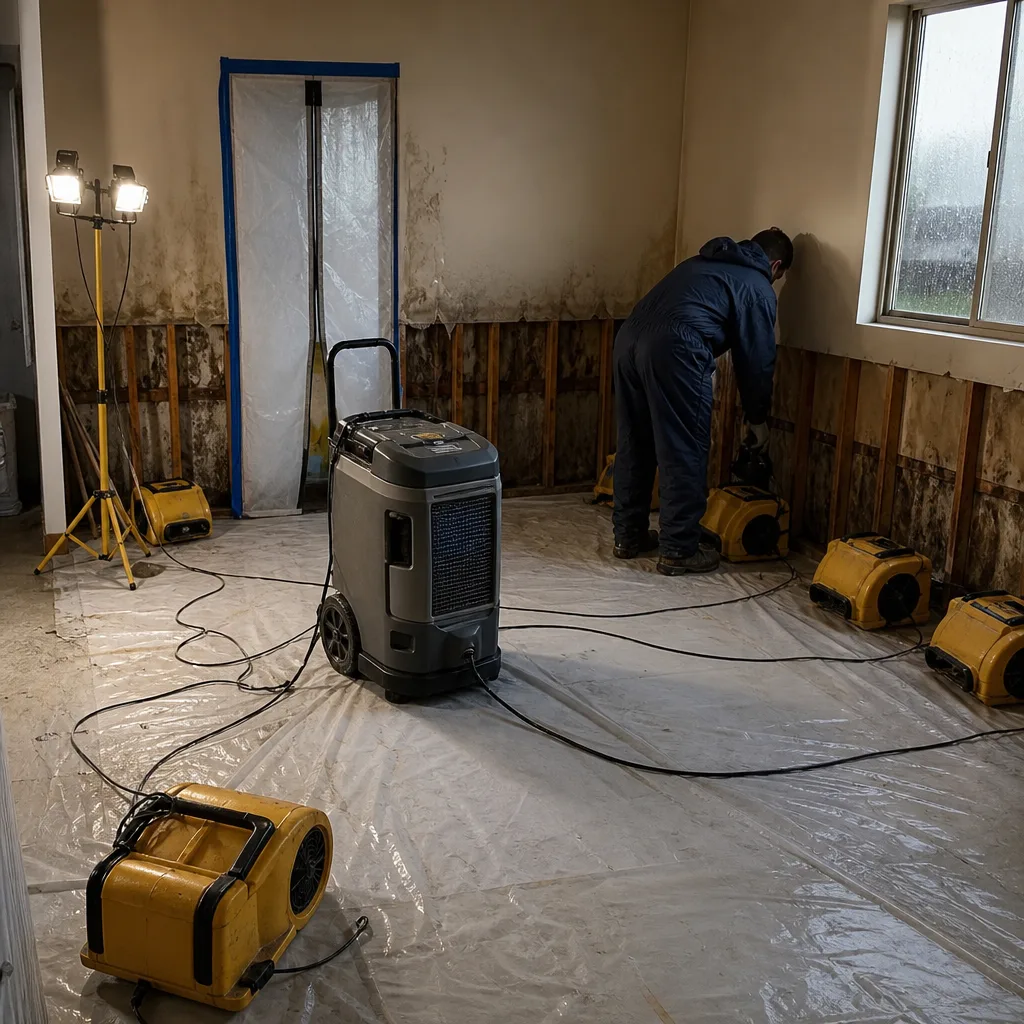
Carson’s marine layer typically arrives between 10 PM and 3 AM, pushing relative humidity above 90% while temperatures drop to the mid-50s. Roof sheathing that absorbed daytime heat radiates that warmth upward, creating a vapor pressure differential - warm, moist air drawn toward the cooler surface, where it condenses. This is psychrometric behavior: the study of how air, moisture, and temperature interact in building assemblies.
The critical threshold for Carson homeowners is 19% WME in roof sheathing. Below this, mold spores remain dormant. Above it, colonization accelerates exponentially. We’ve documented attics in the Dominguez Hills area where sheathing reached 24% WME by late August - the homeowner noticed nothing until September, when a musty smell in a bedroom closet led to inspection.
What to Document Before Marine-Layer Season
- Photograph all attic sheathing surfaces with date stamp visible. Capture the north-facing slope, which receives least sun and dries slowest. Note any existing darkening, staining, or prior mold treatment.
- Measure moisture at six points: two on the north slope, two on the south slope, one at the ridge, one at the eave. Record each reading with location description. A pin-type moisture meter with insulated probes gives the most accurate WME reading on wood.
- Assess soffit ventilation. Carson homes built between 1960 and 1990 often have inadequate intake venting - 4-inch round soffit vents every 8 feet, where modern code requires continuous venting or equivalent. Blocked vents from paint, insulation, or pest activity are common. Photograph each vent’s condition.
- Check bathroom and kitchen exhaust termination. Ducts that terminate in the attic rather than through the roof dump moisture directly onto sheathing. This is a code violation in Carson under current California Building Standards, but remains in many older homes.
If your baseline moisture readings exceed 16% WME before marine-layer season begins, you’re already in the risk zone. At 19% or above, documented remediation - not just ventilation improvement - is warranted. Our Mold Remediation in Carson protocol includes establishing drying goals with daily moisture logs, the same documentation standard we apply to every water loss.
The equipment that produces these logs matters. We deploy professional-grade drying systems from Dri-Eaz and Phoenix, with psychrometric readings documented to IICRC S520 standards for mold remediation. A homeowner with a handheld meter and a notebook can establish credible baseline data; a restoration company with calibrated equipment and standardized forms produces evidence an adjuster accepts without dispute.
October-December: Santa Ana Wind Season and Structural Stress Documentation
Carson’s Santa Ana wind exposure is specific to our position relative to the Los Angeles Basin. When high pressure builds over the Great Basin and pressure gradients channel air through the Cajon and San Gorgonio passes, we get sustained northeasterly winds that desiccate everything they touch. The 14 events in 2023 ranged from 2-day episodes to a 6-day period in late November that kept humidity below 10% continuously.
These conditions create damage through three mechanisms: material shrinkage, adhesive failure, and particulate intrusion. Stucco contracts across control joints. Caulk separates from substrates at different rates. Roof-to-wall transition tape - the waterproofing layer between sloped roofing and vertical walls - loses tack as the asphalt modifier dries. Wind-driven dust and debris then infiltrates these openings, creating abrasion that accelerates future water entry.
Pre-Santa Ana Documentation Protocol
The window for effective documentation is September 15 to October 15. After the first Santa Ana event, you’re documenting damage, not baseline condition. Here’s the protocol we recommend to Carson homeowners:
- Exterior photo survey: Systematic photographs of all elevations, roof planes, and appurtenances. Include close-ups of every control joint, window perimeter, door threshold, and roof penetration. Use consistent angles you can replicate in January for comparison.
- Caulk condition assessment: Rate each bead as intact, checking, or failed. “Checking” means visible cracking without separation; “failed” means visible gap between caulk and substrate. Record locations on a sketch or photo map.
- Roof-to-wall transition inspection: This is the most commonly missed point. From a ladder at the eave, photograph the transition zone where shingles or tile meet vertical wall. Look for lifted, cracked, or dried tape. In Carson’s older homes, this may be exposed felt rather than self-adhered membrane - a vulnerability Santa Ana winds exploit.
- Moisture readings at potential intrusion points: Use a non-invasive moisture meter on interior drywall at exterior wall transitions, window headers, and door jambs. Record baseline readings. Post-Santa Ana readings that exceed baseline by 3% or more indicate air infiltration carrying moisture, even if no liquid water is present.
The documentation value here is temporal. A January claim for water damage at a roof-to-wall transition succeeds or fails on whether the homeowner can show the transition was intact before Santa Ana season. Photos dated October 3 with intact tape, versus photos dated January 20 with failed tape and water staining, establish a clear cause-and-effect timeline. Without October photos, the insurer’s default position is deferred maintenance - a claim reduction or denial.
We’ve processed claims in the Avalon Village and Carson Street corridor areas where Santa Ana-driven dust infiltration alone created enough interior contamination to trigger professional cleaning. The source wasn’t water damage; it was particulate loading that exceeded normal living conditions. Documentation of exterior gap condition supported the claim that this was sudden, wind-driven event damage rather than gradual accumulation.
January-March: Rain Intrusion at Pre-Opened Pathways
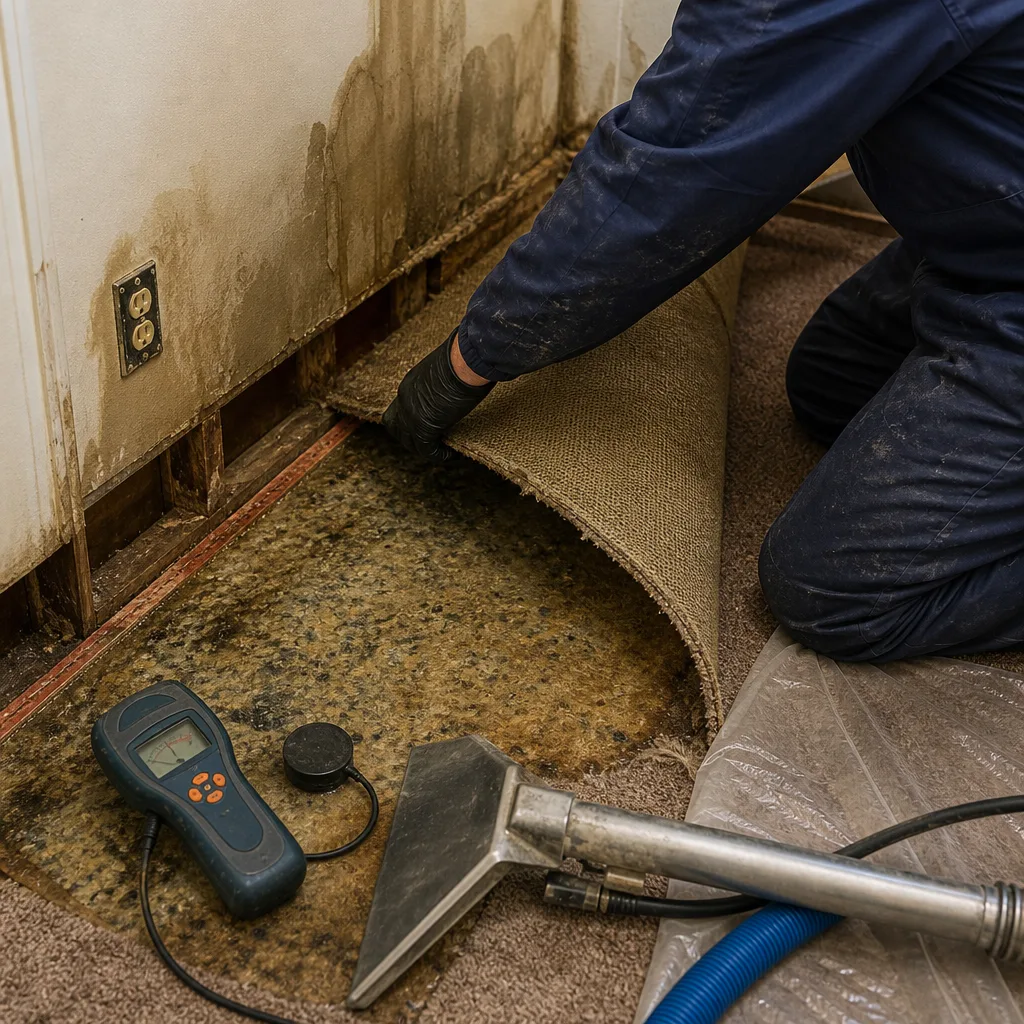
Carson receives approximately 12 inches of annual rainfall, with 10 of those inches concentrated January through March. The critical factor isn’t rainfall volume; it’s rainfall intensity combined with pre-existing openings. A brief, heavy downpour - 0.5 inches in 30 minutes - produces more intrusion at a failed roof-to-wall transition than a week of light drizzle. The opening was created in November. The water enters in February. The documentation gap determines whether the homeowner collects full replacement cost or faces depreciation and denial.
Our DryMark Restoration Carson home response volume typically increases 40% during these twelve weeks. The pattern is consistent: caller reports “new” water stain, inspection reveals gap that has been developing for months, insurer questions whether damage is “sudden and accidental” or “long-term and gradual.”
What to Do at First Sign of Intrusion
- Photograph the interior evidence immediately - stain pattern, bulging drywall, dripping location - with date stamp. This establishes the discovery date, which insurers use to determine claim timeliness.
- Contain and protect: Move furnishings, place collection containers, but do not disturb the stain pattern or open the wall cavity. The visible damage pattern is evidence of water path and duration.
- Document the exterior condition at the corresponding location: Photograph from ground level, from ladder if safe, and any accessible roof area. Do not attempt steep-slope roof access in wet conditions - this is documented injury risk.
- Request professional moisture mapping: A restoration company with thermal imaging and non-invasive meters can trace the water path beyond visible staining, identifying affected materials that appear dry to touch.
The moisture mapping report becomes part of your seasonal file. It shows the extent of affected materials, distinguishes bound water from free water, and establishes drying goals. Our documentation includes daily moisture logs with readings at established points, photographed at each visit, until materials return to dry standard - typically below 12% WME for softwood framing in Carson’s climate.
Here’s where Haven Standard, Clause 1 matters: a written price before work begins. When a Carson homeowner calls with active intrusion in February, the first visit produces a documented scope with line-item pricing. No work begins until the homeowner signs. This eliminates the scope-creep anxiety that damages trust in this trade - the fear that once the crew is inside, the price will multiply. Our written scope is binding; additions require change orders with separate signatures.
The Three Exterior Inspection Points Carson Stucco Homes Skip
Carson’s housing stock is predominantly stucco-over-frame construction, built between 1950 and 1990, with significant infill development in the 2000s. Stucco’s durability depends on drainage plane integrity - the water-resistant barrier behind the stucco that allows incidental moisture to weep out. Three specific details are routinely missed in pre-season inspections, and all three fail predictably under Santa Ana conditions.
Weep Screed Clearance
Weep screed is the metal or vinyl strip at the base of stucco walls that provides drainage exit and termination for the water-resistant barrier. It requires minimum 4-inch clearance above finished grade, 2 inches above hardscape, per California Building Code. In Carson, landscape mulch, soil migration, and installed planters commonly bury this detail. When blocked, water that enters the stucco assembly cannot exit; it wicks upward into framing. Santa Ana winds accelerate this by creating negative pressure at wall base that draws interior air - and any moisture it carries - outward through the stucco.
Inspection: Probe at the wall base with a screwdriver. If you hit stucco rather than metal screed within the first inch, clearance is inadequate. Photograph the condition, measure the exposed screed height, and record. Remediation before Santa Ana season is grading adjustment or planter relocation, not stucco repair.
Window Flashing Overlap
Window flashing in Carson’s era of construction typically consists of building paper lapped shingle-fashion over the nailing fin, with a metal head flashing above. The critical detail is overlap sequence: lower flashing laps over upper, so water drains outward. Reversed laps, missing head flashing, or sealant substituted for proper flashing are common in retrofit and additions. Santa Ana winds drive rain horizontally at these laps; without proper sequence, water enters the wall cavity directly.
Inspection: From ground level, examine the head joint above each window. Proper metal flashing projects beyond the stucco face and has visible drip edge. If you see caulk bead only, or if stucco extends to the window frame without visible flashing, documentation is warranted. This is not a DIY repair; proper remediation requires removal of stucco surround, flashing installation, and stucco restoration.
Roof-to-Wall Transition Tape
We’ve mentioned this detail in Santa Ana season context, but it deserves specific focus. In Carson’s prevailing construction, the transition between sloped roof and vertical wall is protected by self-adhered bituminous tape, often called “ice and water shield” or “peel-and-stick membrane.” This tape has a limited service life - 15 to 25 years depending on formulation and exposure. Santa Ana desiccation accelerates aging; UV exposure at exposed edges degrades the adhesive.
Inspection requires ladder access to the eave line. Look for: lifted edges, alligatoring (surface cracking), exposed nail heads through the tape, or gaps where tape meets wall surface. Any of these conditions warrant professional evaluation. The repair is not tape-only; it requires removal of adjacent roofing, installation of new membrane with proper overlap, and roofing restoration. For detailed pricing context, see our Damage Restoration Cost Breakdown: The Carson Homeowner’s Reference for 2026; cost typically ranges $400-$1,200 per transition in Carson’s market, depending on roofing material and access difficulty.
Documenting these three points in September, with follow-up in January after first significant rain, creates a maintenance record that preempts “deferred maintenance” claim denials. The homeowner who can produce dated photos of weep screed clearance, proper flashing, and intact transition tape has established due diligence.
Building a Seasonal File That Adjusters Read as Evidence
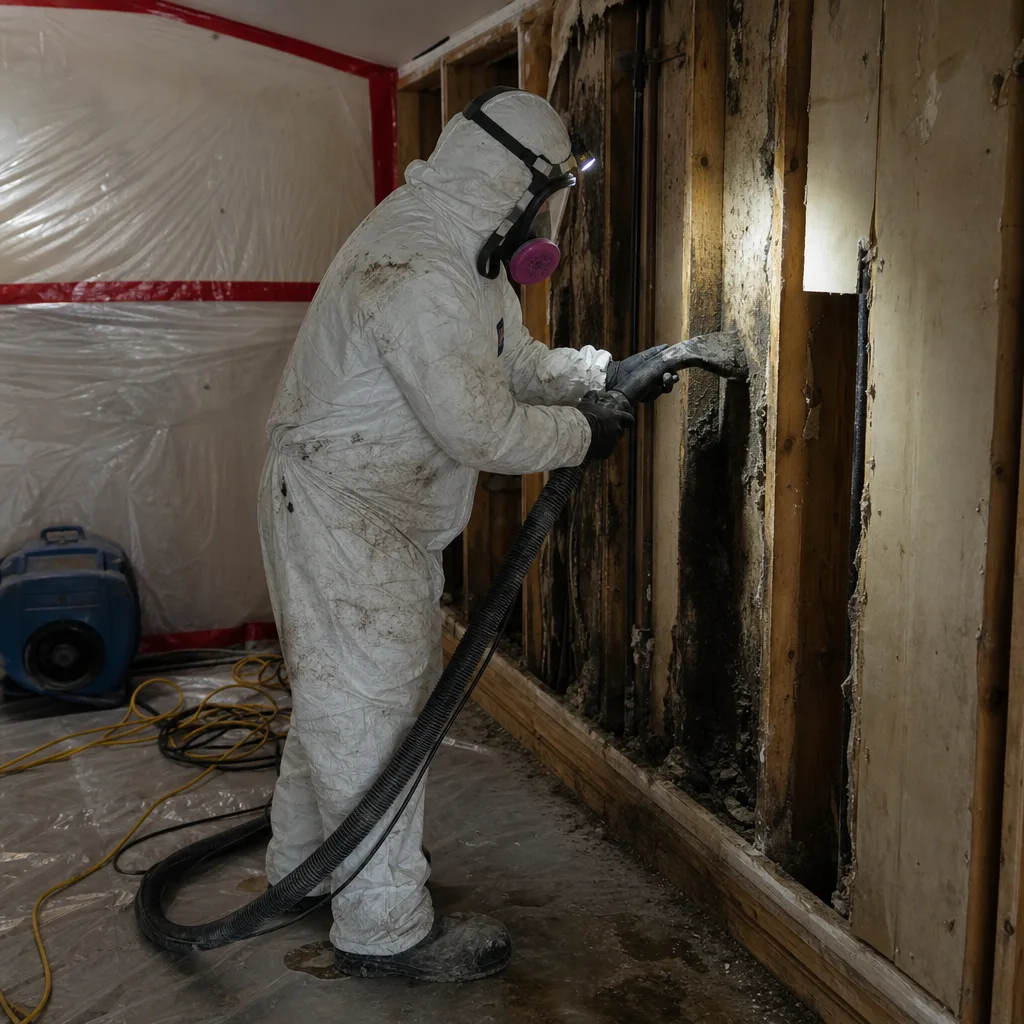
Insurance adjusters evaluate claims against a standard of “sudden and accidental” versus “long-term and gradual.” The burden of proof falls on the policyholder. A seasonal maintenance file, properly assembled, shifts that burden with documented evidence of diligent care.
The file structure we recommend to Carson homeowners mirrors the documentation standard we apply to every DryMark Restoration Carson job: chronological, photographic, measurable, and cross-referenced.
File Organization
- Property baseline: Date-stamped photographs of all building elevations, roof, attic, and crawl space. Include a measurement reference - a ruler in frame, or known-dimension object - for scale. Update every two years, or after any significant repair.
- Seasonal inspection records: Separate sections for marine-layer season (May documentation), Santa Ana season (September documentation), and rain season (January follow-up). Each contains: inspection date, weather conditions, inspector identity, findings with photos, moisture readings with location map, and any remediation performed with contractor documentation.
- Maintenance and repair receipts: All professional work, with scope descriptions. DIY work documented with before/during/after photos and material specifications.
- Correspondence log: All insurer communications, with date, recipient, and summary. This becomes critical if claim handling extends beyond initial adjuster assignment.
- Professional assessment reports: Moisture mapping, mold testing, structural evaluation - any third-party documentation that establishes condition at a specific date.
The format matters less than the consistency. A three-ring binder with printed photos and handwritten notes, maintained annually for five years, carries more evidentiary weight than a single digital folder with undated images. Adjusters look for patterns of care, not perfection. A homeowner who documented weep screed clearance in 2022, noted degradation in 2023, and scheduled repair demonstrates due diligence - even if the repair hadn’t occurred when damage happened.
Our documented photo record on every visit, included as standard deliverable under The Haven Standard, integrates directly with this homeowner file. When DryMark Restoration Carson performs pre-season inspection or responds to active damage, the photo set we produce becomes part of your chronological record - dated, labeled, and formatted for adjuster review.
Common Mistakes to Avoid
- Waiting for visible damage before documenting condition. By the time a water stain appears on interior drywall, the damage path has been active for weeks or months. Baseline documentation must precede the damage season.
- Using only touch-and-sight assessment. Moisture meters cost $50-$200; thermal imaging rental is $75/day. The information they provide exceeds their cost by orders of magnitude when a claim is at stake.
- Failing to photograph the measurement process. A moisture reading of 22% WME is data; a photo showing the meter probe in the sheathing with date stamp is evidence. Always photograph the act of measurement, not just the result.
- Ignoring the marine layer because “it doesn’t rain in summer.” Carson’s summer moisture damage is condensation-driven, not rain-driven. Attic mold colonies established in August are discovered in October, with the cause misattributed to fall rains.
- Assuming stucco cracks are cosmetic. Hairline cracking at control joints is normal; cracking at window corners, door headers, or wall base indicates structural movement or drainage failure that will admit water.
- Discarding documentation after repairs. Insurance claims can be reopened, subrogation claims filed, or future damage attributed to prior repair quality. Maintain records for the statute of limitations plus two years - seven years minimum in California.
- Accepting verbal scope or pricing from any contractor. Haven Standard, Clause 1 exists because verbal agreements become disputed agreements. A written price before work begins protects both parties and produces documentation that supports your claim file.
When to Call a Professional
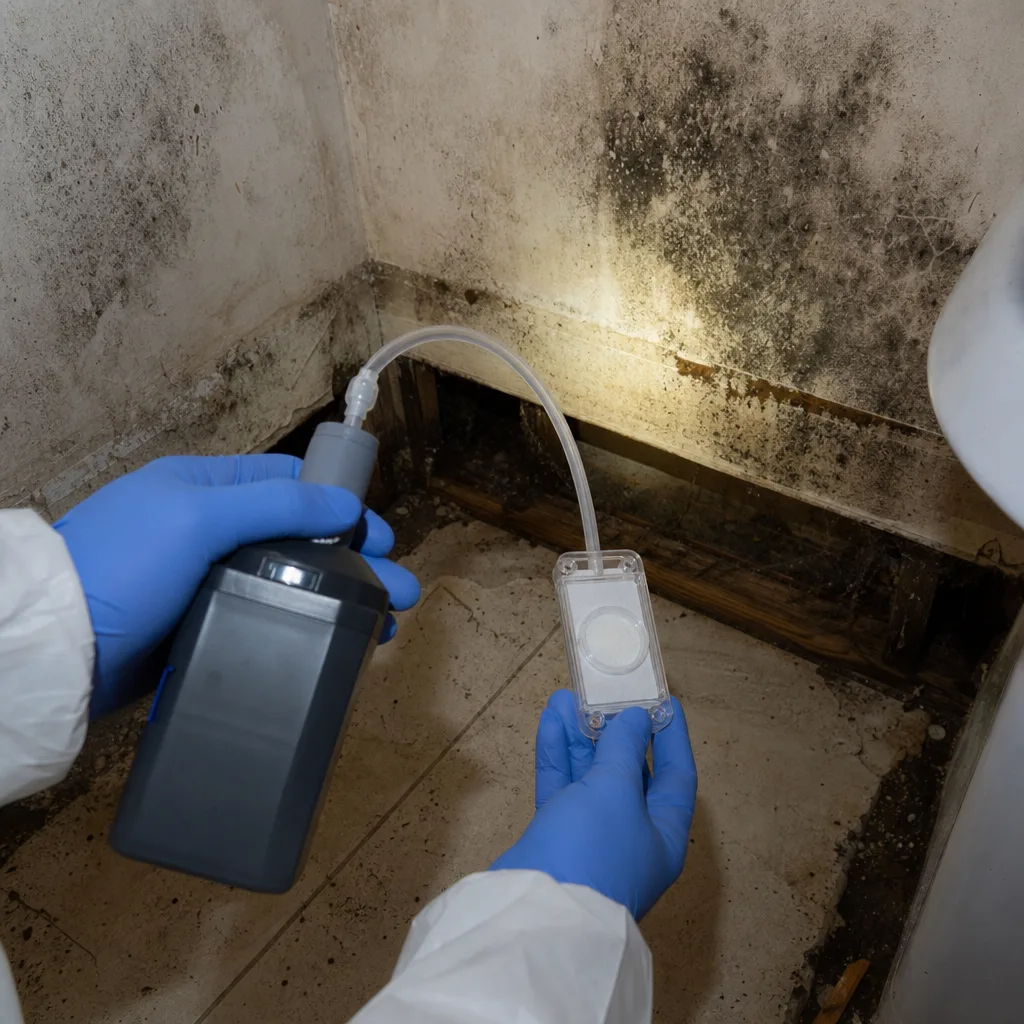
Some seasonal maintenance is appropriate for capable homeowners: gutter cleaning, landscape grading adjustment, visual inspection from ground level. Other conditions warrant professional evaluation - not because homeowners are incapable, but because the documentation standard required for insurance purposes demands calibrated equipment, standardized forms, and chain-of-custody protocols that individuals rarely maintain.
Call for professional assessment when: moisture readings exceed 19% WME in any wood material; you discover active water intrusion during rain events; mold growth is visible or suspected based on musty odor; Santa Ana season has passed and you lack pre-season documentation; or an insurer has questioned whether damage is “sudden and accidental.”
DryMark Restoration Carson offers free estimates in Carson - call (424) 305-3365. Every estimate includes documented moisture readings, photographic assessment, and a written scope with line-item pricing before any work begins. Our 365-Day Done Right Promise, backed by The Haven Standard, applies to every job we accept.
Frequently Asked Questions
Professional moisture mapping for a single-family home in Carson typically ranges $250-$450 for initial assessment, with follow-up monitoring visits at $125-$200 each. DryMark Restoration Carson provides free estimates that include baseline moisture readings and photographic documentation. Call (424) 305-3365 to schedule - estimates are free and include a written scope if remediation is warranted.
Standard homeowners policies in California typically cover mold remediation only when the moisture source is a covered peril - sudden pipe break, storm intrusion, or similar. Condensation from inadequate ventilation is generally classified as maintenance-related and excluded. However, if condensation results from a covered event (such as roof damage from Santa Ana winds that compromises ventilation), the resulting mold may be covered. Documentation of cause and sequence is essential. We coordinate directly with adjusters to establish this documentation.
Our live phone coverage is available 24 hours a day, 7 days a week with no voicemail on emergency lines. For active water intrusion in Carson, we typically deploy within 60-90 minutes during daylight hours, 90-120 minutes overnight. Response time for documentation-only appointments (non-emergency moisture assessment) is usually next business day. The critical factor is calling at first discovery - delay increases damage extent and documentation difficulty.
Remediation versus cleaning depends on three factors: moisture source elimination, affected material extent, and contamination level. Surface growth on sheathing below 10 square feet, with moisture source corrected and verified below 16% WME, may be addressed with HEPA vacuuming and antimicrobial treatment. Growth exceeding 10 square feet, or any growth with moisture source unresolved, requires full remediation per IICRC S520 with containment, negative air, and clearance testing. Our assessment distinguishes these categories with documented moisture readings and photographic extent mapping.
We deal with adjusters directly on every claim. Our documentation package - daily drying logs, photo record, written scope, and moisture verification - is formatted for adjuster review and produced to IICRC, RIA, and IFA standards. We attend adjuster meetings on request, explain our scope in trade terminology they recognize, and advocate for full coverage based on documented evidence. This is the documentation-first approach that Alicia Brennan established when founding Back to Dry in 2011, and it remains our standard practice.
Yes. Our Free Second Opinion on Any Written Estimate policy means you can bring a competitor’s written scope and pricing, and we’ll review it at no charge. We’ll identify scope gaps, pricing anomalies, or documentation deficiencies, and provide our own written scope for comparison. This service exists because we’ve seen Carson homeowners accept incomplete scopes that left moisture trapped in assemblies, producing secondary damage months later.
The Bottom Line
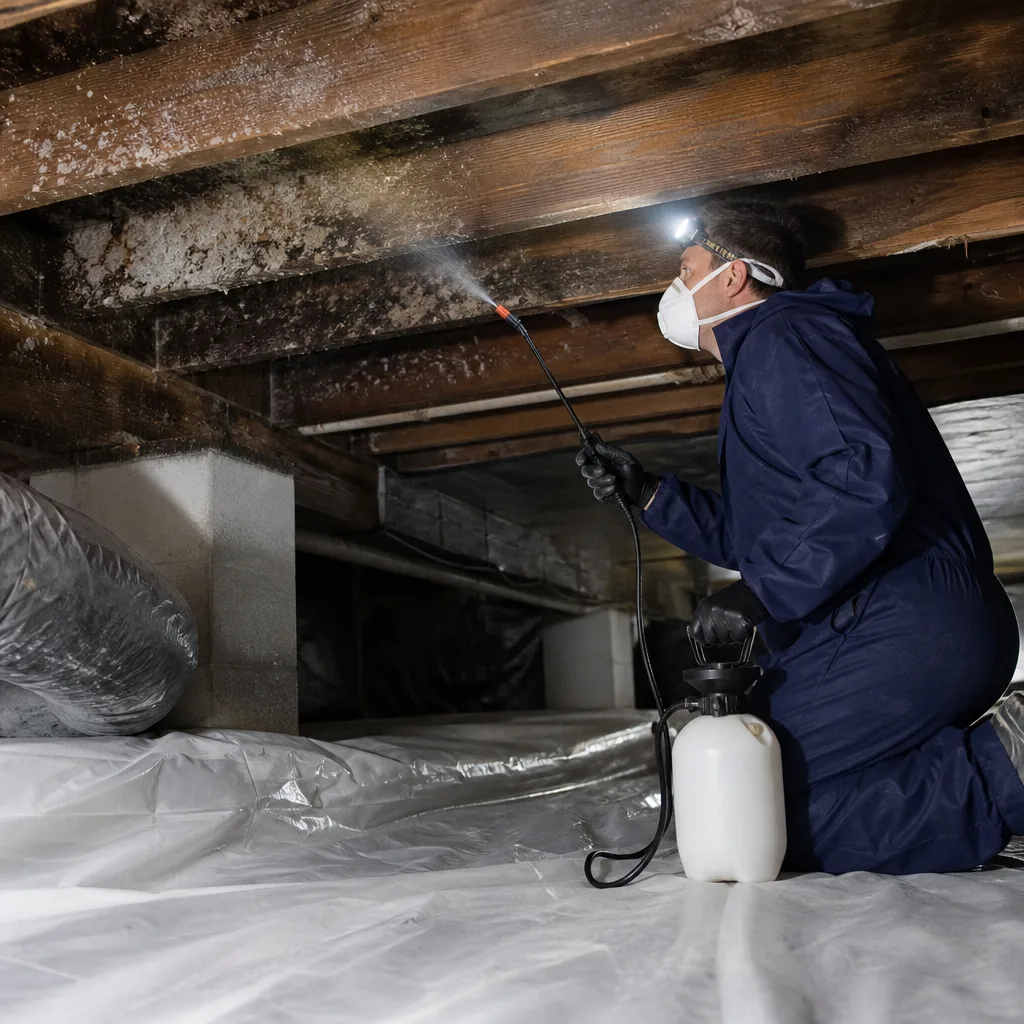
Carson’s climate demands a maintenance calendar built on three seasons, not four: marine-layer condensation from June through September, Santa Ana structural stress from October through December, and rain intrusion at pre-opened gaps from January through March. Each season requires specific documentation - photographs, moisture readings, and written records - that establish baseline condition before damage occurs. The three most commonly missed inspection points on Carson stucco homes are weep screed clearance, window flashing overlap, and roof-to-wall transition tape integrity. A seasonal file, maintained annually and organized for adjuster review, transforms potential claim disputes into documented evidence of diligent maintenance. For more guides & resources, visit our blog. The investment is measured in hours and a moisture meter; the return is measured in claim acceptance and full replacement cost recovery.
Written by Alicia Brennan, Owner at DryMark Restoration Carson, serving Carson since 2011.